Method
Brew the milk tea
Bring 720 ml of water for milk tea to a full boil in a saucepan. Remove the pan from the heat, add 5 black tea bags for milk tea, cover, and steep for 8 minutes. Lift out the tea bags without squeezing them hard; pressing them can pull harsh tannins into the drink.
08:00Sweeten and cool the tea
Stir 50 g of light brown sugar for milk tea into the hot tea until fully dissolved. Pour the tea into a heatproof jug and let it stand at room temperature for 35 to 45 minutes, until no longer hot. Begin checking at 35 minutes. While it cools, immediately complete the next three tea-jelly steps so the tea cooling and jelly setting run at the same time.
35:00Brew the jelly tea
Bring 360 ml of water for tea jelly to a boil in a small saucepan. Remove the pan from the heat, add 2 black tea bags for jelly, cover, and steep for 5 minutes. Remove the tea bags without squeezing them.
05:00Dissolve the agar
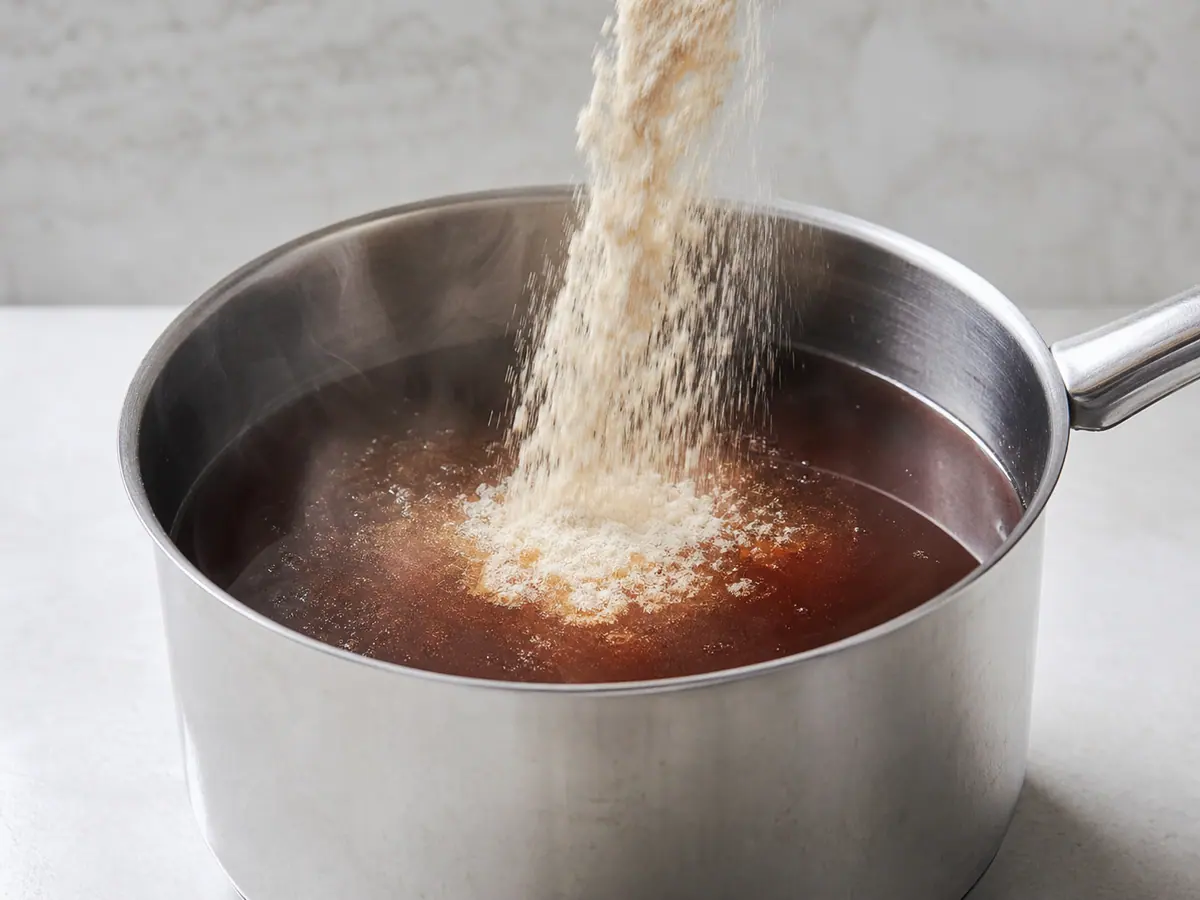
Whisk 5 g of agar powder and 25 g of granulated sugar for jelly into the brewed jelly tea. Return the saucepan to medium-high heat, stirring until the liquid reaches a full boil. Boil for 2 minutes, stirring steadily so the agar dissolves evenly, then pour into a shallow heatproof dish that will make a layer about 1.3 cm (1/2 in) deep.
02:00Set and cut the tea jelly
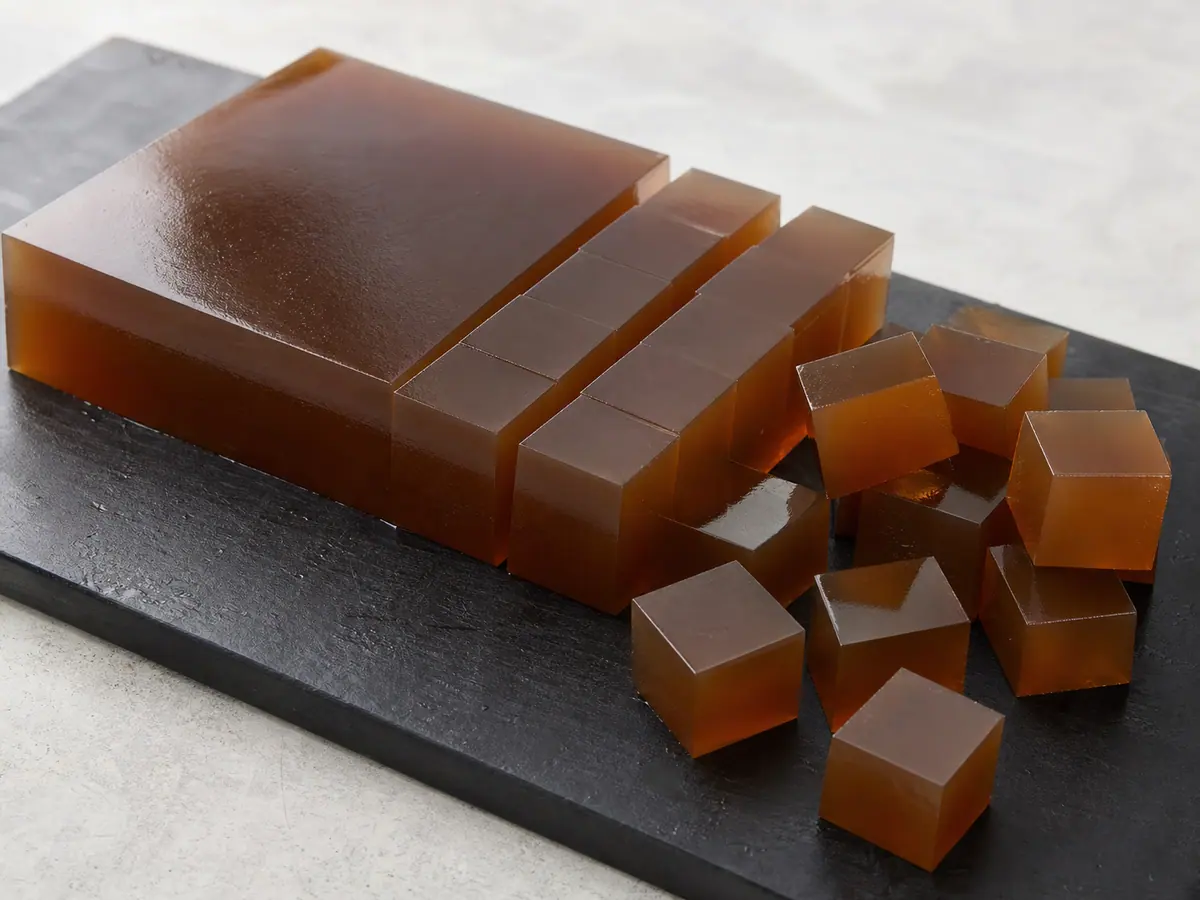
Let the jelly stand undisturbed at room temperature for 35 to 45 minutes. Begin checking at 35 minutes; it is ready when the surface is firm, dry to the touch, and springs back lightly. During the final 10 minutes before the first check, start heating 1900 ml of water for cooking tapioca pearls in a large saucepan so it reaches a rolling boil as the jelly becomes ready. Loosen the jelly edges, turn the slab onto a clean cutting board, and cut it into 1.3 cm (1/2 in) cubes.
35:00Cook the tapioca pearls
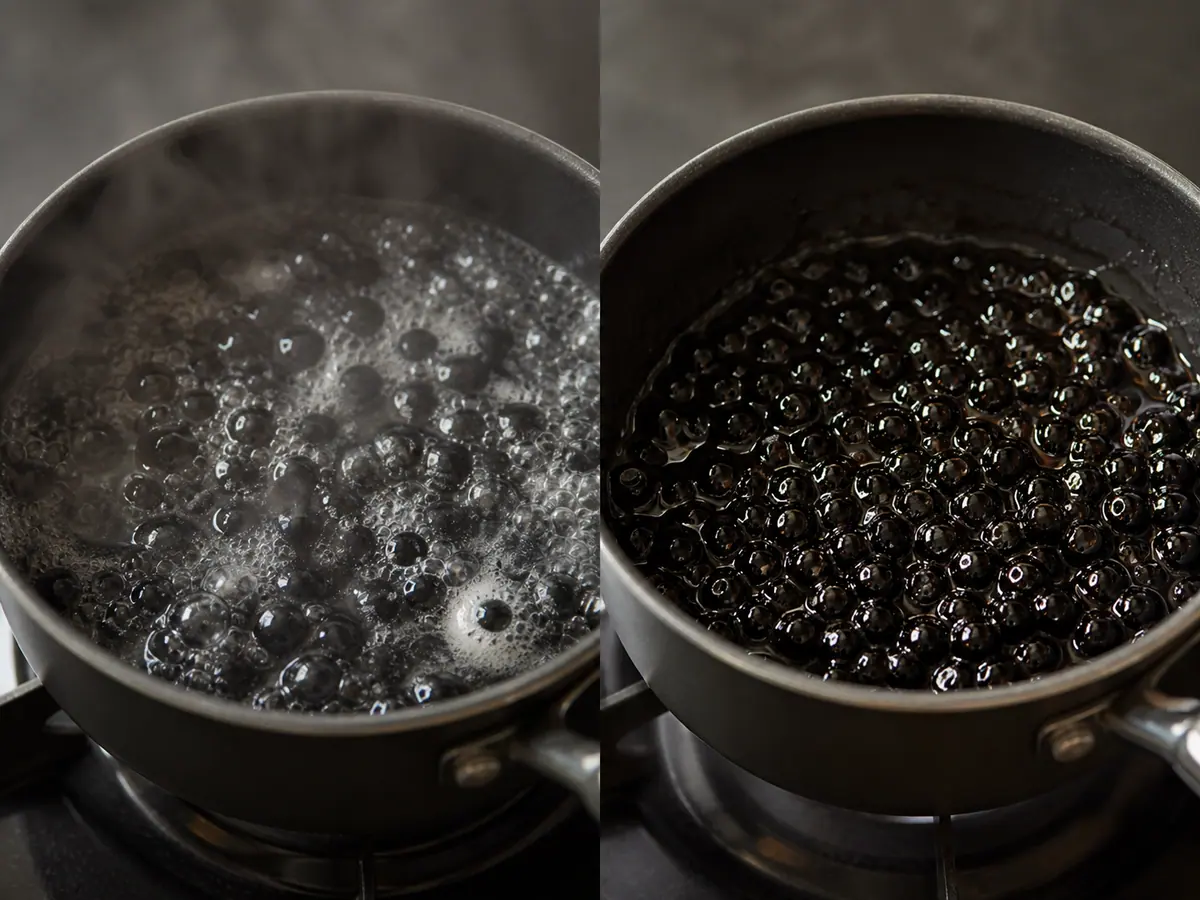
With 1900 ml of water for cooking tapioca pearls at a rolling boil in a large saucepan, add 120 g of quick-cooking black tapioca pearls slowly while stirring to keep the pearls separate. When they float, reduce the heat to medium, cover, and cook for 5 minutes, or follow the package timing when it differs. Stir once halfway through.
05:00Rest and drain the pearls
Turn off the heat and let the pearls stand in the covered pan for 5 minutes. Cool one pearl briefly before tasting; it should be chewy through the center with no chalky core. Drain the pearls in a fine-mesh strainer.
05:00Make the brown sugar syrup
Combine 60 ml of water for brown sugar syrup and 60 g of dark brown sugar for syrup in a small saucepan over medium heat. Stir until the sugar dissolves, then simmer for 3 minutes, until glossy and slightly thickened. Remove from the heat and immediately stir in the drained pearls.
03:00Let the boba absorb the syrup
Let the pearls sit in the warm brown sugar syrup for 10 minutes, stirring once after 5 minutes. They should look glossy, separate easily, and stay pleasantly springy.
10:00Build the dice pool
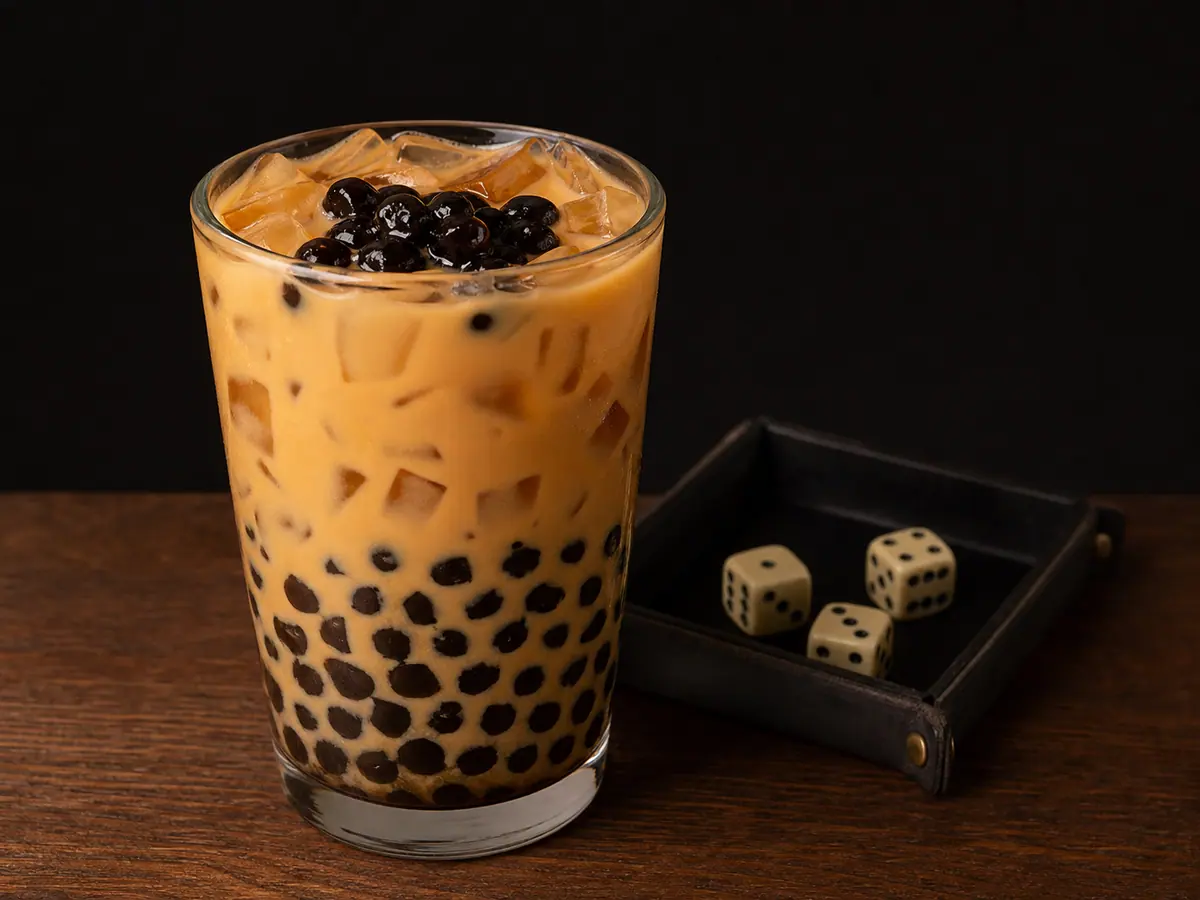
Whisk 480 ml of whole milk into the cooled black tea. Divide the syrup-coated pearls and tea-jelly cubes evenly among tall serving glasses. Add ice cubes (optional) to the glasses, pour in the milk tea, and stir once from the bottom so each serving keeps a visible pool of cubes and pearls. Serve immediately with wide straws or long spoons.


Smart Substitutions
- No whole milk? Use unsweetened oat milk for a lighter body or soy milk for a creamier one; both keep the black tea flavor clear.
- No quick-cooking pearls? Use standard black tapioca pearls and follow their package timing. The recipe will take longer, but the same doneness cue applies.
- No agar powder? Use firm ready-to-serve coconut jelly cut into 1.3 cm (1/2 in) cubes, and omit the jelly tea ingredients.
- Prefer less sweetness? Reduce both brown sugars by one-third. Keep the jelly sugar unchanged so the tea cubes do not taste flat beside the milk tea.
Tips and Variations
- Choose a brisk black tea such as Assam, Ceylon, or English breakfast; delicate tea can disappear behind milk and syrup.
- Cut the jelly no larger than 1.3 cm (1/2 in) so the cubes move through a wide straw instead of blocking it.
- Start the boba only after the jelly is firm and the tea is cool, so the pearls reach the glasses at their springiest.
What Went Wrong?
- Jelly stays loose Return the mixture to the saucepan, bring it to a full boil, cook for 2 minutes while stirring, and pour it back into the dish.
- Jelly cubes crack Use a thin, sharp knife and wipe it between cuts. Press straight down instead of sawing through the slab.
- Pearls have a hard center Return them to gently simmering water for 1 to 2 minutes, then cover and rest them for another 2 minutes before checking again.
- Milk tea tastes weak Use a brisker black tea or steep the bags 1 to 2 minutes longer next time; do not squeeze the bags to force more flavor.
Nutrition Estimate
- Fiber: 0 g per serving
- Sodium: 80 mg per serving
Nutrition disclaimer:This recipe is provided for general cooking information only. Nutrition values are estimates and may vary by ingredients, brands, preparation methods, and serving sizes. Check ingredient labels and follow appropriate food-safety practices. This content is not medical, dietary, allergy, or professional food-safety advice.
FAQ
Found an error or have a suggestion?
Help us improve this recipe. Send us your feedback and include the recipe name so we can take a look.