Method
Soak the rice and dal
Rinse 240 g of idli rice in one bowl until the water is mostly clear. Rinse 60 g of urad dal and 2 g of fenugreek seeds in a second bowl. Cover both bowls generously with cool water and soak for 4 to 6 hours, beginning the texture check at 4 hours; the rice should snap easily and the dal should crush between two fingers.
4:00:00Grind and ferment the batter
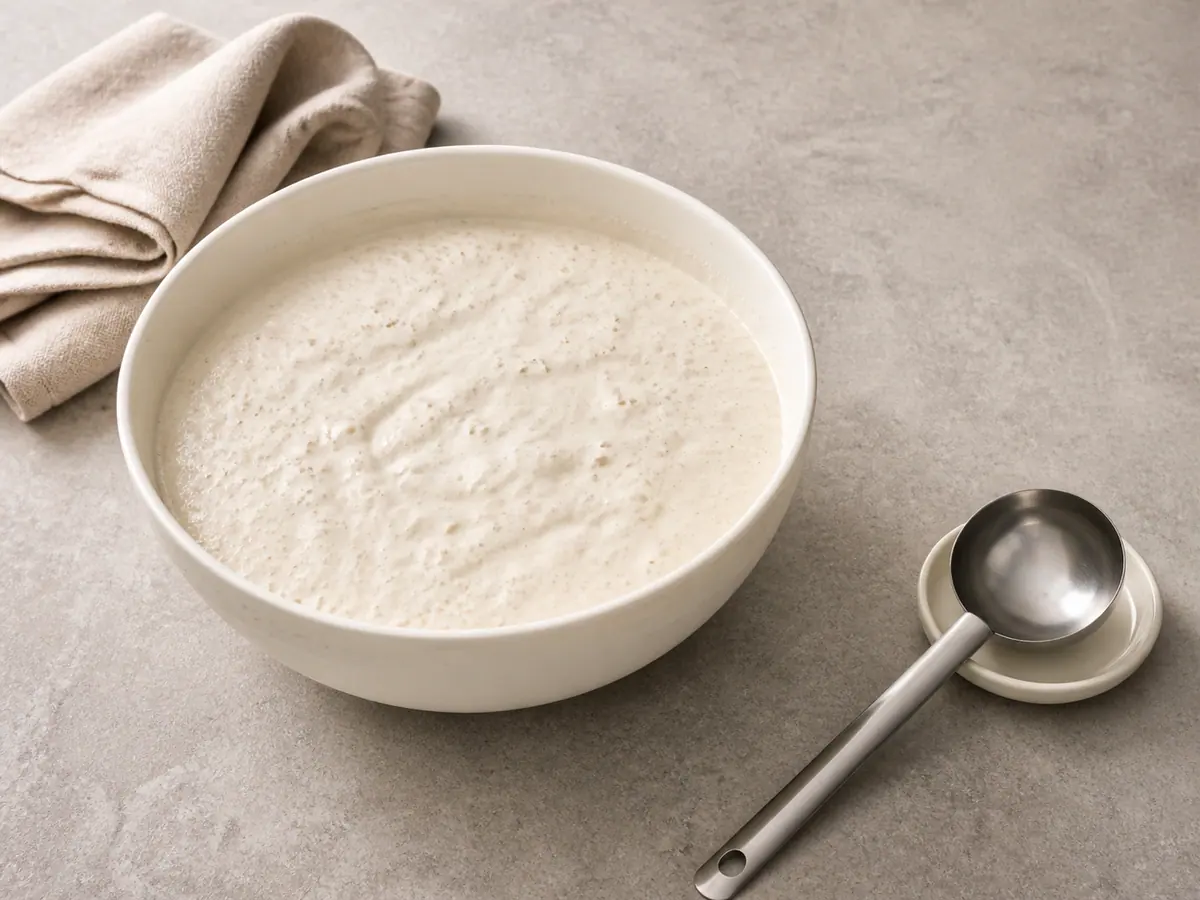
Drain both bowls. Blend the dal and fenugreek first with cool water added gradually until pale, smooth, and airy. Blend the rice separately until mostly smooth with a faint fine-grain texture. Combine both batters in a large clean bowl. Stir in 5 g of fine sea salt, reserving about one third for the filling, then add enough cool water for a thick, pourable consistency. Cover loosely and ferment in a warm place for 8 to 12 hours, beginning the rise check at 8 hours; the batter should expand, look bubbly, and smell pleasantly tangy.
8:00:00Cook the potatoes
Cut 400 g of waxy potatoes into 3 cm pieces and place them in a saucepan. Cover with cool water, bring to a boil, then lower to a steady simmer. Cook for 15 to 20 minutes, checking at 15 minutes, until a knife slides easily into the center. Drain well and crush into rough bite-size pieces rather than a smooth mash.
15:00Start the masala filling
Measure 60 ml of neutral oil. Set one quarter aside for cooking the dosas and one half aside for the podi brush. Heat the remaining quarter in a skillet over medium heat. Slice 150 g of yellow onion thinly, add it to the skillet, and cook for 5 to 7 minutes, beginning the color check at 5 minutes and stirring often, until soft with light golden edges.
05:00Finish the filling and podi brush
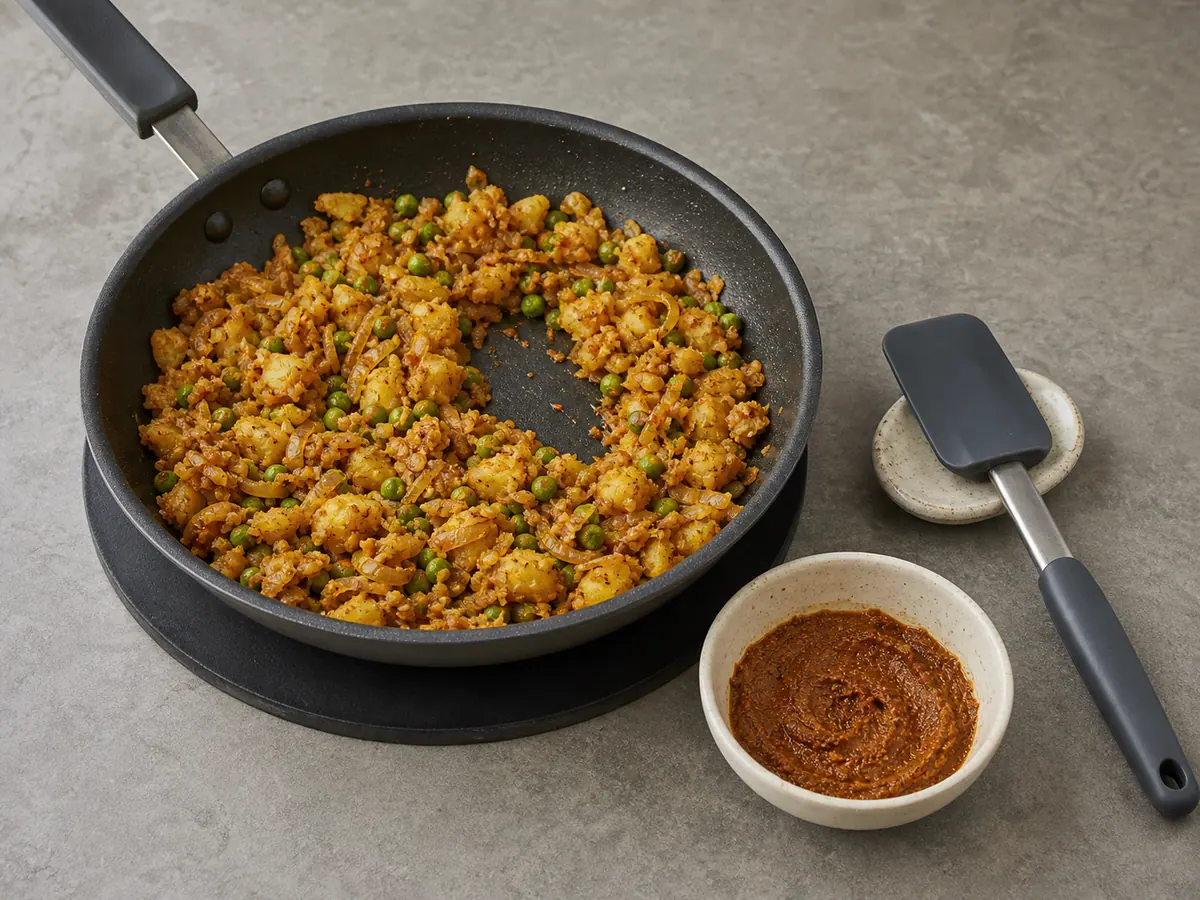
Add the crushed potatoes, 100 g of frozen green peas, and the reserved salt to the skillet. Tip 36 g of dosa podi into a small bowl; stir about one quarter of it into the filling. Cook for 3 to 4 minutes, beginning the dryness check at 3 minutes and folding gently, until the peas are hot and the mixture holds together without looking wet. Mix the remaining podi with the oil reserved for brushing to make a loose, spreadable paste.
03:00Cook and shape the dosa cones
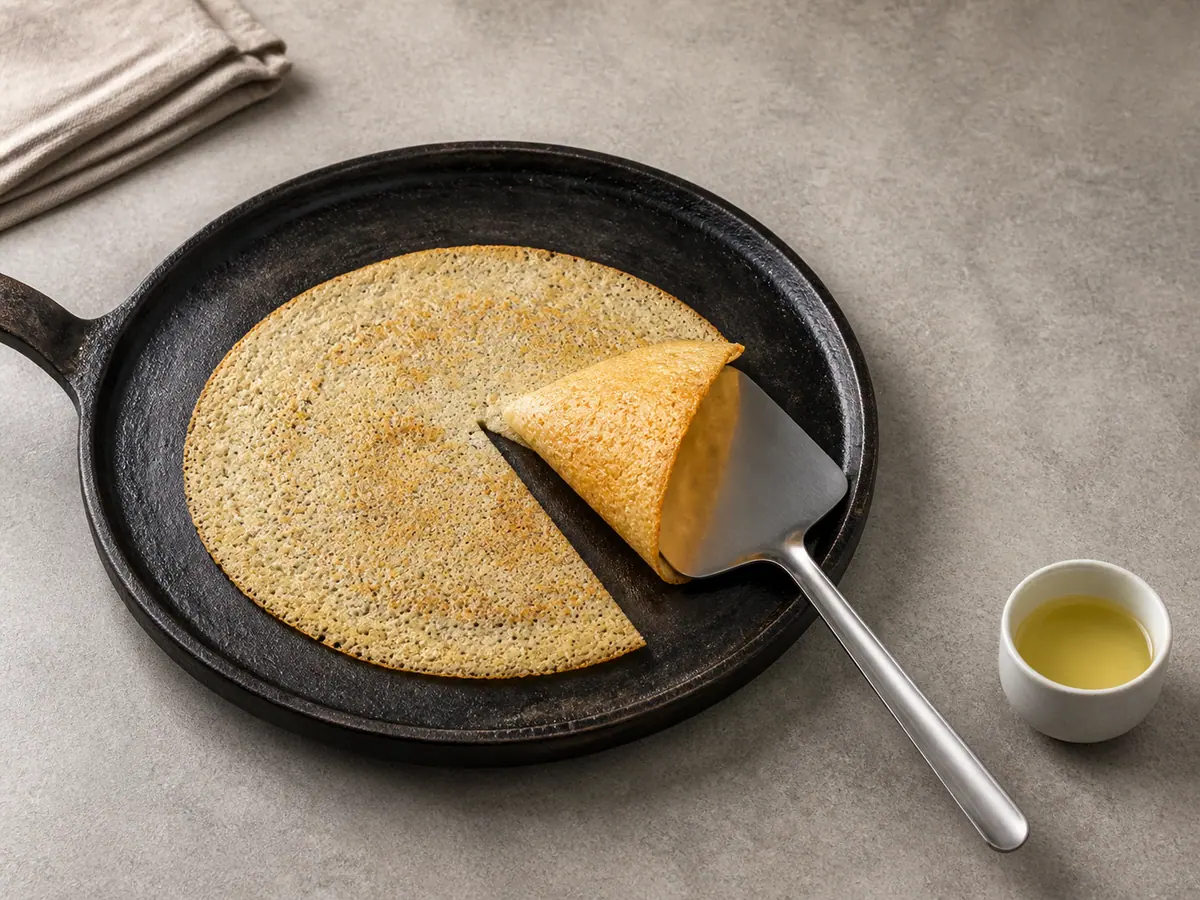
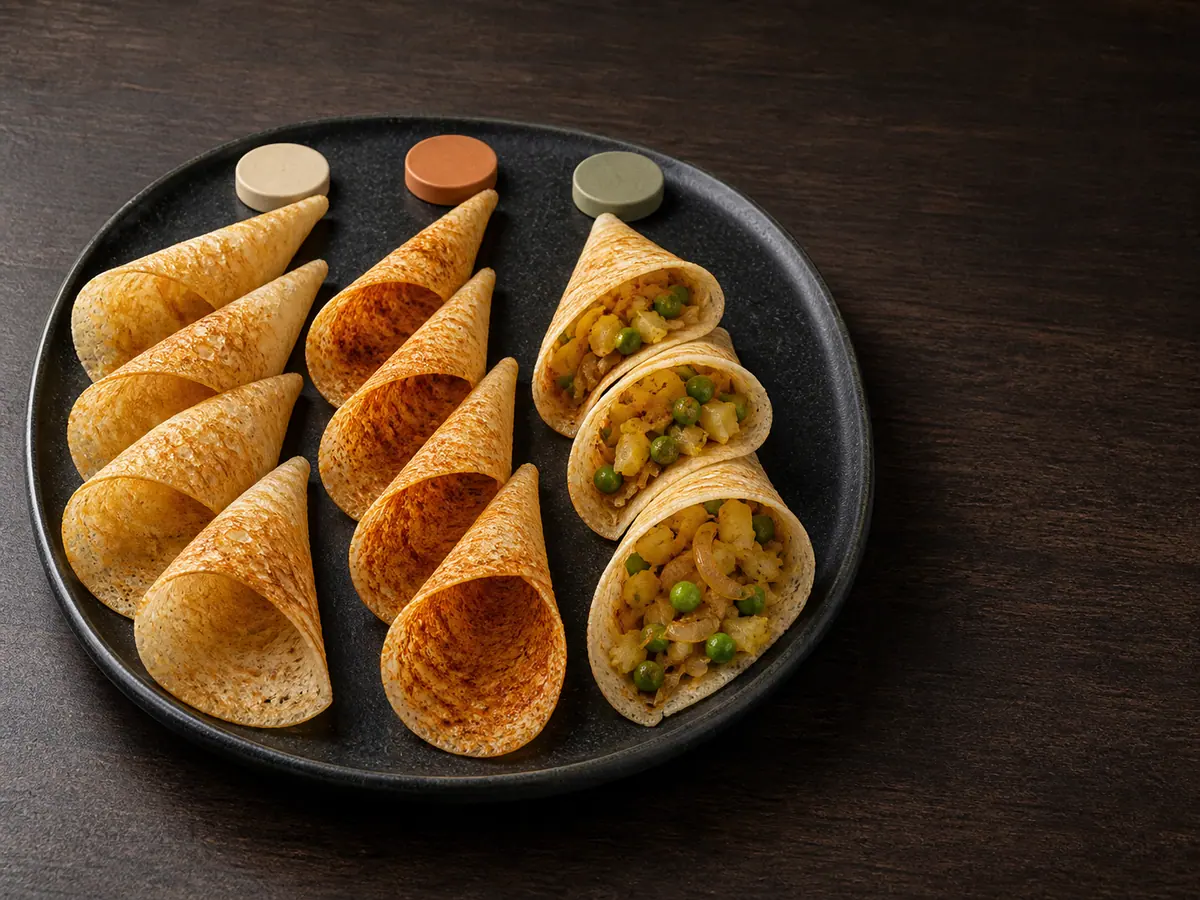
Stir the fermented batter gently and loosen it with cool water until it flows like heavy cream. Heat a well-seasoned tawa or a wide nonstick skillet over medium heat. Brush with a thin film of reserved oil, pour a small ladle of batter in the center, and spread it quickly into an 18 cm circle. Cook for 90 seconds to 2 minutes, checking at 90 seconds, until the top is dry and the underside is golden and crisp. Make one straight cut from the center to the rim. Slide a thin spatula under one cut edge, overlap it around the center point, and hold for a few seconds to form a cone. As you cook, leave the first third plain, spread a thin film of podi paste inside the second third before cutting, and shape the final third plain, ready to fill. Repeat until all the batter is used, targeting three cones per serving and adjusting the heat if the batter seizes before it spreads.
01:30Assemble the three selections
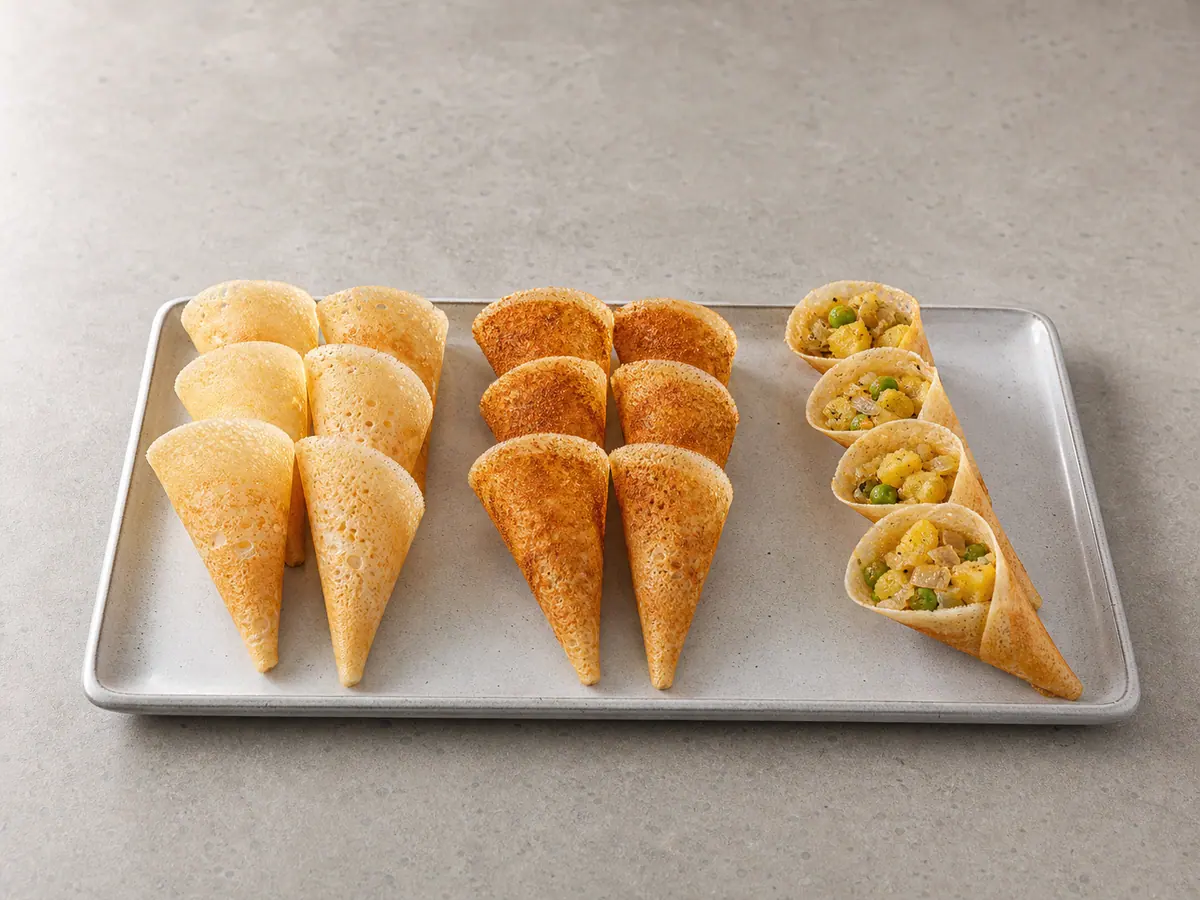
Spoon a modest amount of potato-pea filling into the wide ends of the final third of plain cones, keeping the tips clear and the filling below the rim. Arrange the unfilled plain third, the podi-brushed third, and the filled third as three separate groups on a large platter, with every seam facing down for stability. Serve as soon as the full lineup is arranged so the contrast between crisp shell and soft filling is at its best.


Smart Substitutions
- Need a batter shortcut? Use a fresh, fully fermented plain dosa batter and begin with the potato filling; adjust its consistency only enough to spread thinly.
- No idli rice? Use short-grain white rice. The cones may be slightly less lacy but will still crisp when spread thin.
- No dosa podi? Use another finely ground South Indian lentil-and-chile dry chutney powder, choosing one without large seed pieces.
- No green peas? Use finely diced cooked carrots or sweet corn, keeping the filling dry and lightly packed.
Tips and Variations
- Use a loose cover during fermentation and judge readiness by expansion, bubbles, and a clean tangy aroma rather than the clock alone.
- If the batter sets before you can spread it, lower the heat and cool the tawa briefly with a damp cloth between dosas.
- Keep the potato mixture crumbly rather than creamy, and fill only one group so the three selections stay visibly distinct.
What Went Wrong?
- Batter will not spread The tawa is probably too hot or the batter is too thick. Lower the heat, wipe the surface briefly with a damp cloth, and loosen the batter with a little cool water.
- Cones crack while shaping The dosa has cooked past its flexible window. Cut and overlap it as soon as the top is dry and the underside is golden, before the sheet becomes fully brittle.
- Cones turn soft quickly Spread the batter thinner, use less oil, and keep the filling dry and below the rim. Arrange the filled group last and serve promptly.
- Batter is not bubbly Give it more time in a comfortably warm place. Properly fermented batter should look expanded, airy, and pleasantly tangy before cooking.
Nutrition Estimate
- Fiber: 9 g per serving
- Sodium: 540 mg per serving
Nutrition disclaimer:This recipe is provided for general cooking information only. Nutrition values are estimates and may vary by ingredients, brands, preparation methods, and serving sizes. Check ingredient labels and follow appropriate food-safety practices. This content is not medical, dietary, allergy, or professional food-safety advice.
FAQ
Found an error or have a suggestion?
Help us improve this recipe. Send us your feedback and include the recipe name so we can take a look.