Method
Cook the potatoes
Scrub 800 g of floury potatoes and place them unpeeled in a large pot. Cover with cold water by 2.5 cm (1 in), bring to a boil, then reduce to a steady simmer. Begin checking after 30 minutes; continue cooking until a thin knife slides through the center with almost no resistance, usually 30 to 40 minutes depending on size. Drain thoroughly and let the potatoes stand until they can be handled safely, then peel them while still warm.
30:00Build the fluffy filling
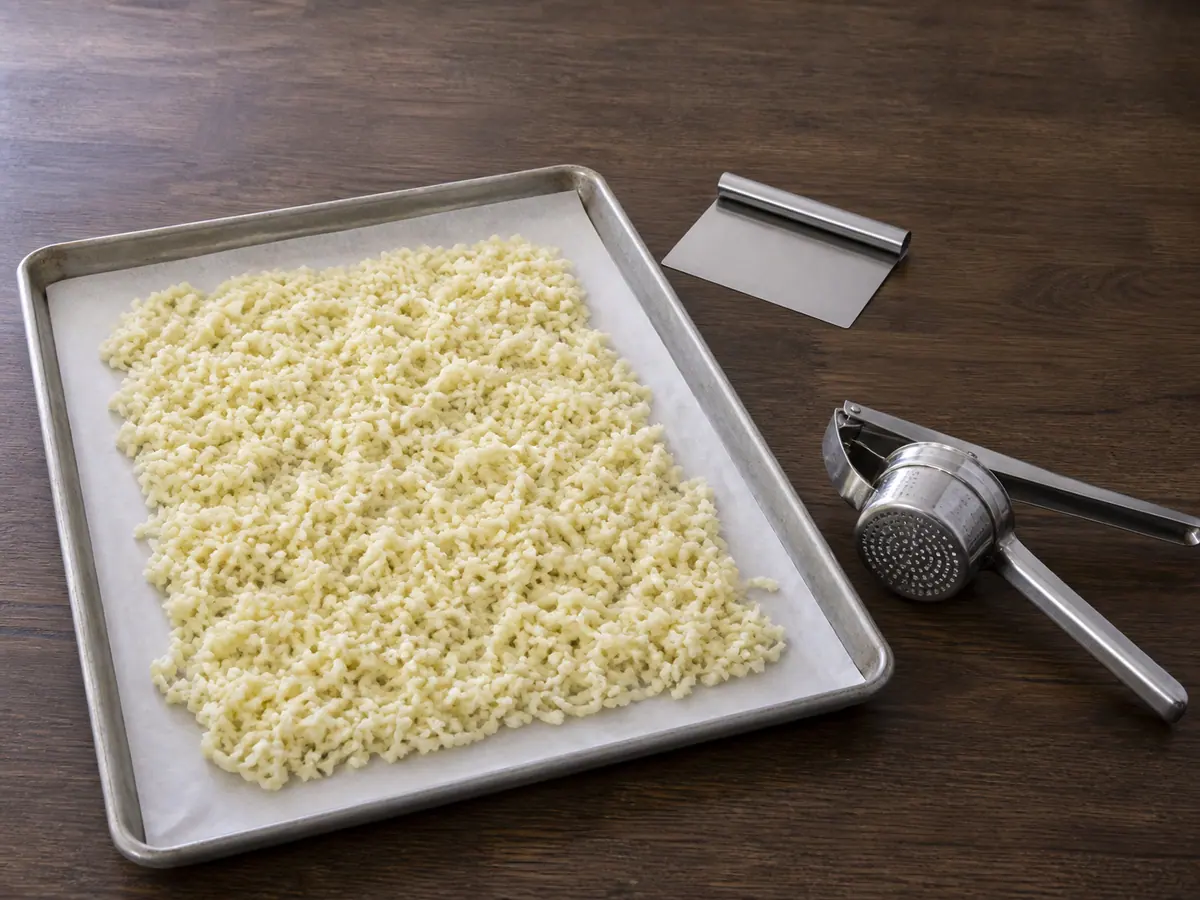
Pass the warm potatoes through a ricer onto a wide tray or mash them thoroughly without using a blender. Spread the potato in a loose layer and let steam escape for 5 minutes; the surface should look matte rather than wet. Transfer it to a bowl, add 50 g of parmesan cheese, 1 egg yolk, 15 g of fresh parsley, 3 g of fine sea salt, 0.6 g of black pepper, and 0.3 g of ground nutmeg, then fold just until evenly combined. The mixture should hold a clean scoop without slumping.
05:00Press the token shapes
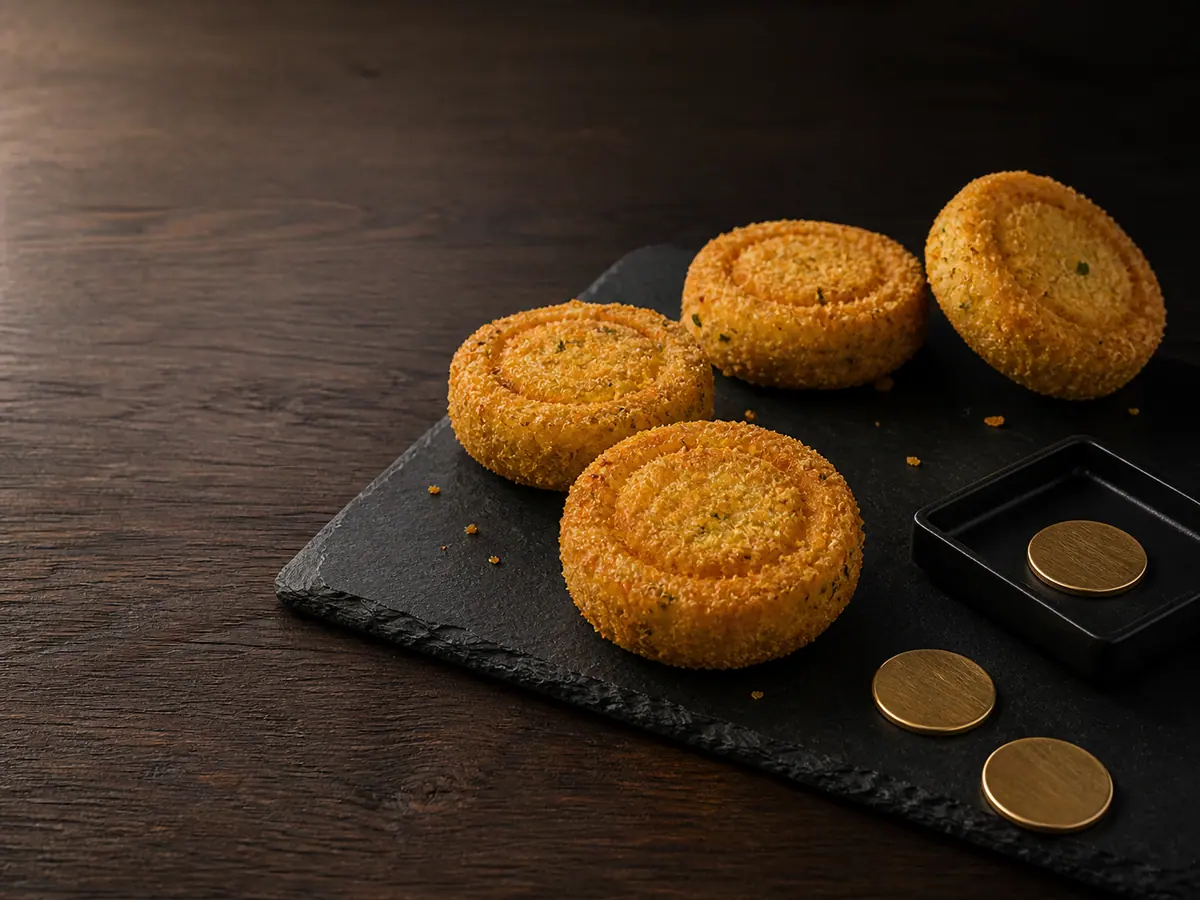
Divide the mixture so each serving receives four equal pieces. Roll each piece briefly between your palms, flatten it into a disc about 5.5 cm (2 1/4 in) across and 1.5 cm (5/8 in) thick, then smooth the edge so there are no deep cracks. Press the rim of a smaller plain glass or round cutter lightly into each face to mark one shallow concentric ring without cutting through. Set the unbreaded tokens on a parchment-lined tray. After shaping, wash your hands with soap and warm water, and wash any tools or work surfaces that contacted the egg-yolk mixture with hot, soapy water before setting up the breading station.
Lock in the crisp coating
Place 45 g of all-purpose flour in one shallow bowl. Beat 1 large egg in a second bowl, and place 90 g of panko breadcrumbs in a third. Coat each token lightly with flour and shake off the excess, dip it in egg and let the extra drip away, then press it gently into the breadcrumbs until the face, edge, and ring are evenly covered. Return the breaded tokens to the tray and let them stand for 10 minutes while the coating hydrates and grips the potato. While the coating stands, wash your hands with soap and warm water, and wash the breading bowls, utensils, and work surface that contacted egg with hot, soapy water before handling cooked croquettes or clean serving equipment. Do not reuse the breading tray for cooked food unless it has been washed first.
10:00Fry the tournament rounds
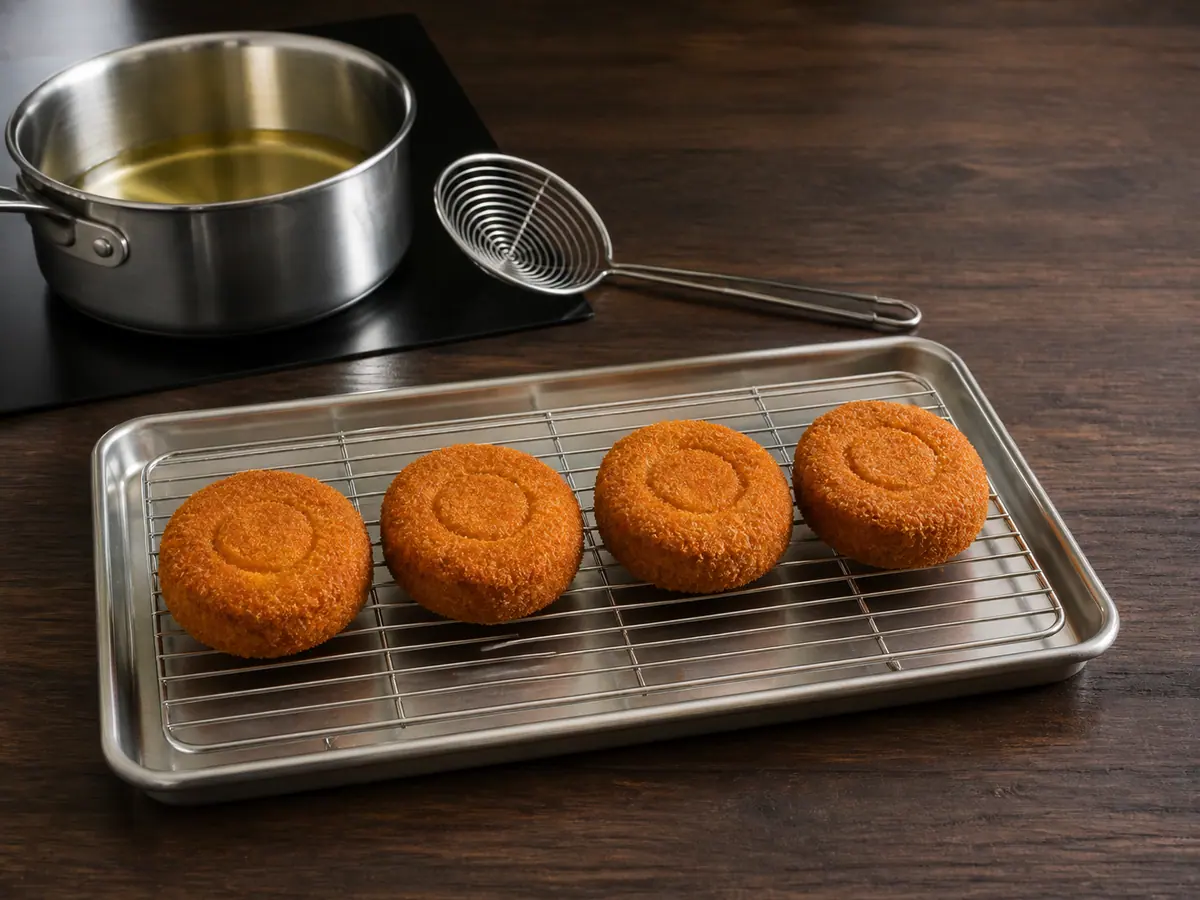
Pour 500 ml of canola oil into a deep, heavy saucepan, keeping the pan no more than one-third full. Heat the oil to 175°C (350°F) and keep water away from the cooking area. Lower in 4 tokens at a time with a metal spider or slotted spoon and fry for 3 to 4 minutes, turning once, until the coating is evenly deep golden and crisp. Start checking at 3 minutes. Remove the first batch before checking the center of one token with a clean instant-read thermometer; the egg-containing filling must reach at least 71°C/160°F. If it is below 71°C/160°F, carefully return the batch to the oil, continue frying, and recheck one token with a cleaned thermometer; do not serve until the center reaches at least 71°C/160°F. Let the oil return to 175°C (350°F) before each new batch, never leave it unattended, and wash the thermometer probe with hot, soapy water after use away from the frying area.
03:00Cash out the crispest bite
Transfer the fried tokens to a clean wire rack set over a clean tray and let excess oil drain for 2 minutes; a rack keeps the broad faces crisp better than stacking them on paper. Arrange four tokens per serving in a loose row or small stack and serve immediately, allowing diners to pause between rounds so the hot filling can be eaten comfortably.
02:00


Smart Substitutions
- No parmesan? Use finely grated pecorino or another firm aged cheese with a similarly dry texture.
- No fresh parsley? Use finely cut chives or a small amount of fresh basil for a different herbal finish.
- No panko? Use fine dry breadcrumbs; the crust will be smoother and slightly less jagged.
- No nutmeg? Omit it or use a small pinch of garlic powder for a more savory route.
Tips and Variations
- Keep every disc close to the same thickness so the broad faces brown at the same rate.
- Fry in small batches and wait for the oil to return to 175°C (350°F) before adding more.
- Let the breading stand for the full 10 minutes; the hydrated crumbs cling better when the tokens enter the oil.
What Went Wrong?
- Tokens crack while shaping Press the portion firmly before flattening, then smooth the edge with slightly damp fingertips; deep edge cracks can open in the oil.
- Potato mixture feels too soft Spread it out for a few more minutes so steam can escape, then work a small amount of the breading crumbs into the mixture before reshaping.
- Coating slides off Use only a thin dusting of flour, let excess egg drip away, and press the crumbs onto the face, ring, and edge before the 10-minute stand.
- Croquettes taste greasy The oil was probably below 170°C (340°F) or the pan was crowded. Restore the heat and fry fewer tokens at once.
Nutrition Estimate
- Fiber: 5 g per serving
- Sodium: 640 mg per serving
Nutrition disclaimer:This recipe is provided for general cooking information only. Nutrition values are estimates and may vary by ingredients, brands, preparation methods, and serving sizes. Check ingredient labels and follow appropriate food-safety practices. This content is not medical, dietary, allergy, or professional food-safety advice.
FAQ
Found an error or have a suggestion?
Help us improve this recipe. Send us your feedback and include the recipe name so we can take a look.