Method
Cook the brown rice
Rinse 150 g of long-grain brown rice in a fine-mesh sieve until the water runs mostly clear. Combine 150 g of long-grain brown rice, 360 ml of water for rice, and 1.5 g of fine salt for rice in a medium saucepan and bring to a boil over medium-high heat. Stir once, cover, reduce the heat to low, and simmer for 40 to 45 minutes, starting the check at 40 minutes. While the rice simmers, move directly to the sweet-potato and curry steps so the components cook in parallel and finish in the same window. The rice is ready when the liquid is absorbed and the grains are tender. Remove the pan from the heat and leave it covered until assembly, then fluff with a fork.
40:00Roast the sweet potatoes
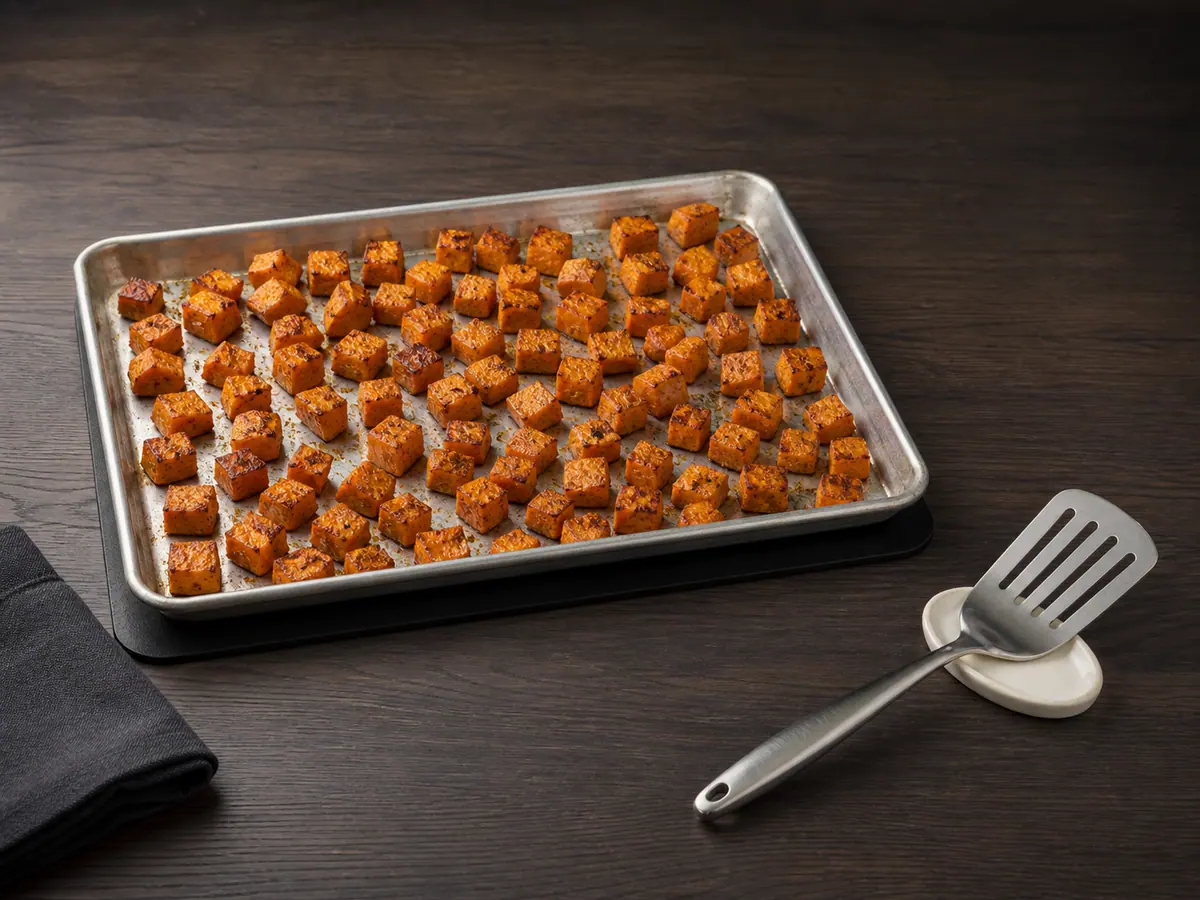
Heat the oven to 220°C (425°F). Cut 600 g of sweet potatoes into 2 cm (3/4 in) cubes. Toss the cubes with 15 ml of olive oil for sweet potatoes, 2 g of ground cumin, 4 g of garam masala, 1.5 g of fine salt for sweet potatoes, and 0.5 g of black pepper on a large rimmed sheet pan. Spread them in one layer with space between the pieces. Roast for 25 to 30 minutes, turning the cubes once after about 15 minutes, until the centers are tender and several edges are deeply browned. Once the tray is in the oven, move directly to the onion and curry steps while the sweet potatoes roast. Start the final sweet-potato doneness check at 25 minutes.
25:00Soften the onion
Warm 15 ml of olive oil for curry in a wide skillet or shallow pot over medium heat. Chop 180 g of yellow onion into small pieces, add it to the skillet, and cook for 6 to 8 minutes, stirring every minute or two, until translucent with a few pale-golden edges. Lower the heat if the onion begins to brown quickly.
06:00Bloom the aromatics and spices
Mince 3 garlic cloves and finely grate 15 g of fresh ginger. Add both to the softened onion with 7 g of mild curry powder, 1 g of ground turmeric, and crushed red pepper (optional). Stir constantly for 60 to 90 seconds, until the mixture smells fragrant and the spices darken slightly without scorching. If the skillet looks dry, lower the heat rather than adding more oil.
01:00Simmer the chickpea curry
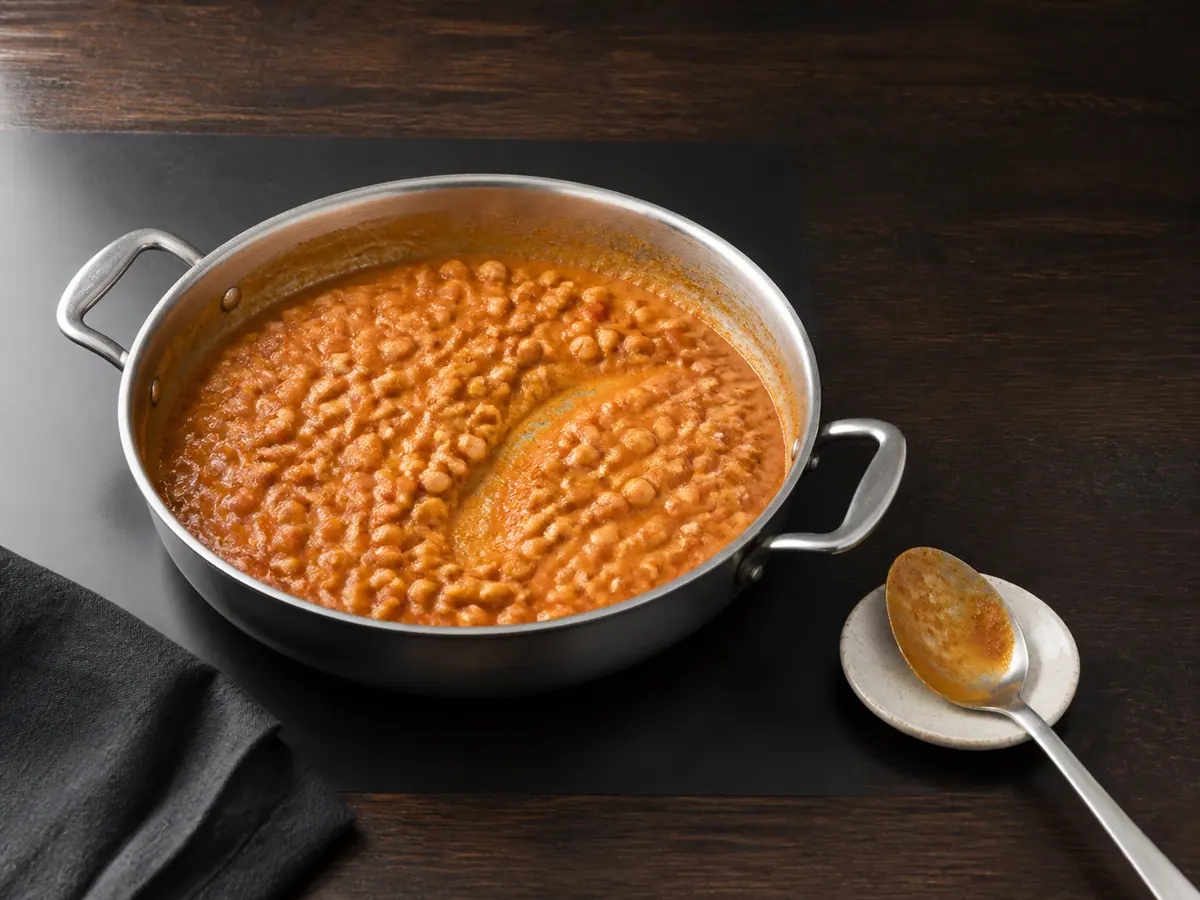
Drain and rinse 480 g drained of no-salt-added canned chickpeas. Add 400 g of no-salt-added canned diced tomatoes, 200 ml of canned coconut milk, 240 ml of low-sodium vegetable broth, 1.5 g of fine salt for curry, and 480 g drained of no-salt-added canned chickpeas to the skillet. Stir well, bring the mixture to a gentle simmer, and cook uncovered for 12 to 15 minutes, stirring occasionally, until the sauce coats the back of a spoon and the chickpeas are hot throughout. Start checking the consistency at 12 minutes; lower the heat if the curry bubbles vigorously.
12:00Finish with spinach and lime
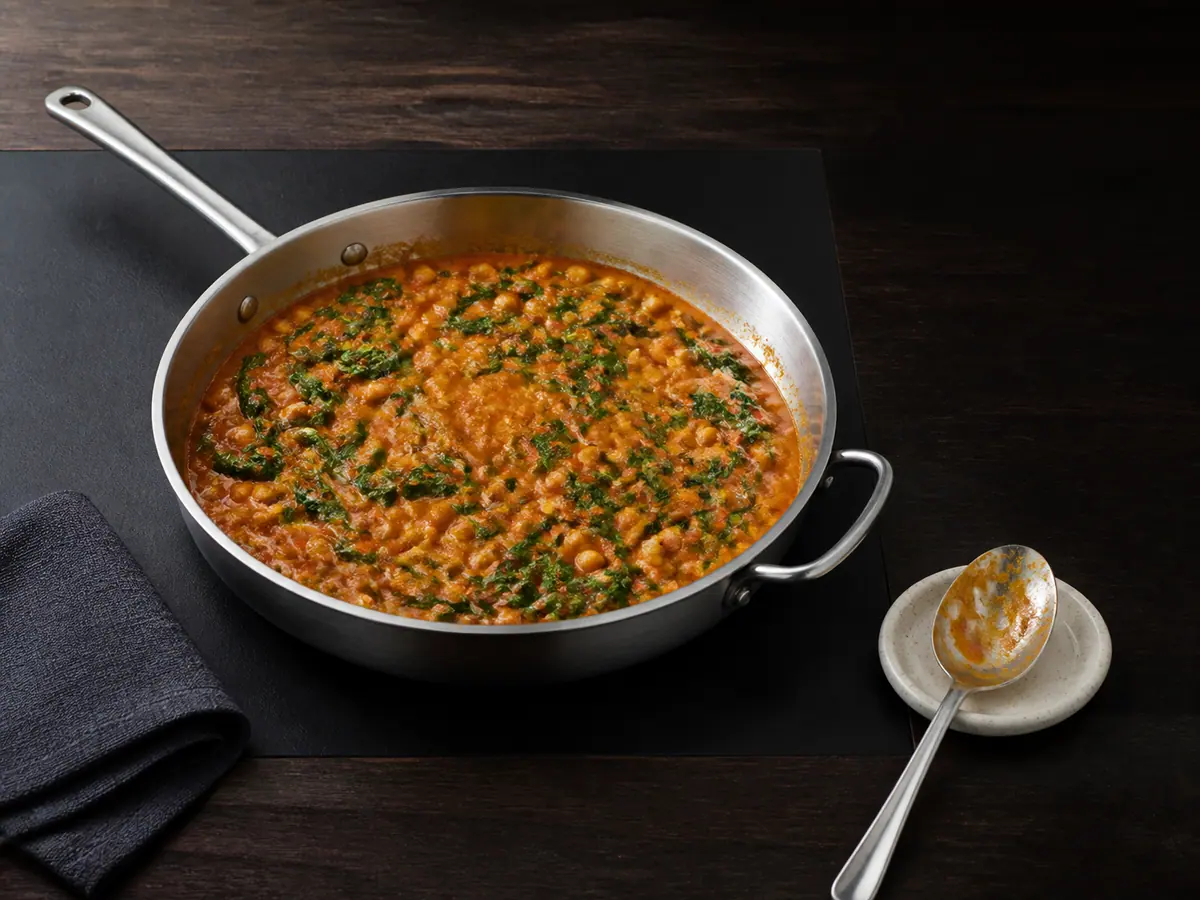
Add 120 g of baby spinach to the simmering curry in batches, stirring after each addition. Cook for about 2 minutes, until the leaves are wilted but still green. Stir in 30 ml of fresh lime juice, then taste the sauce and adjust the seasoning only if needed. The finished curry should be thick enough to sit beside the rice rather than run across the entire bowl.
02:00Build the balanced bowls
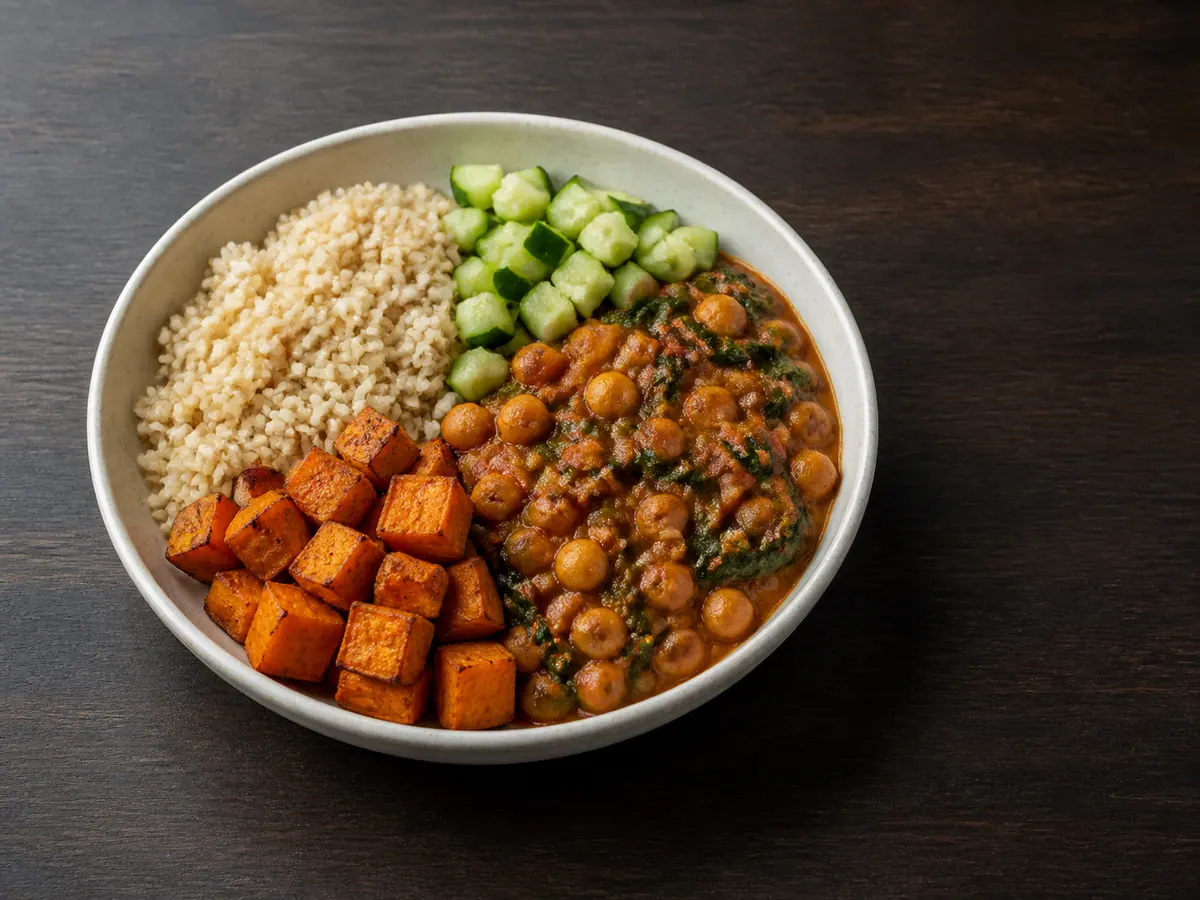
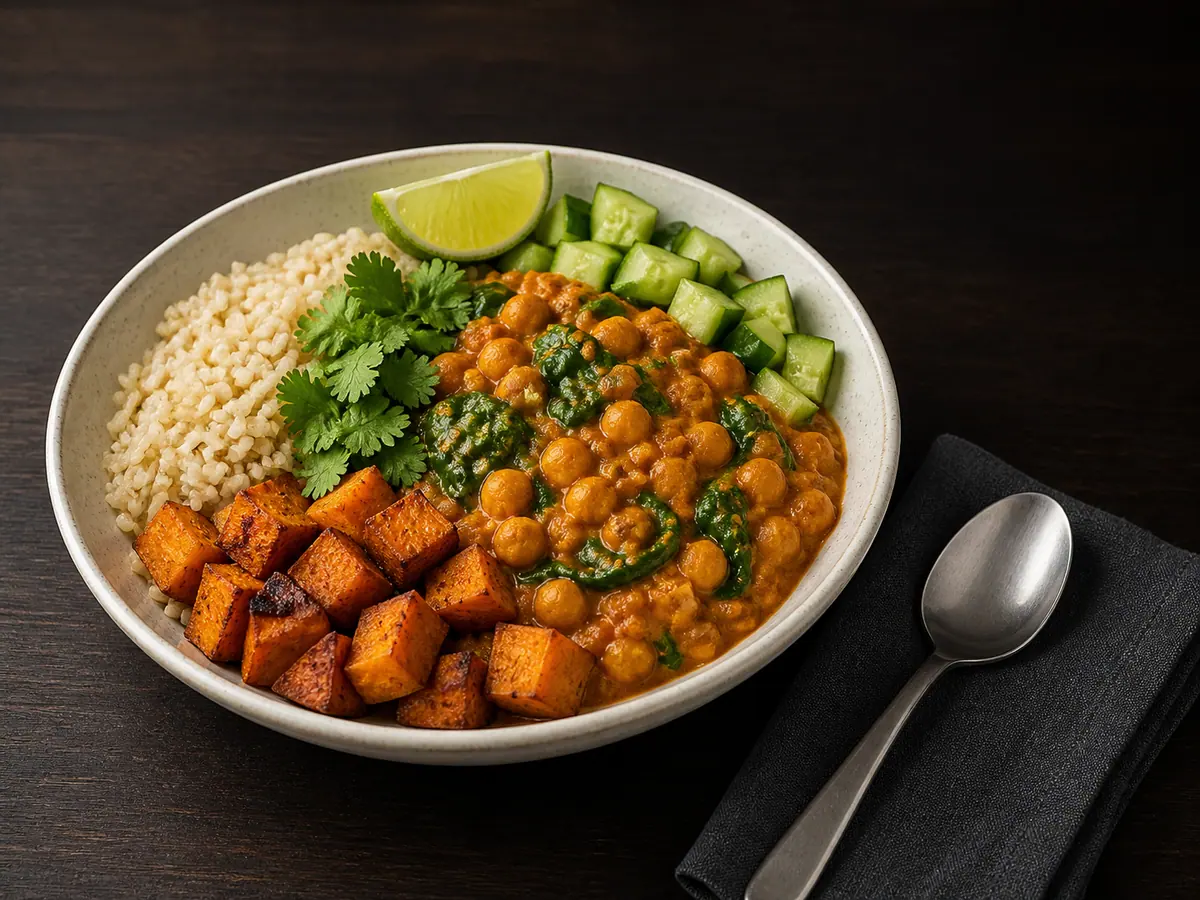
Cut 250 g of English cucumber into small dice and fluff the rice. Divide the rice, chickpea curry, roasted sweet potatoes, and cucumber among shallow serving bowls, arranging each component in a distinct loose arc so every serving has creamy, caramelized, tender, and crisp zones. Finish with fresh cilantro (optional) and lime wedges (optional). Serve immediately and stir the zones together at the table.


Smart Substitutions
- No brown rice? Use white basmati rice, quinoa, or cooked millet, following the package directions for the grain you choose.
- No coconut milk? Use an equal amount of unsweetened oat cooking cream and add a small drizzle of olive oil for body.
- No chickpeas? Use cooked brown lentils or cannellini beans and simmer only until the sauce thickens around them.
- No spinach? Use finely sliced kale and add it during the last 5 minutes of simmering so it has time to soften.
Tips and Variations
- Keep the sweet potato cubes close to 2 cm (3/4 in) so the centers soften before the spice coating gets too dark.
- Leave visible space between the cubes on the sheet pan; crowding traps moisture and prevents caramelized edges.
- Arrange the four components in loose arcs, then mix them at the table so the first spoonful still shows the bowl’s contrasting textures.
What Went Wrong?
- Sweet potatoes are soft but pale Spread the cubes farther apart and return the pan to the hottest part of the oven until several edges brown.
- Curry is too thin Simmer it uncovered for a few more minutes, stirring often, until it coats the back of a spoon.
- Curry tastes dull Add a little more lime juice first, then adjust the salt; acidity usually restores the contrast without more spice.
- Rice is firm but the pan is dry Add a small splash of boiling water, cover, and continue cooking over the lowest heat until the grains are tender.
Nutrition Estimate
- Fiber: 19 g per serving
- Sodium: 660 mg per serving
Nutrition disclaimer:This recipe is provided for general cooking information only. Nutrition values are estimates and may vary by ingredients, brands, preparation methods, and serving sizes. Check ingredient labels and follow appropriate food-safety practices. This content is not medical, dietary, allergy, or professional food-safety advice.
FAQ
Found an error or have a suggestion?
Help us improve this recipe. Send us your feedback and include the recipe name so we can take a look.