
Method
Mix a firm pastry dough
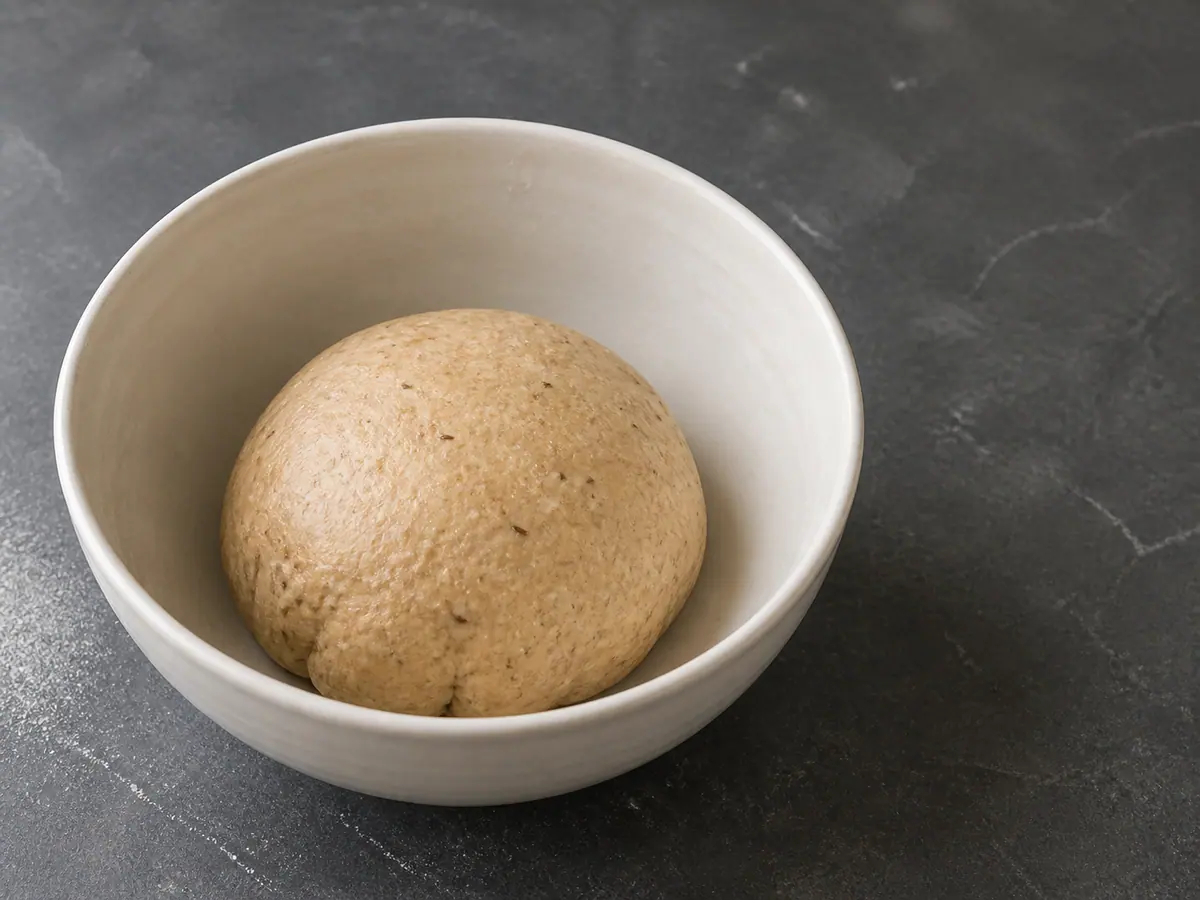
Combine 300 g of whole-wheat flour, 3 g of fine salt for dough, and 1 g of ajwain seeds in a large bowl. Rub 45 ml of neutral oil for dough through the flour with your fingertips until the mixture holds briefly when squeezed. Add 180 ml of water gradually and knead for 5 to 6 minutes into a firm, smooth dough; it should feel stiffer than bread dough and should not stick. Cover the bowl and let the dough rest for 20 minutes.
20:00Cook the potatoes and peas
Cut 300 g of yellow potatoes into 3 cm (1 1/4 in) chunks and place them in a saucepan. Cover with cool water, bring to a steady simmer, and cook for 8 minutes. Add 120 g of green peas and continue simmering for 2 to 4 minutes, until a knife enters the potato pieces easily but they are not waterlogged. Drain thoroughly, return everything to the warm pan for 1 minute to release steam, then crush into rough pieces rather than a smooth mash.
08:00Build a dry spinach filling
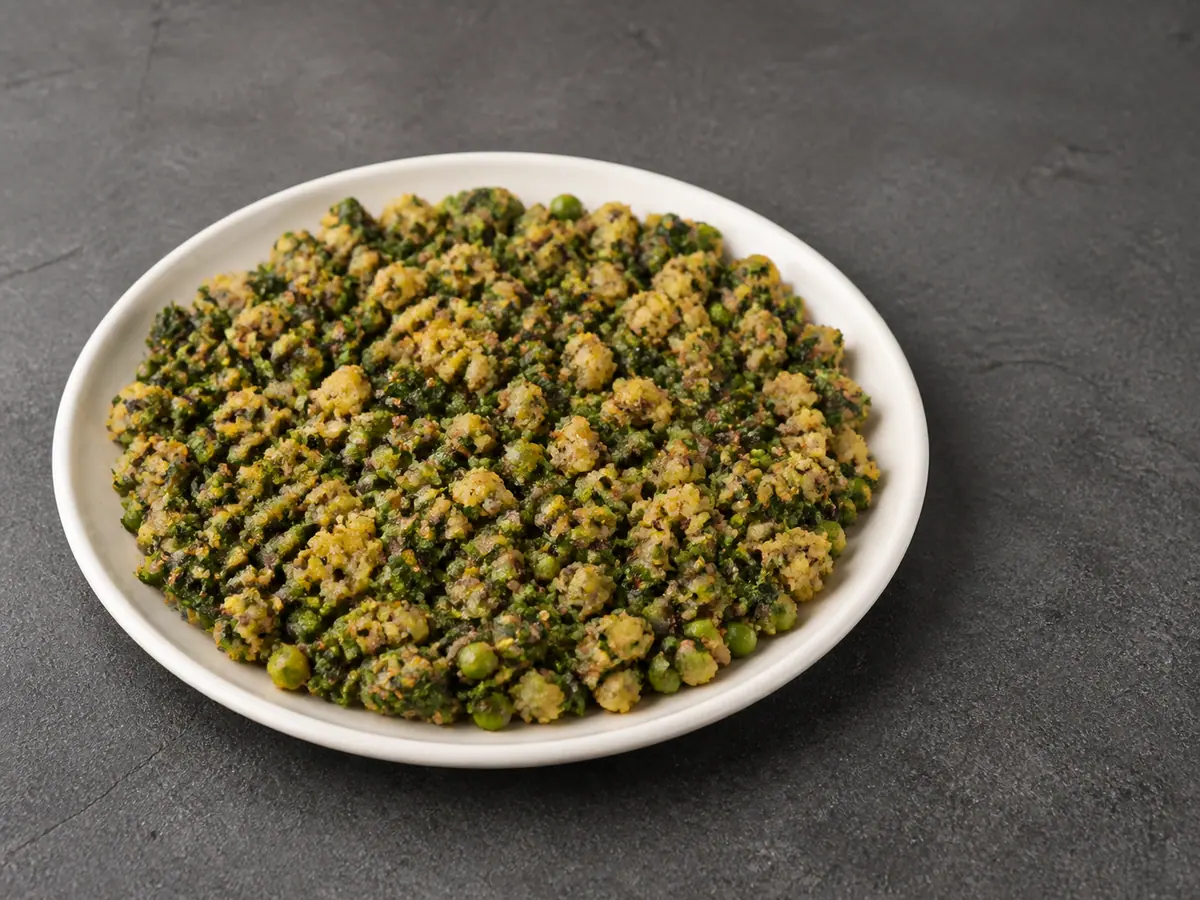
Warm 15 ml of neutral oil for filling in a wide skillet over medium heat. Add 2 g of cumin seeds and cook for 30 seconds until fragrant. Chop 150 g of yellow onion, add it to the skillet, and cook for 5 to 6 minutes until soft and lightly golden. Mince 15 g of fresh ginger, add it, and stir for 30 seconds. Chop 250 g of fresh spinach, add it in batches, and cook for 4 to 5 minutes until fully wilted and the pan looks dry. Stir in 3 g of ground coriander, 2 g of garam masala, 1 g of mild chili powder, 3 g of fine salt for filling, 300 g of yellow potatoes, and 120 g of green peas. Cook for 2 minutes, fold in 10 ml of lemon juice for filling, then spread the filling on a plate and let it cool for 15 minutes before shaping.
15:00Shape and seal the pockets
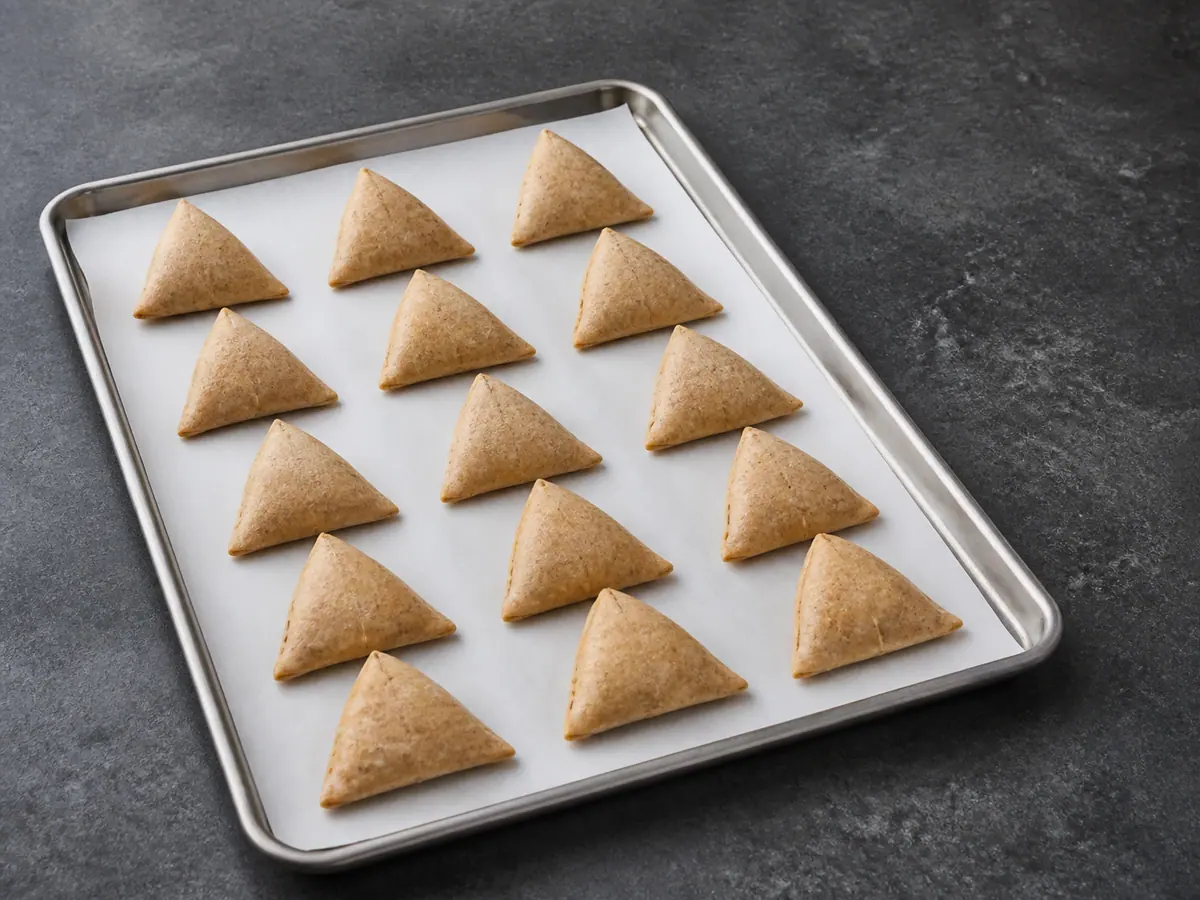
Heat the oven to 190°C (375°F) and line a large baking sheet with parchment. Stir 8 g of whole-wheat flour for sealing paste with 10 ml of water for sealing paste to make a thick sealing paste. Divide the rested dough into 8 equal balls. Roll each ball into a 15 cm (6 in) circle about 2 mm thick, then cut it in half. Brush paste along one straight edge, overlap the straight edges to form a cone, and press the seam firmly. Spoon filling into the cone until it is about two-thirds full, leaving a clean 1.5 cm (1/2 in) border. Brush the open edge with paste, pinch it closed, and set the pocket seam-side down. Repeat to make 16 pockets.
Bake until crisp and unbroken
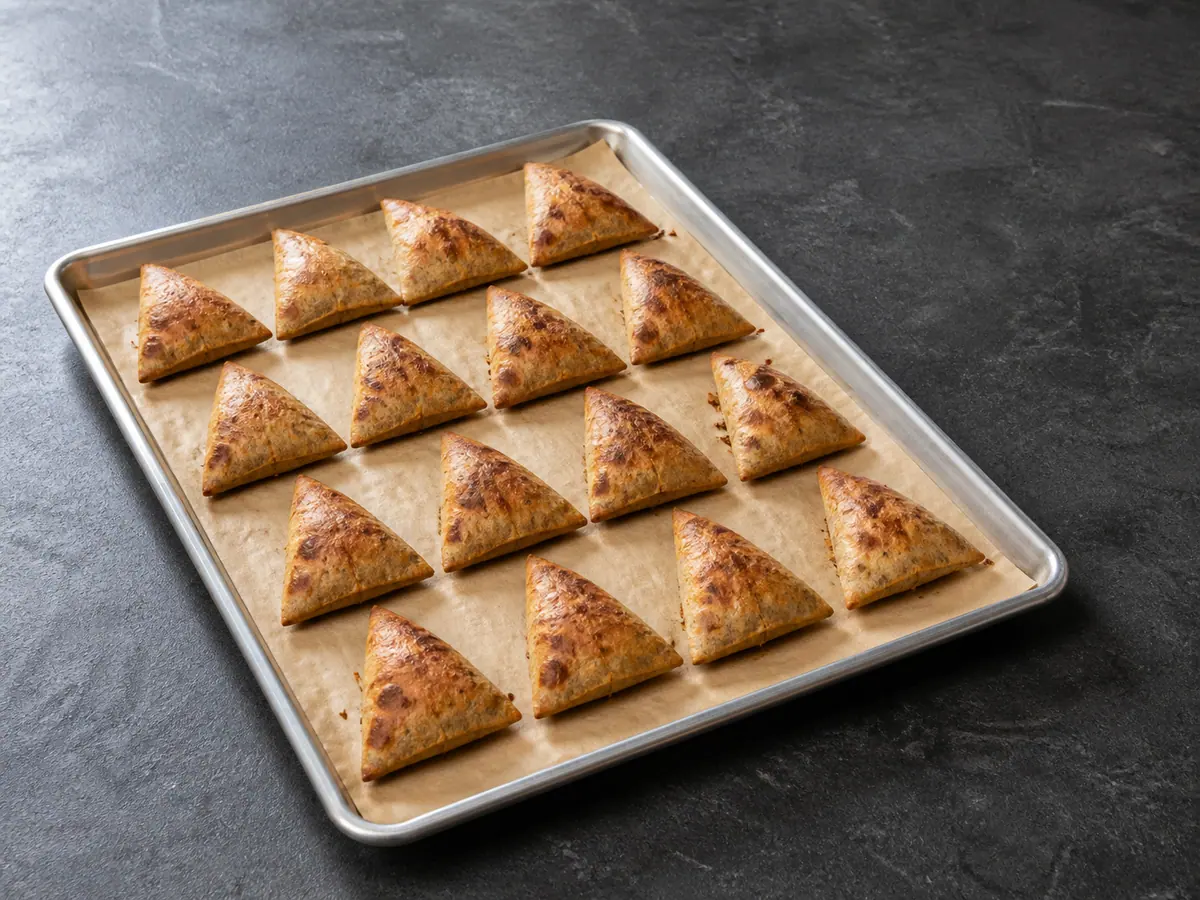
Arrange the pockets with at least 2.5 cm (1 in) between them and brush all exposed pastry lightly with 15 ml of neutral oil for brushing. Bake at 190°C (375°F) for 28 to 32 minutes, rotating the baking sheet after 16 minutes, until the seams are dry, the bases are firm, and the pastry is evenly golden with darker blistered spots. Begin checking at 28 minutes; continue only if the sides still look pale or soft. Let the pockets stand on the baking sheet for 5 minutes before serving so the shells set without cracking.
28:00Blend the bright dipping route
Blend 20 g of fresh cilantro, 10 g of fresh mint, 35 ml of water for chutney, and 5 ml of lemon juice for chutney until thick and spoonable. Add 1 g of fine salt for chutney, blend briefly, and taste for balance. Spoon the chutney into a small bowl and serve immediately with the hot baked pockets.


Smart Substitutions
- No whole-wheat flour? Use all-purpose flour in the same weight; add the water gradually because it may need slightly less.
- No ajwain? Use lightly crushed cumin seeds for a different but still savory pastry aroma.
- No fresh spinach? Use 150 g (5.3 oz) cooked chopped spinach, squeezed very dry before it goes into the skillet.
- Prefer a sharper filling? Replace the filling lemon juice with 1 teaspoon dry mango powder, adding it with the ground spices.
Tips and Variations
- Keep the dough firm; a soft dough bakes bread-like instead of crisp.
- Use a wide skillet for the spinach so moisture evaporates instead of pooling around the filling.
- Leave the top third of each cone empty so the sealing edge stays clean and strong.
What Went Wrong?
- The seams open in the oven Use less filling, wipe the sealing edge clean, apply a thin layer of paste, and press the seam firmly before baking.
- The pastry is hard rather than crisp Roll it to about 2 mm and stop adding water as soon as the dough comes together firmly.
- The bottoms stay pale Use a heavy metal baking sheet and leave space between pockets so hot air reaches every base.
- The filling tastes watery Return it to a wide skillet and cook over medium heat until no liquid appears when you drag a spoon across the pan.
Nutrition Estimate
- Fiber: 13 g per serving
- Sodium: 720 mg per serving
Nutrition disclaimer:This recipe is provided for general cooking information only. Nutrition values are estimates and may vary by ingredients, brands, preparation methods, and serving sizes. Check ingredient labels and follow appropriate food-safety practices. This content is not medical, dietary, allergy, or professional food-safety advice.
FAQ
Found an error or have a suggestion?
Help us improve this recipe. Send us your feedback and include the recipe name so we can take a look.