Method
Mix and knead the dough
Whisk 250 g of all-purpose flour, 5 g of baking powder, and 3 g of fine sea salt in a large bowl. Add 240 g of plain whole-milk Greek yogurt and stir until a shaggy dough forms. Turn it onto a work surface lightly dusted with all-purpose flour (optional, for dusting) and knead for about 2 minutes, just until smooth and cohesive; use only another light dusting of all-purpose flour (optional, for dusting) if it clings heavily.
02:00 kneadRest the dough and prepare the toppings
Cover the dough with the upturned bowl and let it rest for 10 minutes. While it rests, slice 85 g of cremini mushrooms thinly, cut 75 g of red bell pepper into narrow strips, slice 55 g of red onion thinly, roughly chop 30 g of baby spinach, and halve 45 g of pitted Kalamata olives. The rest relaxes the dough so the rounds roll out without springing back, and preparing the toppings now keeps the cooked bases moving straight to assembly.
10:00 restShape and cook the flatbread bases
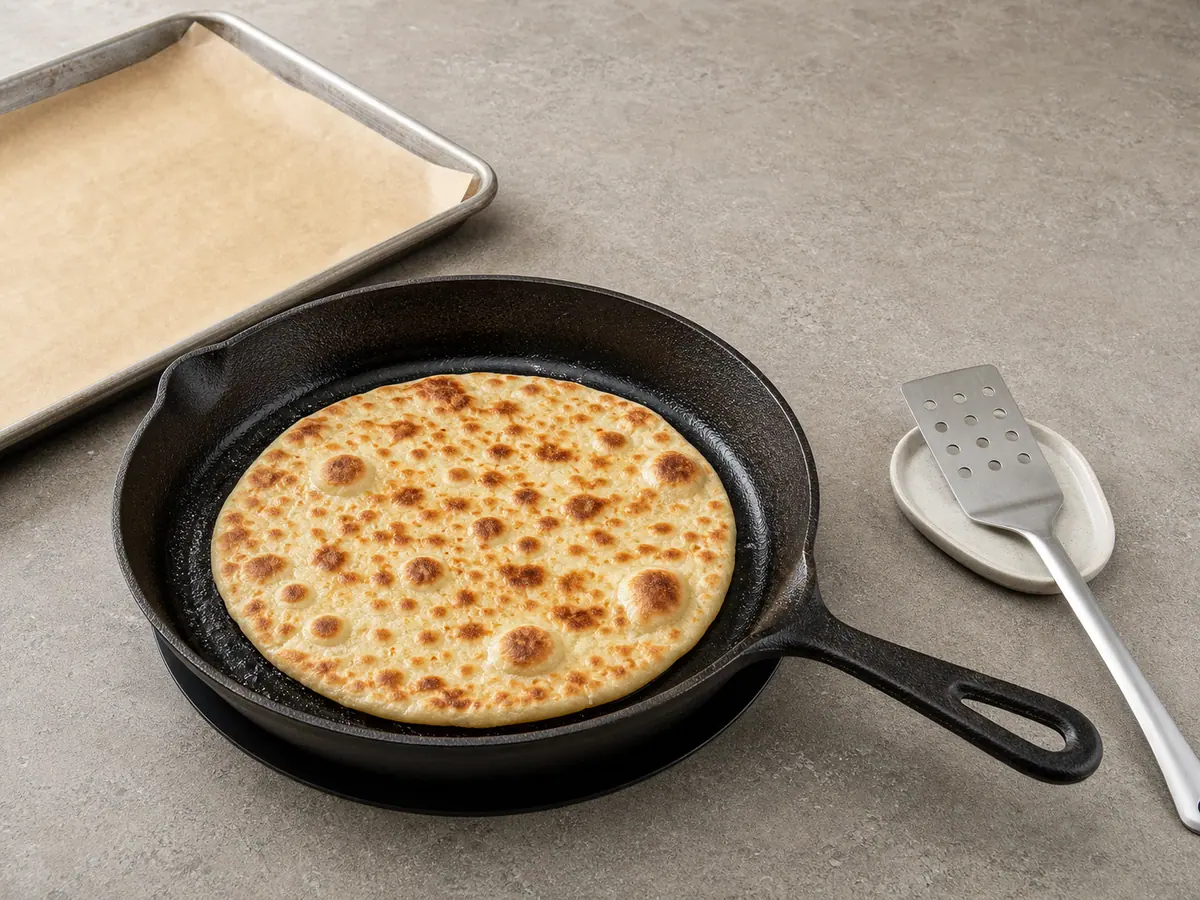
Heat the oven to 230°C (450°F) and line enough rimmed baking sheets with parchment to hold the rounds without overlap. Divide the rested dough into equal pieces, one piece per serving. Roll each piece into a rough 18 cm (7 in) circle about 3 mm (1/8 in) thick, using a light dusting of all-purpose flour (optional, for dusting) only if needed. Heat a heavy skillet over medium-high heat and brush it with 10 ml of olive oil, using only enough to leave a thin sheen. Cook one round at a time for 3 to 4 minutes total, restarting the timer for every round and flipping when bubbles rise and deep brown spots form underneath. Continue until the second side is spotted and no raw dough remains at the thickest edge; check each round at 3 minutes, then transfer it to a lined sheet. For 6 or 8 servings, use two skillets when practical or allow additional time for the skillet batches.
03:00 per-round checkCraft the topping routes
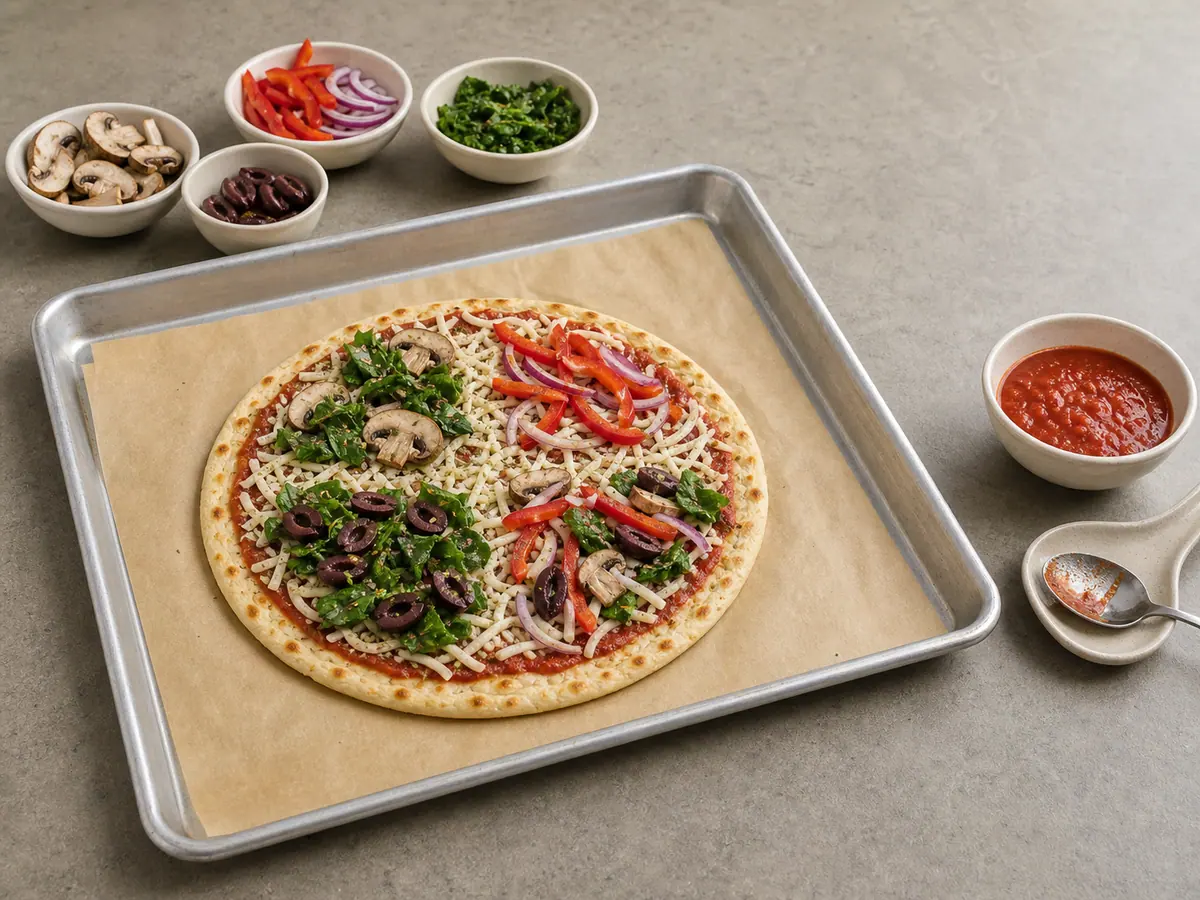
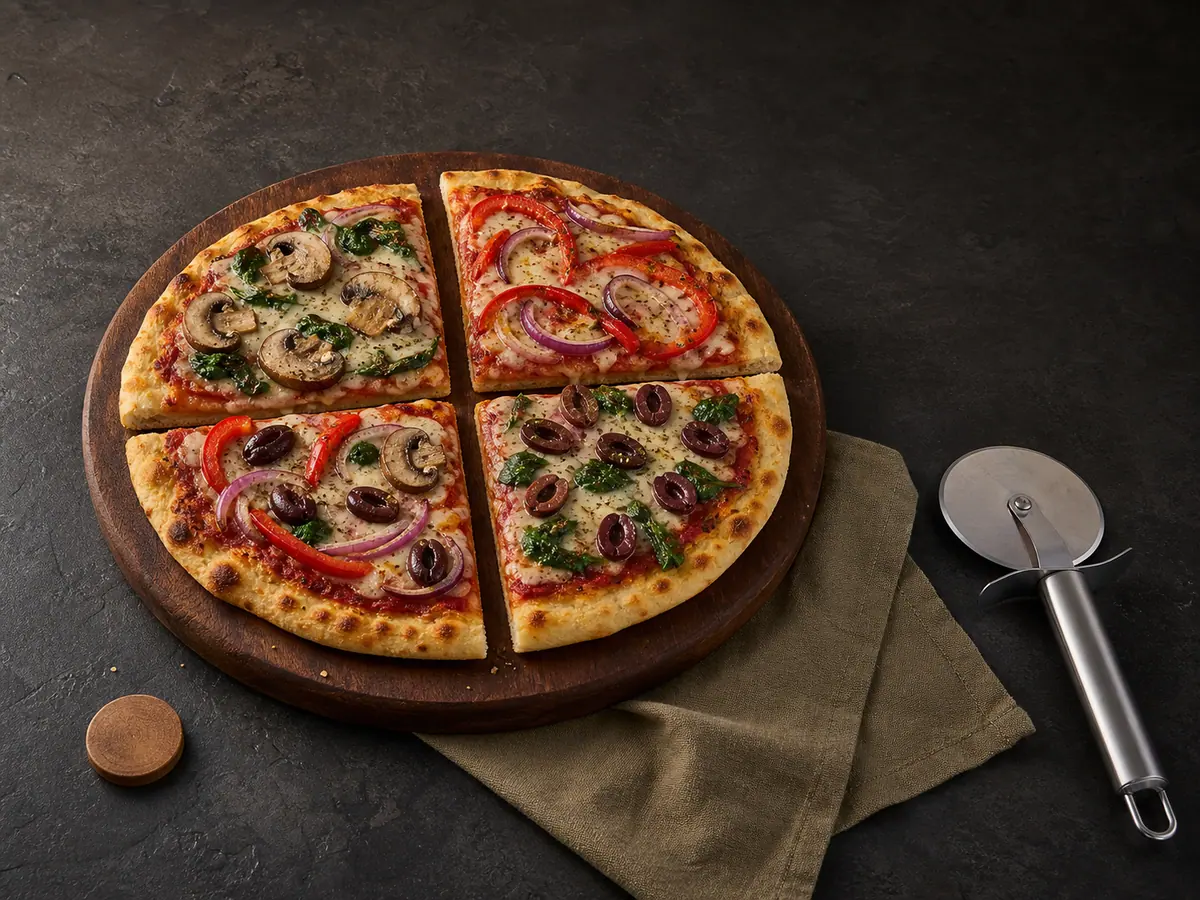
Spread 180 g of no-salt-added tomato sauce over the cooked bases, leaving a 1.5 cm (1/2 in) rim, then scatter 140 g of shredded low-moisture part-skim mozzarella in a light even layer. Set out the prepared 85 g of cremini mushrooms, 75 g of red bell pepper, 55 g of red onion, 30 g of baby spinach, and 45 g of pitted Kalamata olives and let each person choose a build. For a sampler, arrange different toppings in four loose zones on each base rather than piling them together. Finish with 1 g of dried oregano and 0.5 g of black pepper, keeping every topping in a single sparse layer so the crust can crisp.
Bake, cut, and serve
Bake the assembled flatbreads at 230°C (450°F) for 7 to 9 minutes, checking at 7 minutes, until the mozzarella is fully melted with a few golden spots, the vegetables have softened, and the rims are crisp. Bake in batches if the sheets cannot fit without crowding; when using two racks, rotate the sheets from top to bottom halfway through. Move the flatbreads to boards and let the cheese settle briefly. Cut each one into 4 wedges and serve immediately while the bases are crisp and the topping routes are easy to compare.
07:00 first check


Smart Substitutions
- No Greek yogurt? Use the same weight of thick plain yogurt. If the dough feels loose, work in a small dusting of flour during kneading rather than making it stiff.
- Change the cheese Use grated provolone, Monterey Jack, or another mild cheese that melts smoothly without releasing much liquid.
- Swap the vegetables Replace any topping with thin zucchini half-moons, drained roasted peppers, or cooked sweet corn, keeping the total layer sparse.
- Make a dairy-free route Use unsweetened thick plant yogurt in the dough and a plant-based melting cheese. Moisture varies, so adjust the dough with a light flour dusting only as needed.
Tips and Variations
- Prepare and portion the toppings during the dough rest so every skillet-cooked base can move straight to assembly.
- Roll each round to an even thickness; a thick center stays doughy while thin edges become brittle.
- Place topping bowls in the order they appear in the method so several people can assemble without crowding the work surface.
What Went Wrong?
- Dough is very sticky Knead on a lightly floured surface and add only enough flour to stop heavy sticking; too much makes the flatbreads dense.
- Flatbread will not roll out Cover it and rest for another 5 minutes so the gluten relaxes, then roll from the center outward.
- Center turns soggy Use less tomato sauce, keep vegetables in one thin layer, and make sure the skillet-cooked base is firm before topping.
- Crust scorches in the skillet Lower the heat slightly and wipe away loose flour between rounds before brushing the pan with more oil.
Nutrition Estimate
- Fiber: 4 g per serving
- Sodium: 770 mg per serving
Nutrition disclaimer:This recipe is provided for general cooking information only. Nutrition values are estimates and may vary by ingredients, brands, preparation methods, and serving sizes. Check ingredient labels and follow appropriate food-safety practices. This content is not medical, dietary, allergy, or professional food-safety advice.
FAQ
Found an error or have a suggestion?
Help us improve this recipe. Send us your feedback and include the recipe name so we can take a look.