Method
Mix the hot-water dough
Put 300 g of all-purpose flour and 3 g of fine salt in a heatproof bowl. Heat 175 ml of very hot water to about 82°C (180°F), then pour it in steadily while stirring with chopsticks or a sturdy spoon. Mix until no dry flour remains and the dough forms rough, moist clumps. Cover the bowl and let the dough stand for 15 minutes so it cools enough to handle and the flour hydrates evenly.
15:00Knead and relax the dough
Turn the dough onto a clean surface and knead for 3 to 4 minutes. If it sticks, rub a few drops of 10 ml of neutral oil for handling and rolling over the surface instead of adding flour. Stop when the surface looks mostly smooth and the dough bends without cracking. Return it to the bowl, cover, and rest for 20 minutes. During this rest, complete the next step so the fillings are ready when the dough relaxes.
20:00Build the scallion paste and dipping sauce
While the dough completes its 20-minute rest, whisk 16 g of all-purpose flour for filling, 30 ml of neutral oil for filling, and 10 ml of toasted sesame oil for filling into a fluid paste that spreads in a thin film; if it sits in a stiff mound, warm the bowl briefly over the hot-water kettle and stir again. Trim and thinly slice 120 g of scallions. Peel and finely grate 6 g of fresh ginger, then stir it with 30 ml of reduced-sodium soy sauce, 30 ml of rice vinegar, 5 ml of toasted sesame oil for sauce, and 8 g of granulated sugar until the sugar dissolves. Set the sauce in a small, stable bowl for serving.
Form the pinwheel chain
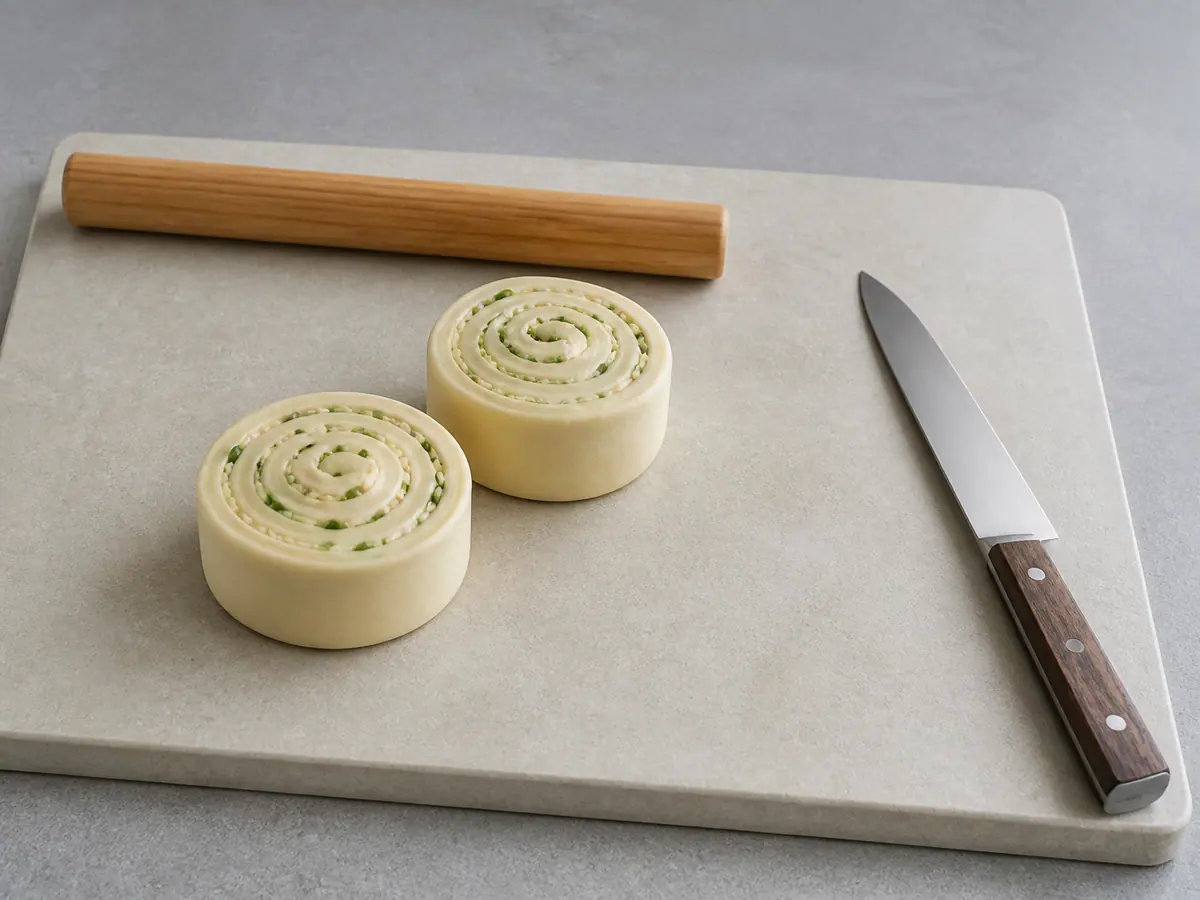
Divide the dough into one equal portion per serving and keep the unused pieces covered. Roll one portion at a time into a thin rectangle about 20 x 12 cm (8 x 4 3/4 in). Spread an equal share of the scallion paste to within 1 cm (3/8 in) of the edges, then scatter an equal share of 120 g of scallions over it. Roll from a short edge into a loose log about 12 cm (4 3/4 in) long, pinch the seam closed, and cut the log crosswise in half. Set both 6 cm (2 3/8 in) pieces cut side up, tuck each loose end underneath, and press gently into thick spiral discs about 5 cm (2 in) across and 4 cm (1 1/2 in) thick. Repeat with the remaining dough, cover all the spirals, and rest for 10 minutes.
10:00Roll the spirals thin
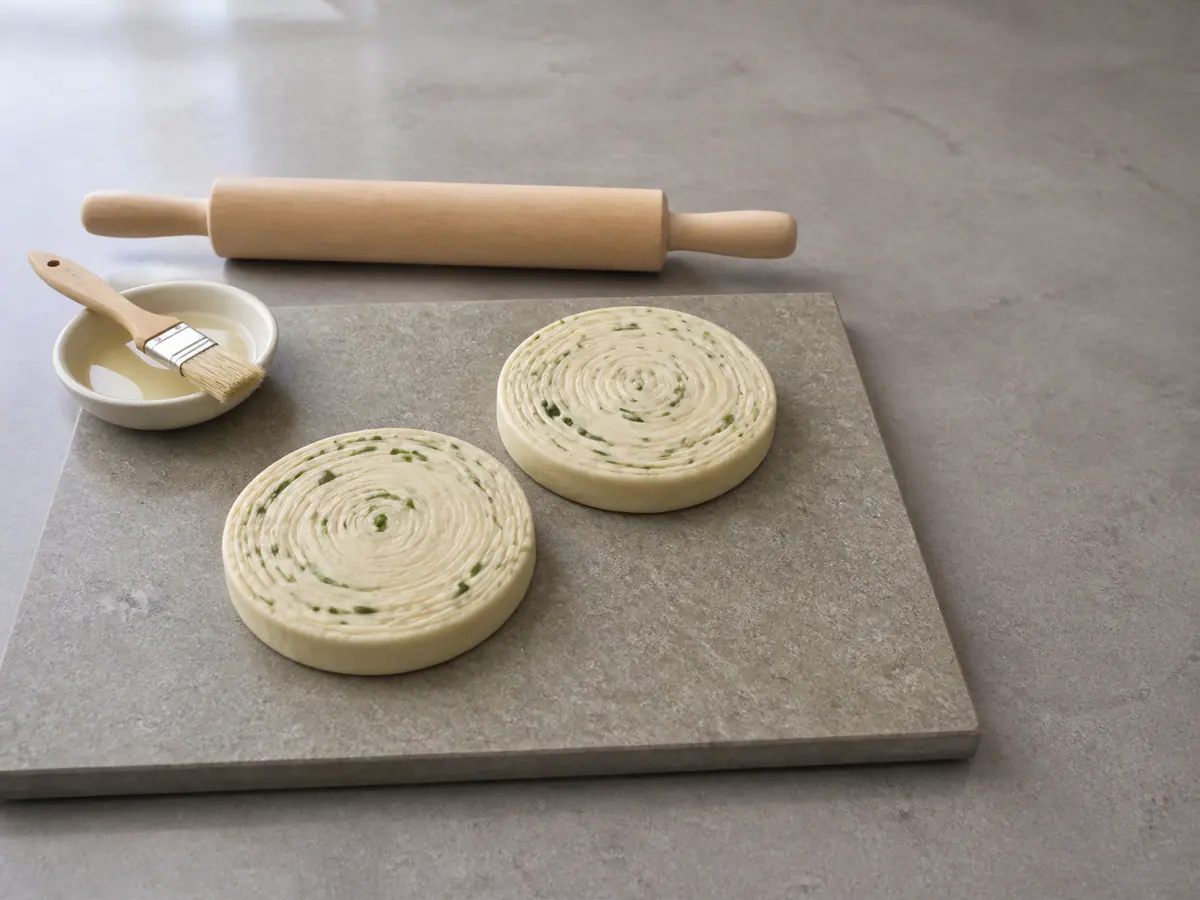
Lightly coat the work surface and rolling pin with 10 ml of neutral oil for handling and rolling. Roll each rested spiral from the center outward to a disc about 10 cm (4 in) across and 10 mm (3/8 in) thick, turning it between passes so the layers stay even. Use light pressure; if a disc springs back or a scallion piece threatens to tear through, cover it for 5 minutes before continuing. Reapply the oil only as needed and keep the rolled discs separated while the skillet heats.
Pan-fry until crisp and layered
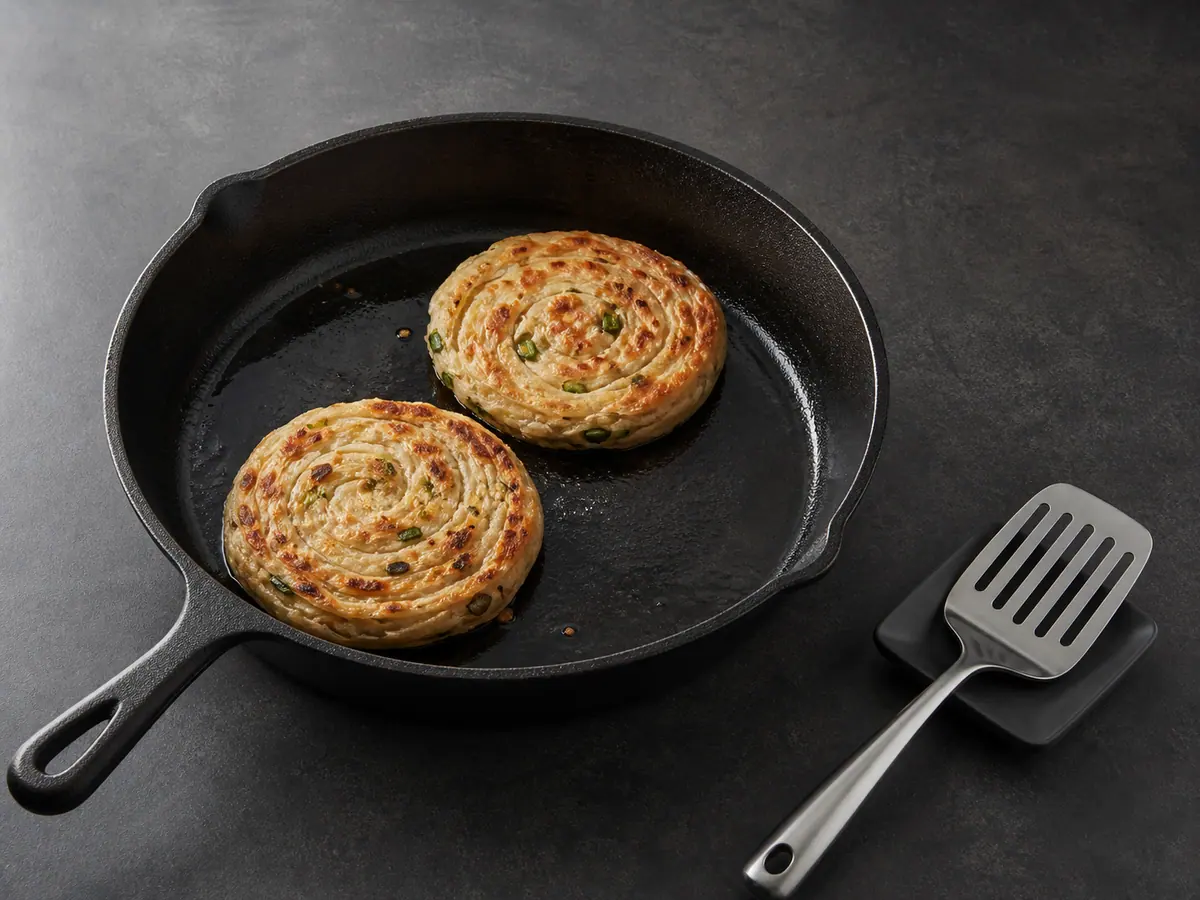
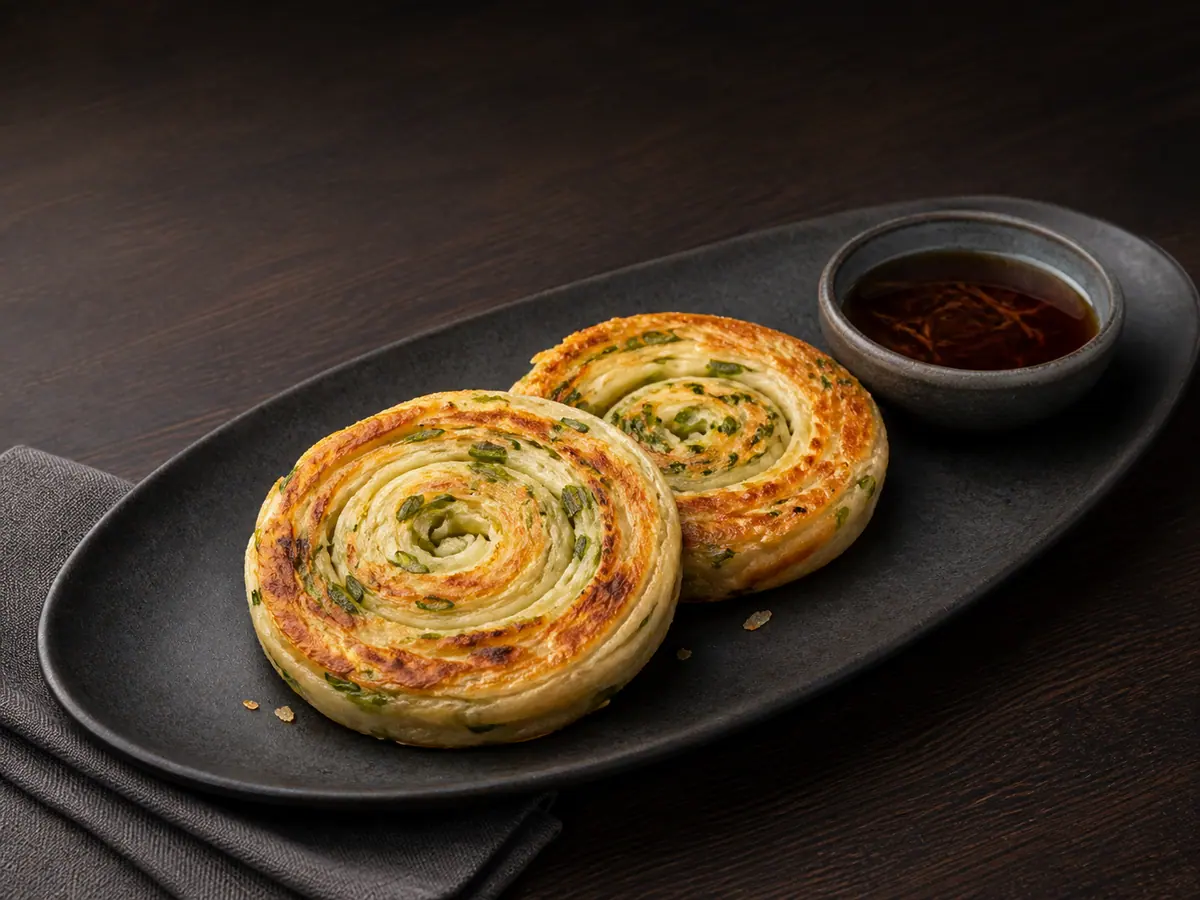
Measure 30 ml of neutral oil for frying beside the stove. Heat a wide skillet over medium heat and add just enough oil to leave a thin, even film. Cook the pinwheels in uncrowded batches for 2 to 3 minutes on the first side, covering the skillet for the first minute so steam can set the center. Uncover, flip, and cook for 2 to 3 minutes more, adding small amounts of the remaining oil between batches. The pinwheels are ready when both faces are golden with darker blisters, the edges look flaky, and the center has no pale, floury patches. Lower the heat if the exterior colors before the middle firms.
Set the chain and serve
Move each finished batch to a wire rack instead of stacking so the crisp faces stay dry. Let the pinwheels stand for 2 minutes, then arrange them in a linked line with each edge just touching the next and place the dipping bowl at the end. Serve while the layers are hot and tender inside, taking care with the first bite because steam can collect between the coils.
02:00


Smart Substitutions
- No rice vinegar? Replace it volume-for-volume with unseasoned apple cider vinegar or Chinese black vinegar.
- No reduced-sodium soy sauce? Replace it volume-for-volume with a 1:1 mixture of regular soy sauce and water, and omit the dough salt.
- No toasted sesame oil? Replace both listed sesame-oil amounts volume-for-volume with neutral oil; the pinwheels will taste cleaner and less nutty.
- Want a gentler allium bite? Replace up to half of the scallions, by volume, with fresh chives or very thinly sliced leek greens.
Tips and Variations
- Oil the work surface lightly instead of dusting it heavily with flour; extra dry flour can seal the layers together.
- Keep every dough portion covered until it is rolled so the edges stay supple and do not crack around the scallions.
- Use medium heat and uncrowded batches; strong heat browns the outer coil before steam has opened the center layers.
What Went Wrong?
- Dough keeps springing back Cover that portion and give it another 5 minutes to relax before rolling again.
- Scallion filling leaks out Use a thinner film of paste, leave the border clear, and roll the log loosely rather than squeezing it tight.
- Layers look dense Press and roll with less force; heavy pressure pushes the oil paste out and bonds the coils together.
- Outside browns before the center cooks Lower the heat, cover the skillet for the first minute, and give each side enough time to firm before chasing deeper color.
Nutrition Estimate
- Fiber: 3 g per serving
- Sodium: 570 mg per serving
Nutrition disclaimer:This recipe is provided for general cooking information only. Nutrition values are estimates and may vary by ingredients, brands, preparation methods, and serving sizes. Check ingredient labels and follow appropriate food-safety practices. This content is not medical, dietary, allergy, or professional food-safety advice.
FAQ
Found an error or have a suggestion?
Help us improve this recipe. Send us your feedback and include the recipe name so we can take a look.