Method
Roast the vegetable terrain
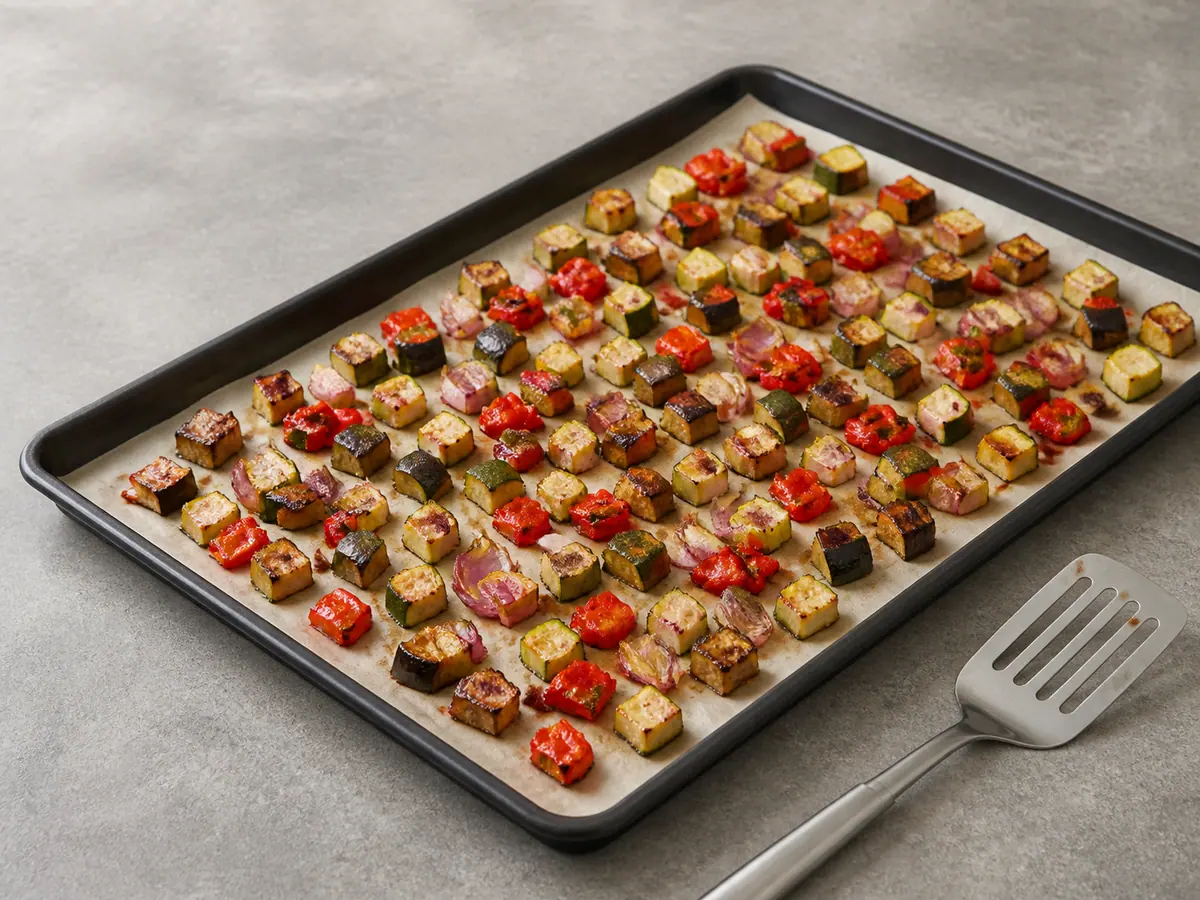
Heat the oven to 220°C (425°F) and line one or more baking sheets with parchment. Cut 160 g of zucchini, 160 g of eggplant, 140 g of red bell pepper, and 80 g of red onion into 1 cm (3/8 in) pieces, discarding the pepper stem and seeds and the onion skin. Toss everything with 15 ml of olive oil, 3 g of kosher salt, and 1 g of black pepper, then spread it in one uncrowded layer. Roast for 15 to 18 minutes, stirring once, until the edges are browned and the tray has no wet puddles; start checking at 15 minutes. Transfer the vegetables to a plate and reduce the oven to 200°C (400°F).
15:00Mix the tangy base
Mince 1 garlic clove. Finely grate the yellow zest from 1 lemon, avoiding the white pith. Mash 90 g of soft goat cheese with 45 g of plain Greek yogurt, 2 g of fresh thyme leaves, garlic, and lemon zest until evenly combined and spreadable.
Cut and score the pastry
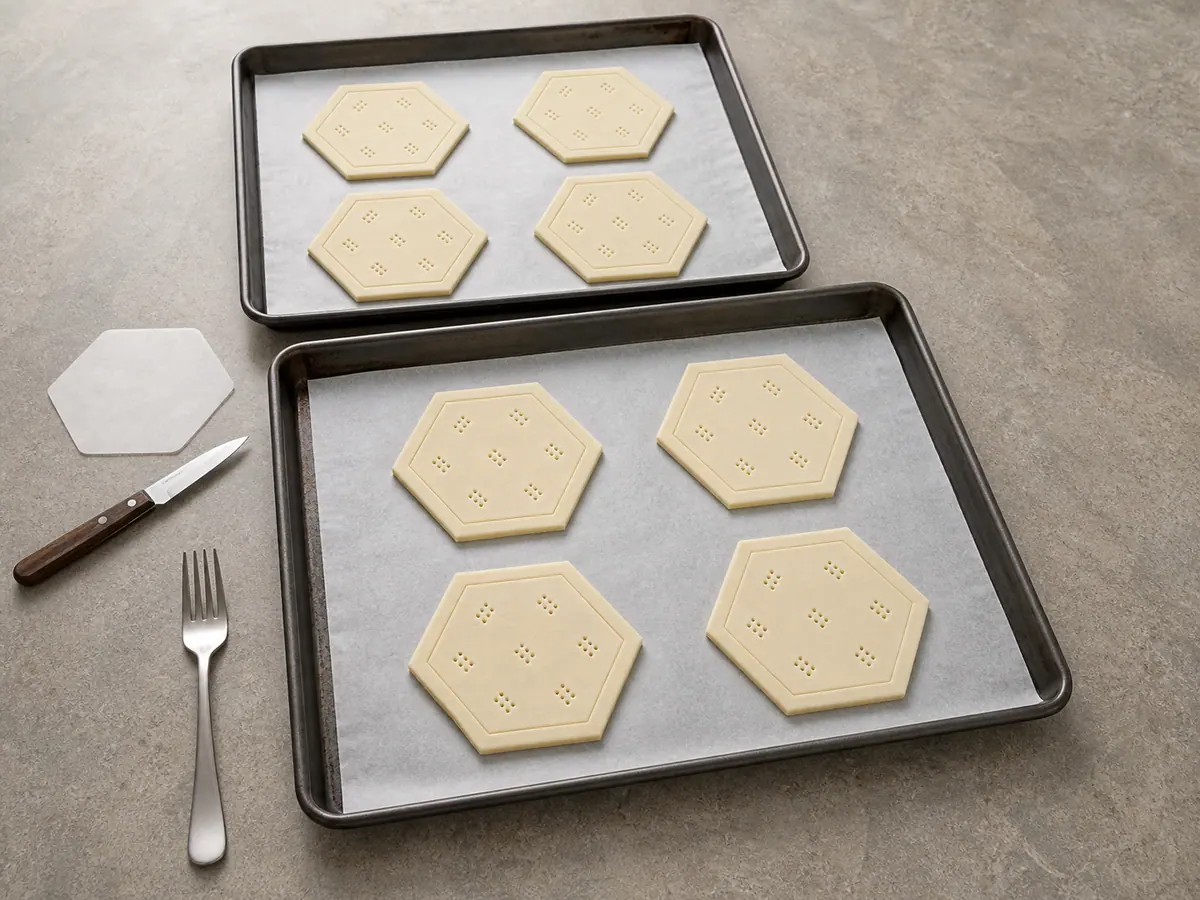
Unroll 250 g of ready-rolled puff pastry on its paper or a fresh sheet of parchment. Cut regular hexagons about 9 to 10 cm (3 1/2 to 4 in) corner to corner, aiming for about two tiles per serving; exact yield depends on the usable dimensions of the pastry sheet. Use a plain paper template; avoid rerolling scraps because compressed layers rise poorly. Transfer the hexagons to parchment-lined baking sheets with at least 3 cm (1 1/4 in) between pieces. Score an 8 mm (1/3 in) inner border without cutting through, then press a four-tined fork into each center six evenly spaced times, creating six small groups of tine marks while leaving the border untouched.
Build the tile route
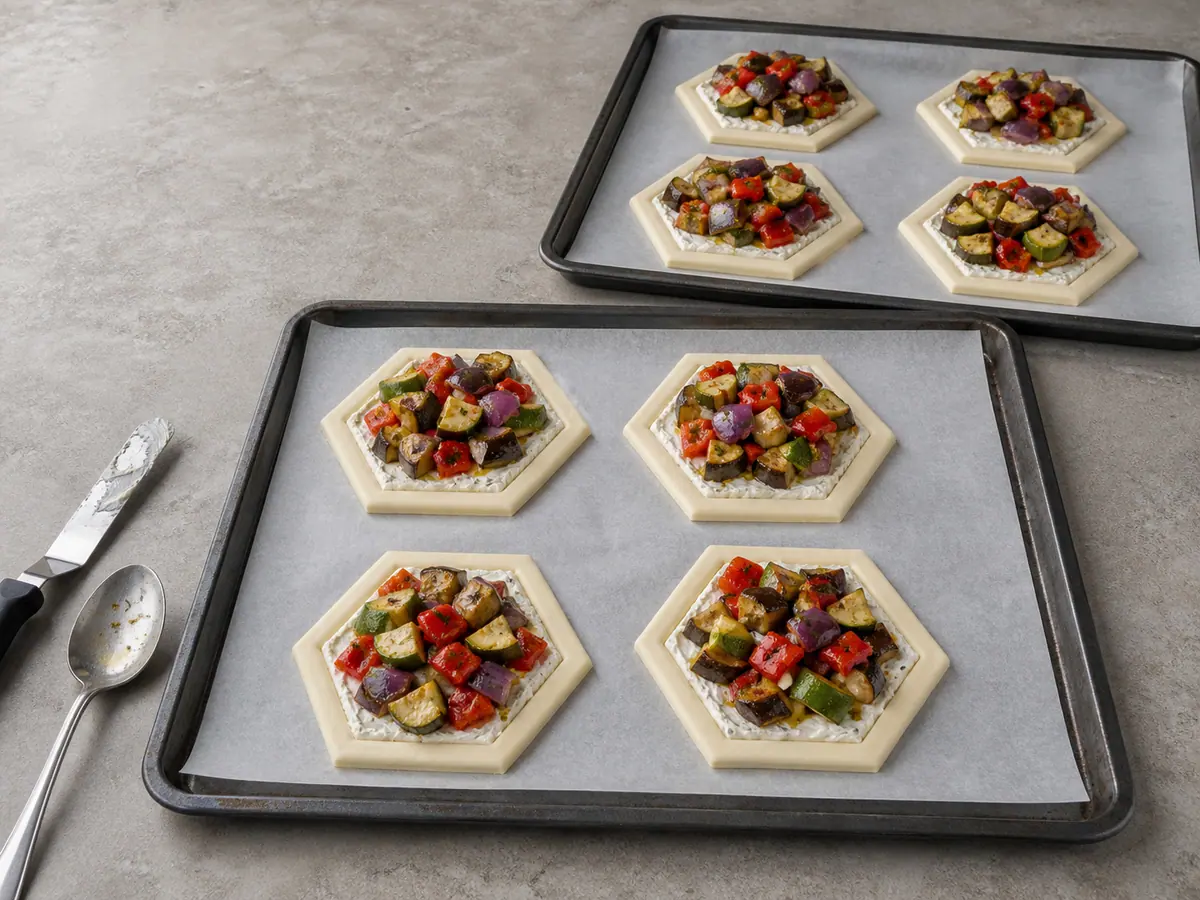
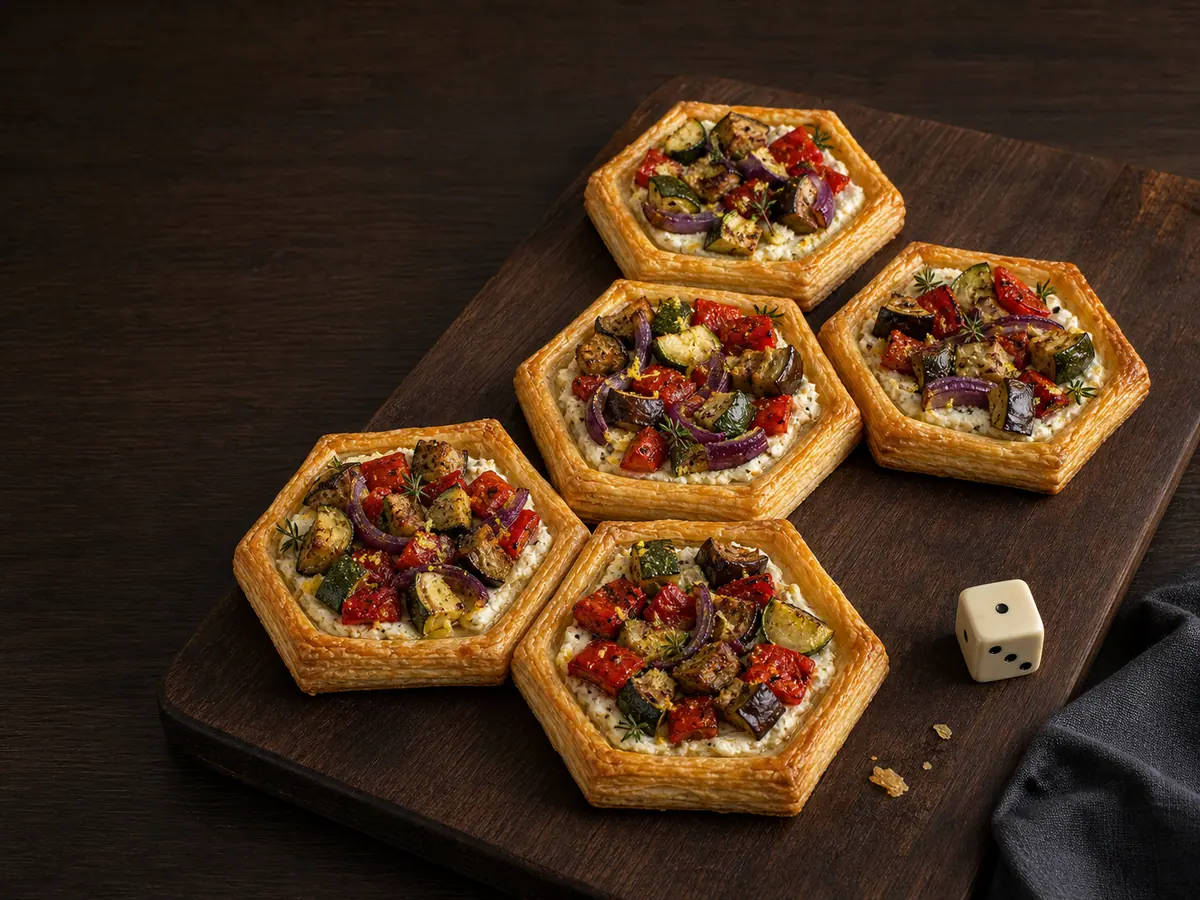
Divide the goat cheese mixture among the pastry centers and spread it inside the score lines in a thin, even layer. Divide the roasted vegetables over the cheese, keeping them in a compact single layer and leaving every border clean. Place more red pepper and red onion along a loose line across some tiles if you want the route to read clearly after baking, but keep all vegetables inside their own pastry.
Bake until deeply golden
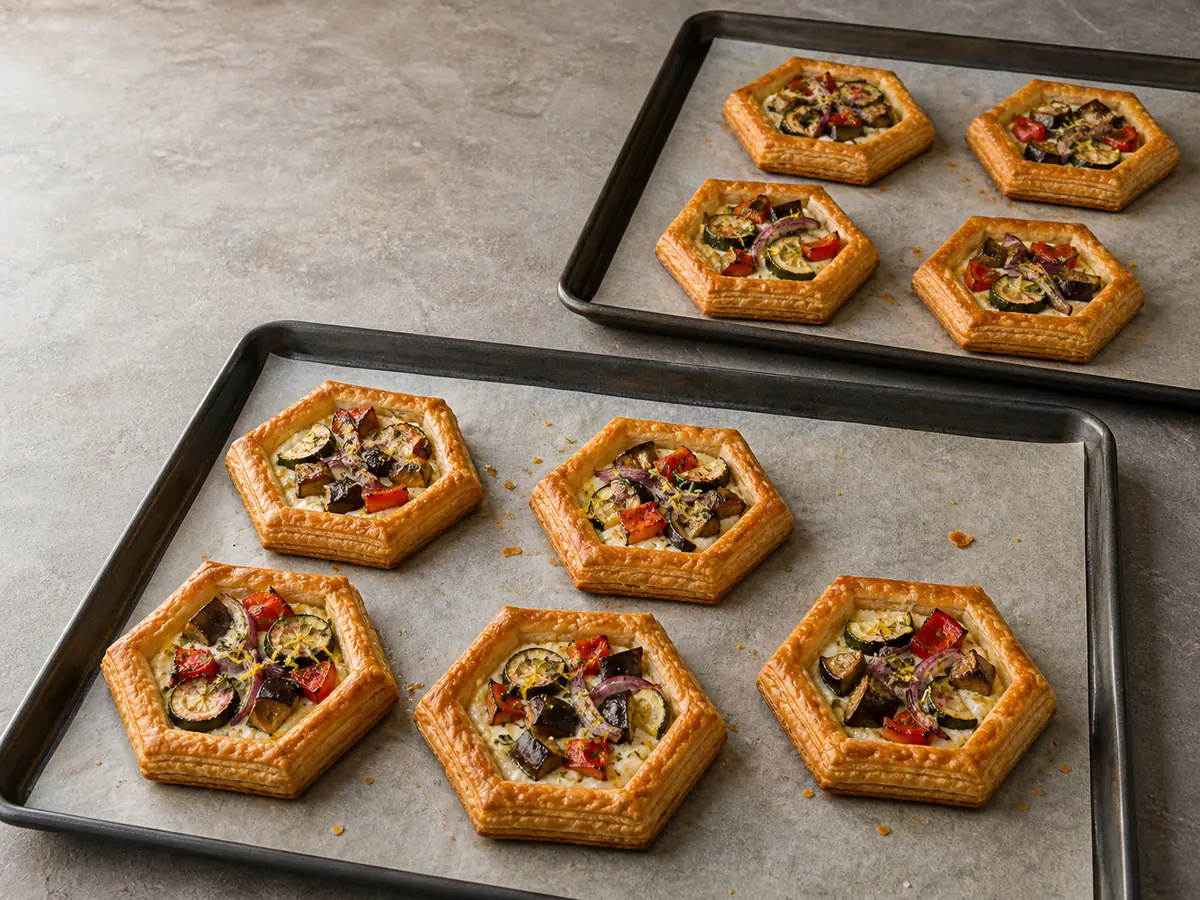
Bake at 200°C (400°F), with one sheet per rack and in batches if needed, for 18 to 22 minutes, swapping rack positions and rotating the sheets after 10 minutes, until the borders are deeply golden, the centers are crisp underneath, and no pale raw pastry remains near the score lines. Start checking at 18 minutes; if one sheet browns sooner, remove it while the other finishes.
18:00Set the route and serve
Let the tiles stand on the baking sheets for 5 minutes so the pastry firms. Arrange them edge-near-edge in a branching cluster and serve immediately while the borders are crisp and the centers lift cleanly.
05:00


Smart Substitutions
- No goat cheese? Use well-drained ricotta mixed with a little grated parmesan, and keep the layer thin.
- No eggplant? Use cremini mushrooms cut into 1 cm pieces and roast until their released moisture evaporates.
- No Greek yogurt? Use thick plain yogurt or crème fraîche.
- No hex template? Cut squares or diamonds while keeping the same border, spacing, and topping depth.
Tips and Variations
- Cut the paper hex template before starting so every tile fits the baking sheets.
- Keep cheese and vegetables below the scored border; stray topping can pin the pastry layers down.
- Use small, even vegetable pieces so the topping stays contained and each tile lifts cleanly.
What Went Wrong?
- Pastry centers are soggy The vegetables were too moist or the topping was too thick. Roast until the tray is dry, then use one compact layer.
- Borders stay flat The score may be too deep or topping may cover the edge. Score lightly and wipe every border clean before baking.
- Hexagons lose their shape The pastry became too warm or was handled repeatedly. Work quickly, cut cleanly, and avoid rerolling scraps.
- Vegetables scorch Cut them evenly, stir once, and start checking at 15 minutes; remove smaller browned pieces first if needed.
Nutrition Estimate
- Fiber: 4 g per serving
- Sodium: 565 mg per serving
Nutrition disclaimer:This recipe is provided for general cooking information only. Nutrition values are estimates and may vary by ingredients, brands, preparation methods, and serving sizes. Check ingredient labels and follow appropriate food-safety practices. This content is not medical, dietary, allergy, or professional food-safety advice.
FAQ
Found an error or have a suggestion?
Help us improve this recipe. Send us your feedback and include the recipe name so we can take a look.