Method
Soak and dry the chickpeas
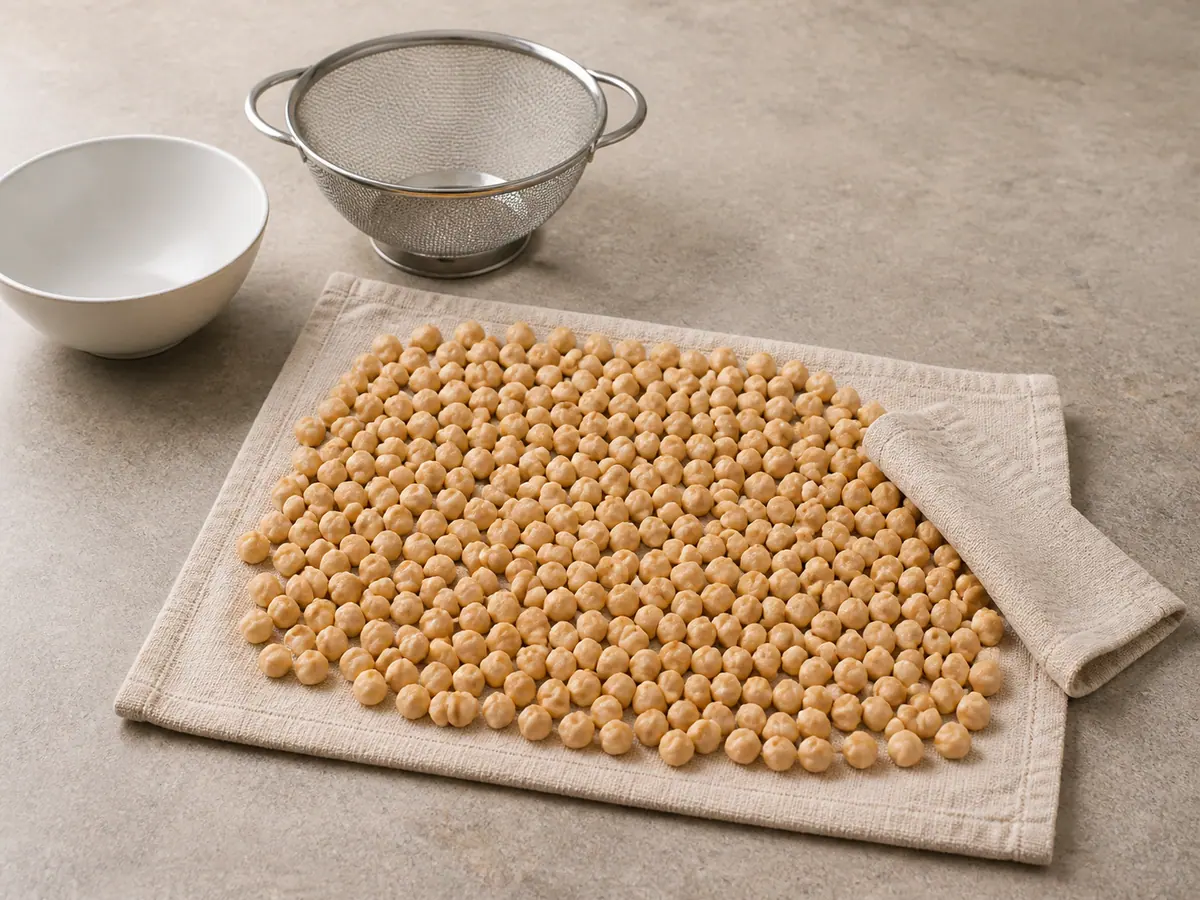
Rinse 250 g of dried chickpeas and remove any stones or damaged beans. Put them in a large bowl and cover with cool water by at least 8 cm (3 in), leaving room for the chickpeas to expand. Soak for 12 hours. Drain thoroughly, spread the chickpeas on a clean towel, and pat them very dry; surface water makes the falafel mixture loose and encourages splattering later.
12:00:00Prepare the sauce and topping routes
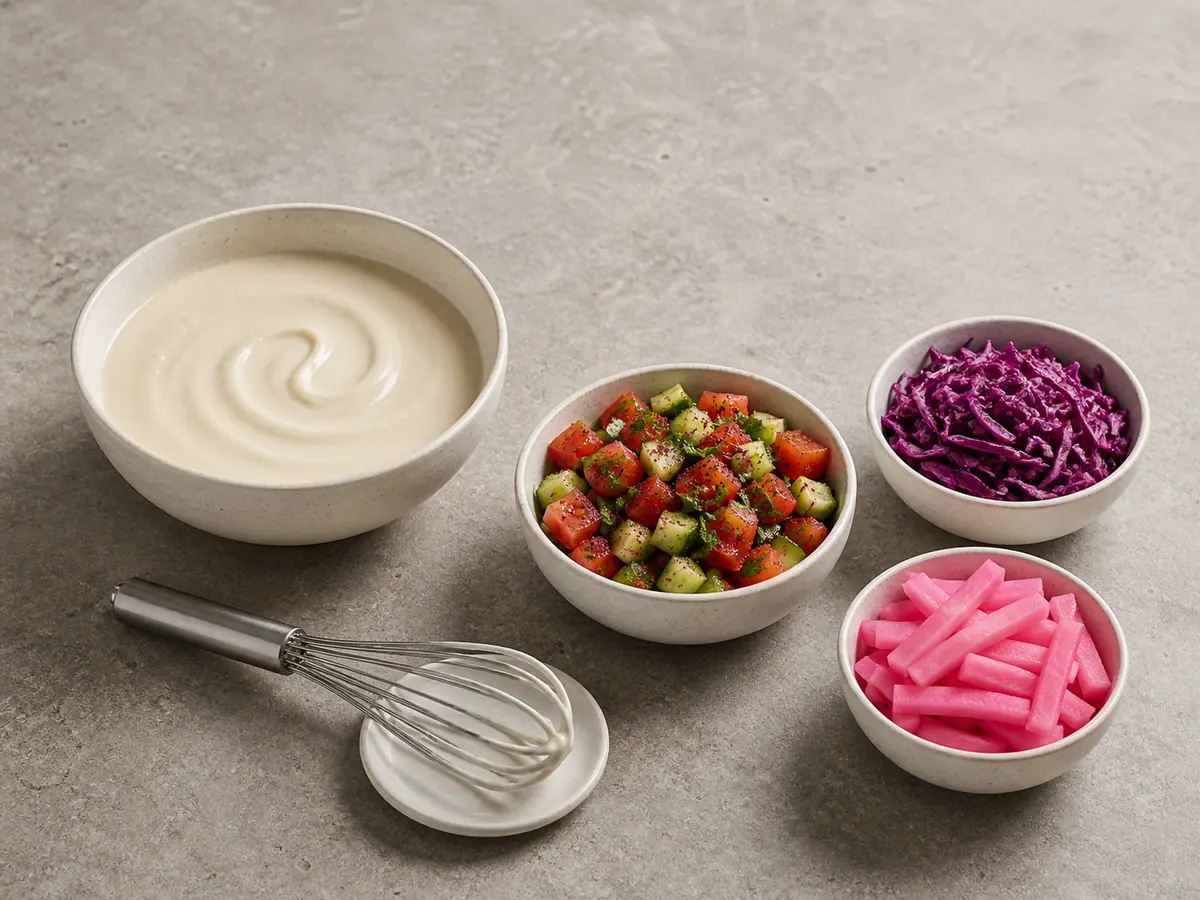
Mince 1 clove of garlic for tahini sauce. Whisk 60 g of tahini with 60 ml of lemon juice and the minced garlic in a medium bowl; the mixture will tighten at first. Add 90 ml of water for tahini sauce gradually and keep whisking until the sauce is smooth and pourable, then season with half of 1.5 g of kosher salt for sauce and salad. Dice 200 g of cucumber and 250 g of ripe tomatoes, shred 120 g of red cabbage, and tear 10 g of fresh mint. Toss the cucumber, tomatoes, mint, 3 g of ground sumac, and the remaining salt together. Keep that salad, the cabbage, and 60 g of pickled turnips as three separate topping routes for the final platter.
Grind and rest the falafel mixture
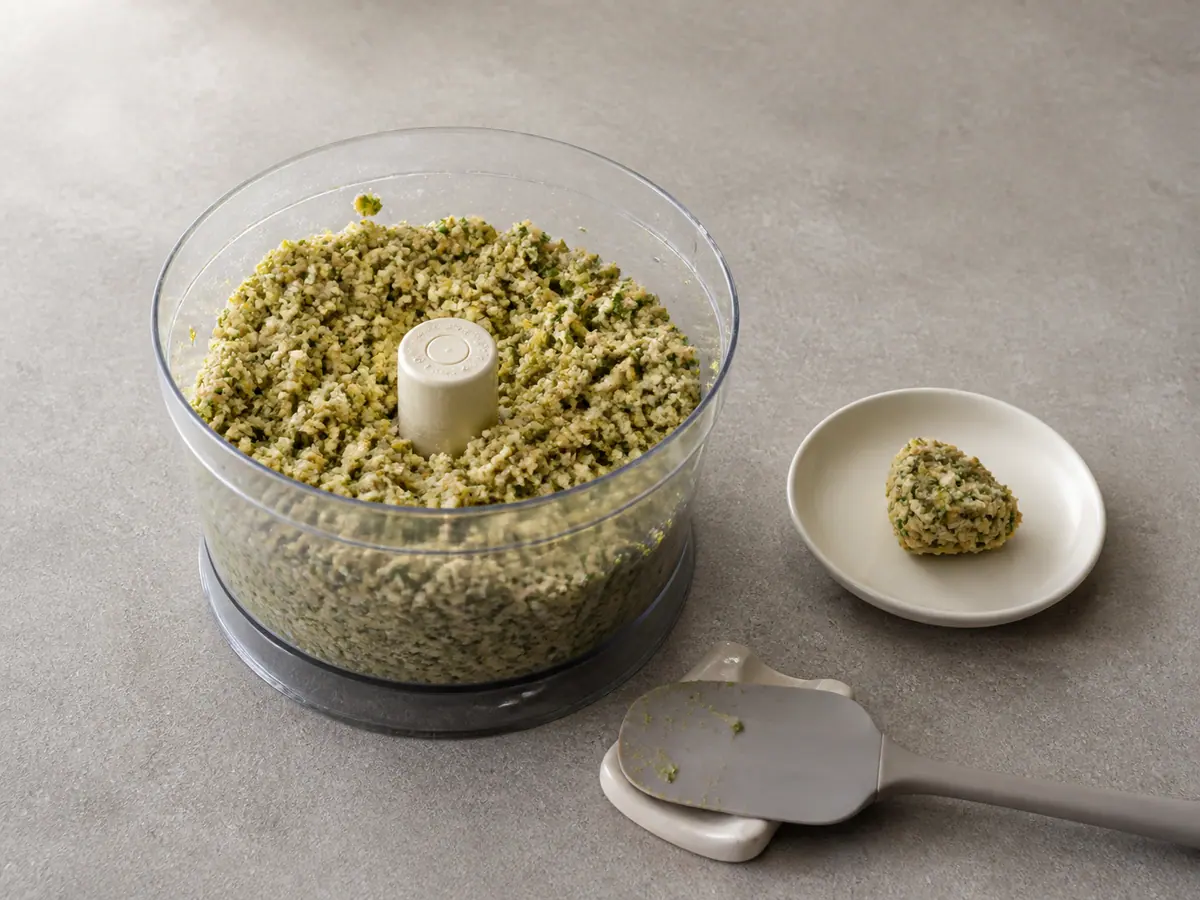
Cut 100 g of yellow onion into chunks. Add the onion, 4 cloves of garlic for falafel, 30 g of flat-leaf parsley for falafel, 16 g of fresh cilantro, 4 g of ground cumin, 4 g of ground coriander, 4 g of baking powder, 3 g of kosher salt for falafel, 1 g of black pepper, and 250 g of dried chickpeas to a food processor. Pulse in short bursts, scraping the bowl as needed, until the mixture resembles coarse damp crumbs and a squeezed portion holds together. Do not process it into a smooth paste. Transfer to a bowl and let it rest for 20 minutes.
20:00Shape the falafel patties
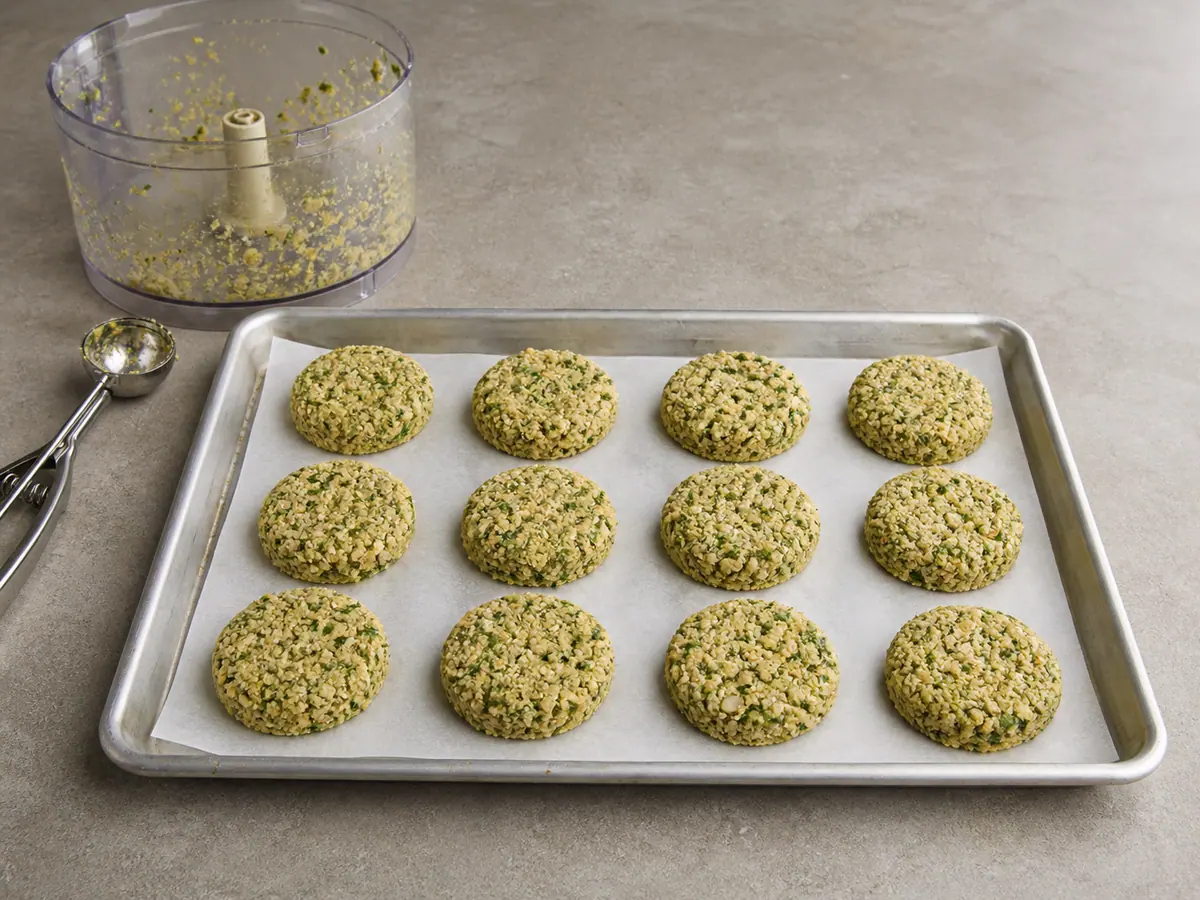
Fold 18 g of sesame seeds through the rested mixture. For the default four-serving batch, divide the mixture into 12 equal portions; when scaled, keep the same ratio of three patties per serving. Press each portion into a patty about 4 cm (1 1/2 in) wide and 1.5 cm (1/2 in) thick. Keep the edges slightly rough for extra crispness, but press firmly enough that each patty lifts without cracking. Arrange them on parchment with space between the pieces while the oil heats.
Pan-fry until crisp
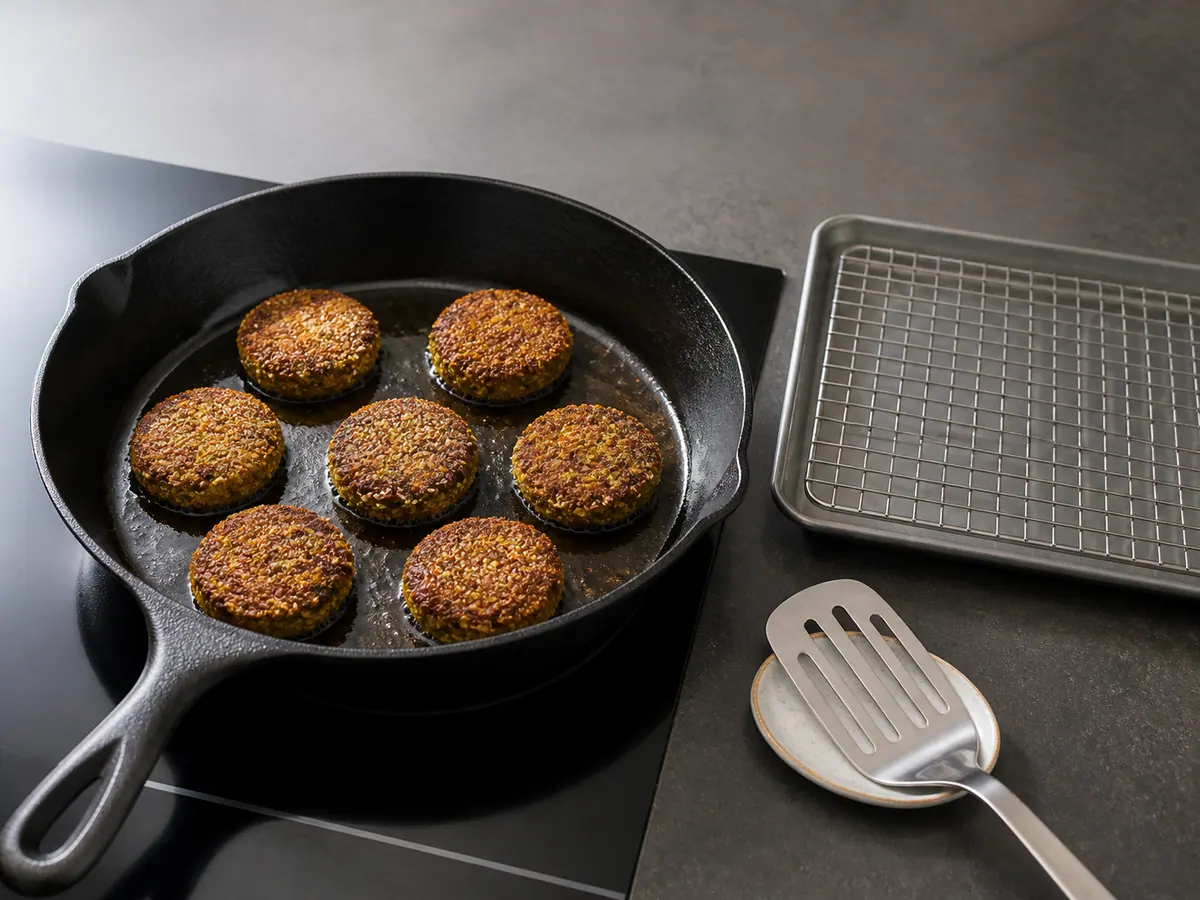
Pour 45 ml of canola oil into a heavy skillet sized so the oil forms a thin continuous film; for the default four-serving batch, use a 30 cm (12 in) skillet. Heat over medium until the oil shimmers and a small loose crumb of falafel mixture sizzles immediately on contact; do not let the oil smoke. Keep the skillet handle turned inward. Working in uncrowded batches, place the patties into the oil away from you and pan-fry for 6 to 8 minutes total, turning once when the underside is deep golden and releases easily. Use the scaled oil as needed to maintain the thin film between batches. Start checking at 6 minutes; the finished falafel should be evenly browned, firm at the edges, and hot through the center. Transfer to a wire rack and let excess oil drip away while the next batch cooks.
06:00Open the party slots
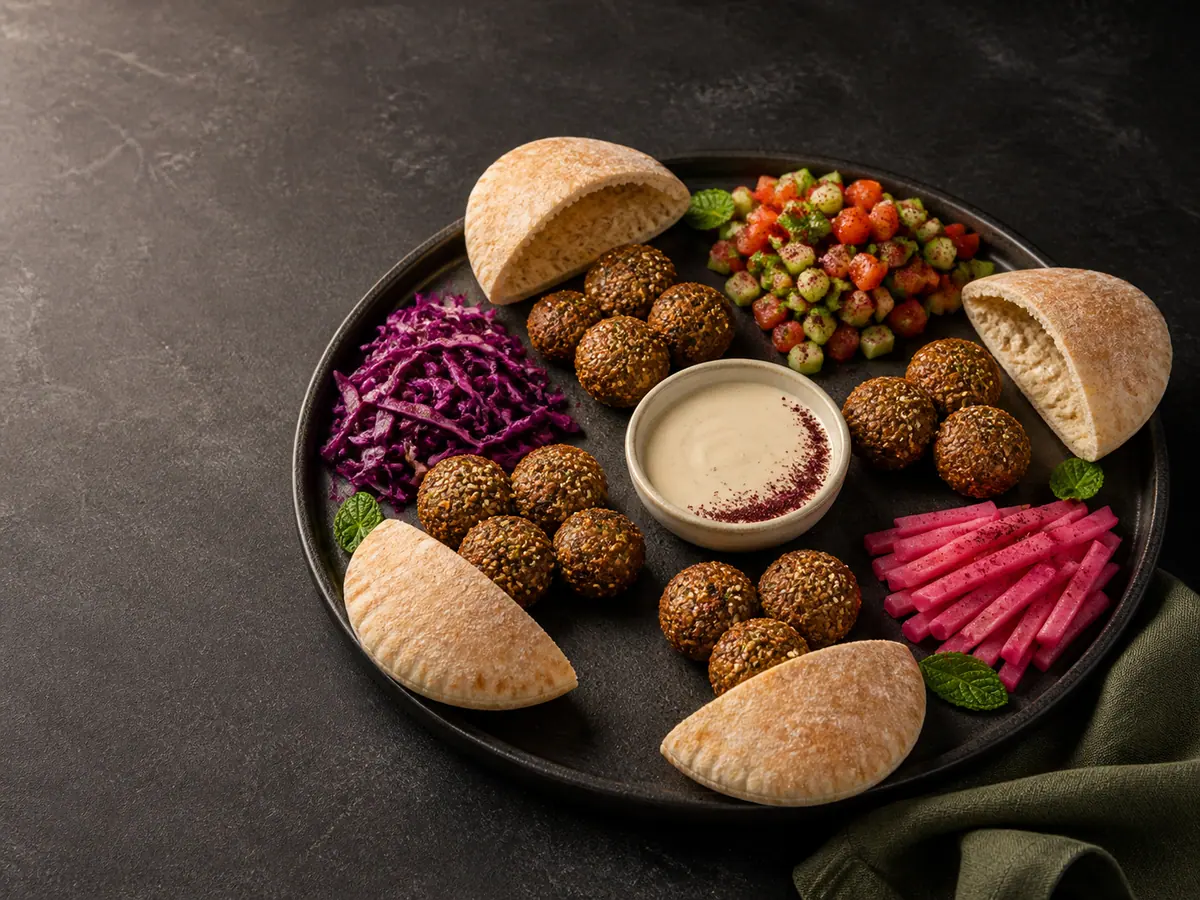
Gently open 4 large of pita breads along one edge to form pockets. Set the tahini sauce in the center of a large platter, arrange the falafel around it in three-patty portions, and place one pita per serving at distinct positions around the rim with the openings facing inward. Add the tomato-cucumber salad, cabbage, and pickled turnips in three separate arcs between the pitas. Serve immediately so each person can fill a pita with one falafel portion, choose two crunchy topping routes, and spoon in tahini without soaking the bread before it reaches the table.


Smart Substitutions
- No cilantro? Use an equal amount of extra flat-leaf parsley and add a little more fresh mint.
- No pickled turnips? Use thinly sliced radishes tossed with lemon juice and a small pinch of salt.
- No sumac? Add finely grated lemon zest to the tomato-cucumber salad for a similar bright edge.
- No pita pockets? Use soft flatbreads and fold them around the falafel and toppings.
Tips and Variations
- Dry the soaked chickpeas thoroughly; even a little clinging water can make the mixture fragile.
- Cook one test patty first. If it cracks, pulse the mixture a few more times and press the remaining patties more firmly.
- Keep the topping routes separate until serving so the pita pockets stay structured and each person can choose a clean build.
What Went Wrong?
- Falafel breaks in the skillet The mixture is too loose or too coarse. Pulse it a few more times, then press each patty firmly before frying another test piece.
- Falafel centers are dense The mixture was processed too smoothly or packed too tightly. Use short pulses and shape with enough pressure to hold, not enough to compress every air pocket.
- Tahini sauce seizes Keep whisking and add water a teaspoon at a time. Tahini often tightens before it becomes smooth and pourable.
- Pita pockets tear Ease the pocket open from one edge and avoid packing all the toppings into the bottom at once.
Nutrition Estimate
- Fiber: 18 g per serving
- Sodium: 1080 mg per serving
Nutrition disclaimer:This recipe is provided for general cooking information only. Nutrition values are estimates and may vary by ingredients, brands, preparation methods, and serving sizes. Check ingredient labels and follow appropriate food-safety practices. This content is not medical, dietary, allergy, or professional food-safety advice.
FAQ
Found an error or have a suggestion?
Help us improve this recipe. Send us your feedback and include the recipe name so we can take a look.