Method
Prepare the syrup and layer the baklava
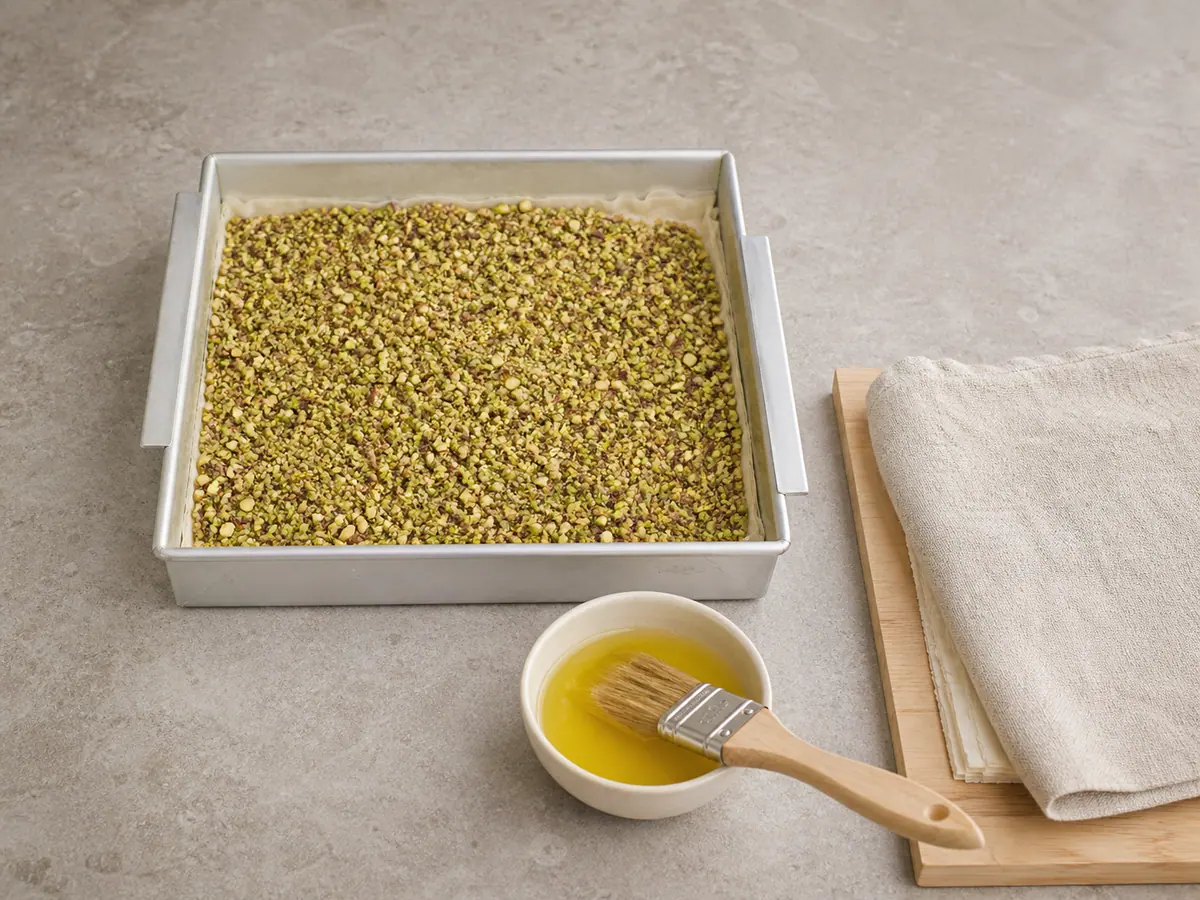
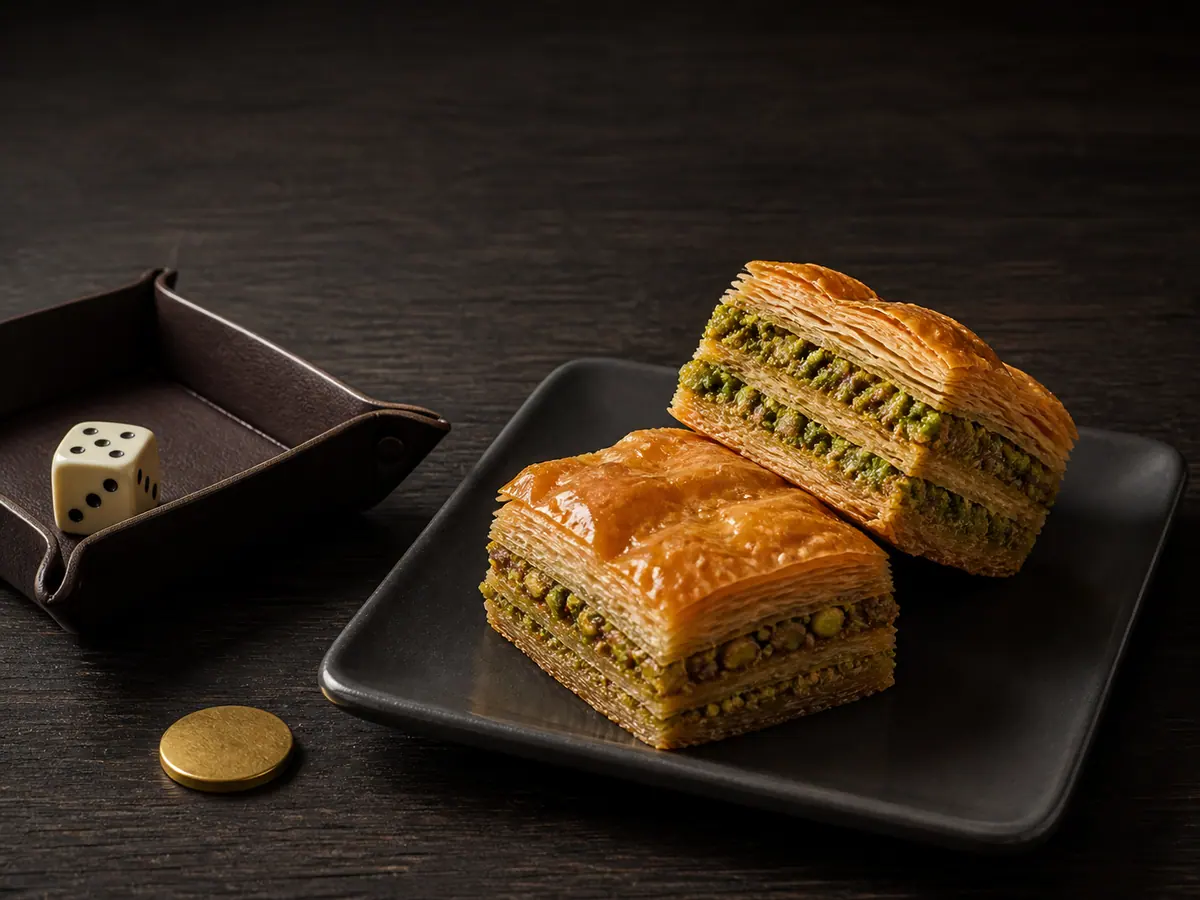
Combine 150 g of granulated sugar with 120 ml of water, 15 ml of fresh lemon juice, 2 g of lemon zest, and 0.75 g of fine sea salt in a small saucepan. Stir over medium heat until the sugar dissolves, bring to a gentle simmer, and cook for 10 minutes without vigorous boiling. Remove from the heat and let the syrup cool fully while you assemble the pastry. Heat the oven to 175°C (350°F). Melt 120 g of unsalted butter over low heat; skim off the foam and pour the clear butter into a bowl, leaving the milky sediment behind. Pulse 160 g of shelled unsalted pistachios with 1 g of ground cinnamon to a coarse, loose crumb, stopping before the nuts become pasty. For 8 servings, grease a 20 x 20 cm (8 x 8 in) metal baking pan. For scaled batches, use approximately 10 x 10 cm (4 x 4 in) for 2 servings, 10 x 20 cm (4 x 8 in) for 4, or 15 x 20 cm (6 x 8 in) for 6 so the phyllo and filling stay at a similar depth. Unroll 180 g of phyllo dough and keep the stack under a barely damp towel. Divide the sheets into three roughly equal groups. Lay the first group in the pan, trimming or folding the sheets neatly to fit and brushing each sheet lightly with clear butter; spread half the pistachio mixture evenly to the edges. Repeat with the second group and the remaining filling, then finish with the last group, brushing the top sheet evenly.
10:00Score the grid and bake
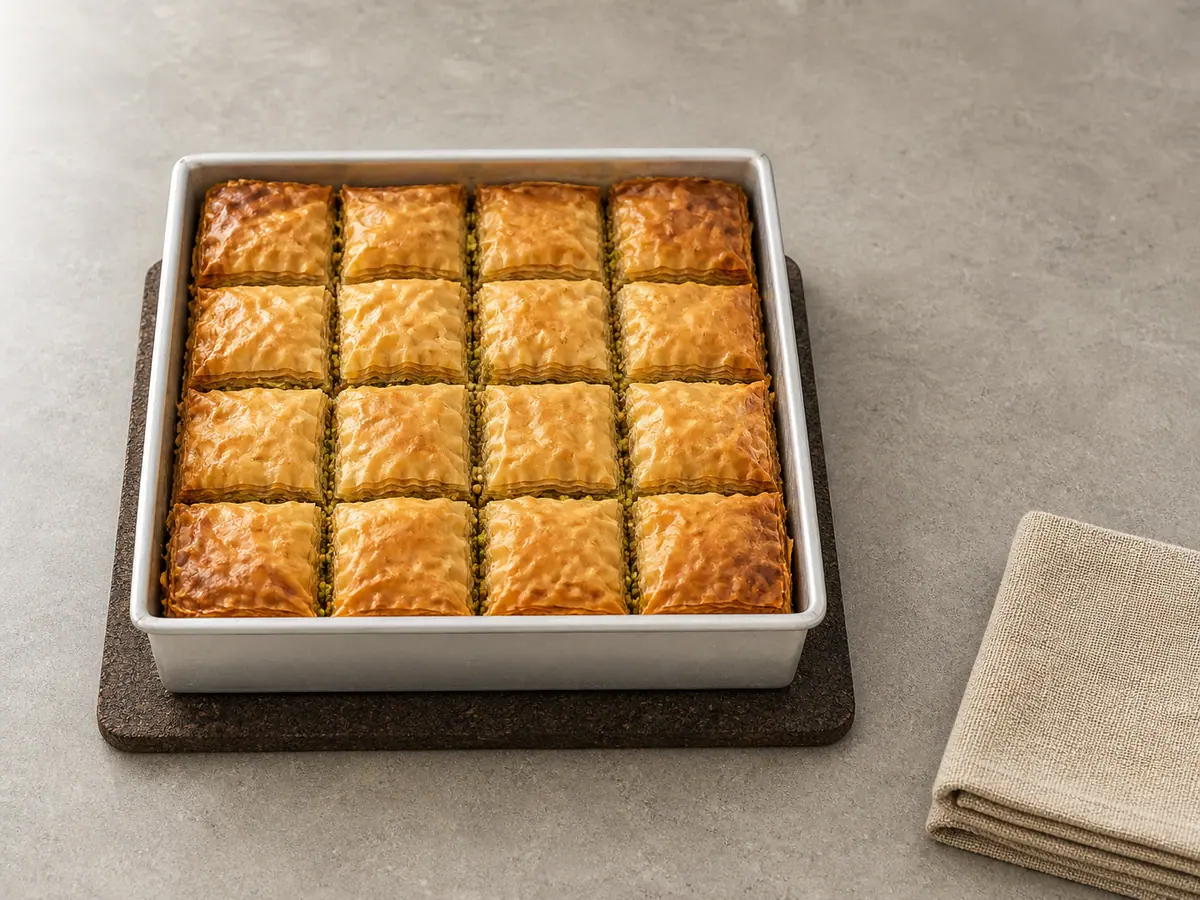
Use a very sharp knife to cut the assembled pastry all the way to the pan base into a grid that yields two small squares per serving: for the 8-serving 20 x 20 cm (8 x 8 in) batch, make a 4 x 4 grid for 16 equal squares about 5 x 5 cm (2 x 2 in) each. For scaled batches, keep the same approximate square size and two-square serving ratio. Wipe the blade between passes so the top sheets stay aligned, then spoon any remaining clear butter along the cut lines. Bake on the center rack for 45 to 55 minutes, rotating the pan once after 30 minutes, until the top is evenly deep golden and the phyllo leaves look dry, crisp, and visibly separated. Start checking at 45 minutes; if the top darkens before the center layers look crisp, cover the pan loosely with plain foil for the remaining time.
45:00Unlock the syrup channels
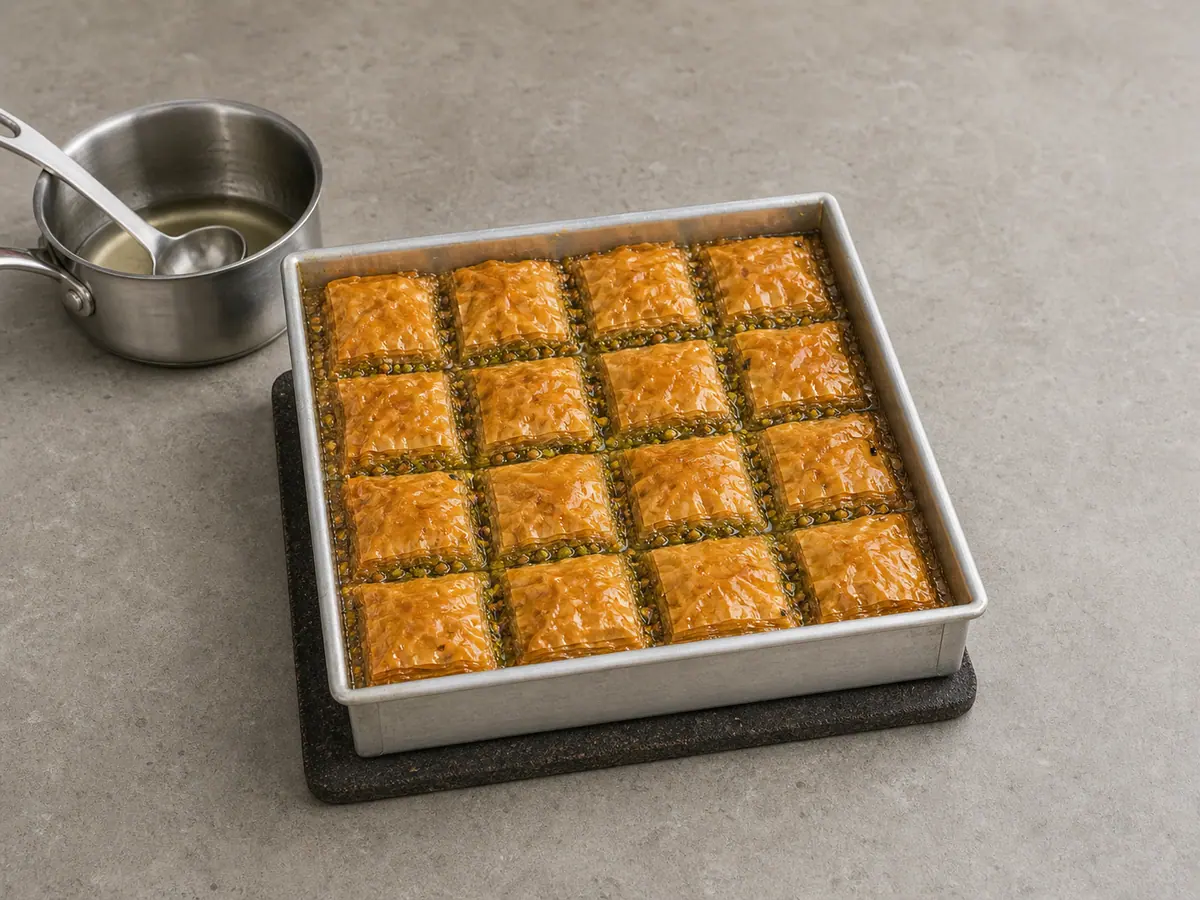
Set the hot pan on a heatproof surface. Immediately and slowly ladle the fully cooled syrup over the pastry, aiming first at the cut lines and edges, then across the top. Pause if the liquid bubbles strongly, then continue until it is evenly distributed. Do not press the layers. Leave the pan uncovered so steam can escape and the top leaves can stay crisp.
Set the squares and serve
Let the baklava stand at room temperature for 2 hours, until the syrup is absorbed, the top feels crisp, and the square edges release cleanly. Run the knife through the original cuts again, lift each square with a thin spatula, and serve two squares per person, setting each square in a plain paper baking cup or arranging both on a small plate.
2:00:00


Smart Substitutions
- No pistachios? Use walnuts or almonds, chopping them to the same coarse crumb so the layers stay distinct.
- No dairy butter? Use the same weight of a firm plant-based baking block and skip the clarifying step; expect slightly softer browning.
- No lemon zest? Omit it and add a little more fresh lemon juice for a clean, bright syrup.
- Prefer cardamom? Replace the cinnamon with ground cardamom for a floral-spiced variation.
Tips and Variations
- Have the syrup, butter, pistachios, and pan ready before exposing the phyllo; cover the stack again between every sheet.
- Brush lightly rather than soaking the pastry. Heavy butter patches glue the leaves together instead of helping them separate.
- For a campaign break, set each square in a small paper baking cup and serve two per person; the cups catch syrup and flakes and keep the handoff tidy.
What Went Wrong?
- Phyllo cracks while layering Cover the stack with a barely damp towel and keep moving. Small tears disappear inside the layered pastry.
- Top is still pale at 45 minutes Continue baking in 5-minute intervals until the top is deep golden and the center leaves look dry and separated.
- Squares feel soft on top The syrup may have been warm or the buttering too heavy. Keep the pan uncovered for the full standing time and avoid pressing the layers.
- Filling spills from the cuts Chop the nuts more finely next time and cut with firm downward strokes instead of sawing through the pastry.
Nutrition Estimate
- Fiber: 3 g per serving
- Sodium: 150 mg per serving
Nutrition disclaimer:This recipe is provided for general cooking information only. Nutrition values are estimates and may vary by ingredients, brands, preparation methods, and serving sizes. Check ingredient labels and follow appropriate food-safety practices. This content is not medical, dietary, allergy, or professional food-safety advice.
FAQ
Found an error or have a suggestion?
Help us improve this recipe. Send us your feedback and include the recipe name so we can take a look.