Method
Cut and toast the secret-door loaf
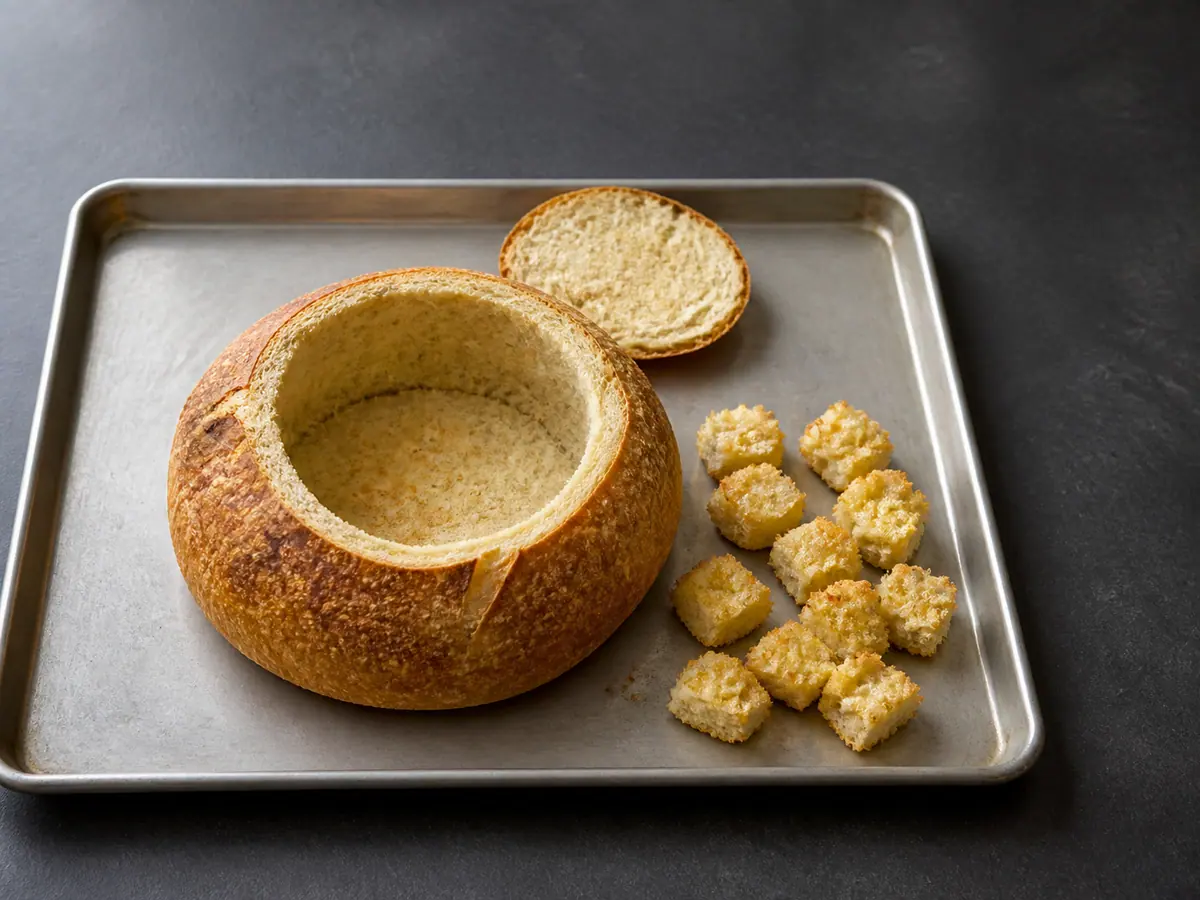
Heat the oven to 190°C (375°F). Set 680 g of round sourdough bread on a rimmed baking sheet. For the default 8-serving loaf (about 20 to 22 cm/8 to 9 in across), use a serrated knife to cut a round cap about 12 cm (5 in) across and keep it intact; hollow the loaf while leaving a 2.5 cm (1 in) wall and base. For a scaled loaf, cut the cap to about 55 to 60 percent of the loaf diameter and leave the wall and base about 12 percent of the loaf diameter so the shell stays sturdy. Tear the removed crumb into sturdy pieces about one-sixth of the loaf diameter; for the default loaf, that is about 3 cm (1 1/4 in). Brush 15 ml of olive oil over the inside of the shell, the cap, and the bread pieces. For the default loaf, toast for 10 minutes, turning the pieces once, until the cut surfaces feel dry and the edges are lightly golden. For 2-, 4-, or 6-serving scaled loaves, begin checking at about 6, 8, or 9 minutes respectively and use the same visual and texture cues rather than browning the bread deeply.
10:00Mix the spinach-artichoke filling
Wilt 454 g of fresh baby spinach in a large dry skillet over medium heat, stirring frequently, until fully collapsed. Let it cool just enough to handle, then wrap it in a clean kitchen towel and squeeze firmly until no more liquid drips; chop it finely. Drain 240 g of canned artichoke hearts, pat them dry, and chop them into bite-size pieces. In a large bowl, beat 225 g of cream cheese, softened with 120 g of plain nonfat Greek yogurt until smooth. Stir in 15 ml of lemon juice, 6 g of garlic powder, 3 g of kosher salt, 1 g of black pepper, and 0.5 g of red pepper flakes. Reserve one-quarter of 170 g of shredded low-moisture part-skim mozzarella and 40 g of grated parmesan for the top, then fold the remainder into the cream cheese mixture with the spinach and artichokes.
Fill the toasted loaf
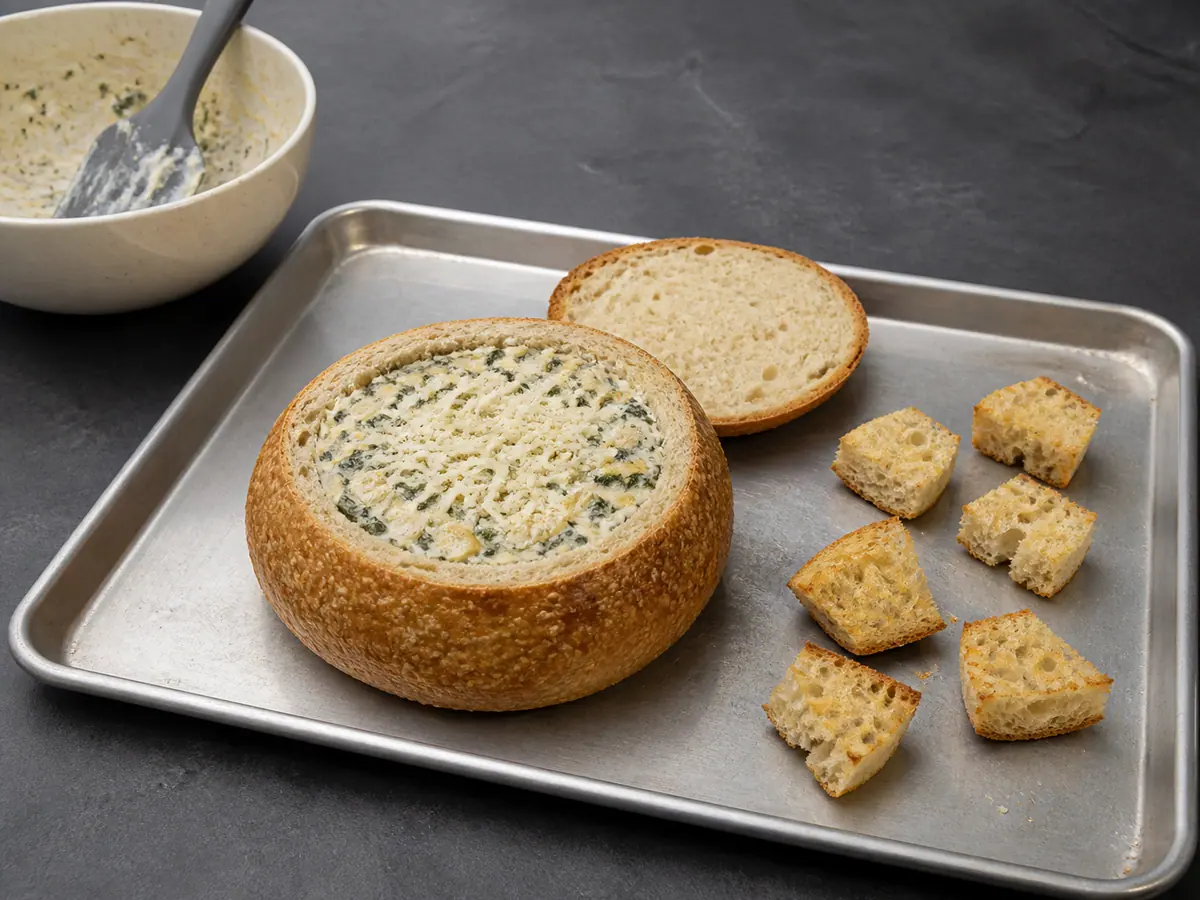
Spoon the filling into the toasted bread shell, pressing gently to remove large air pockets. For the default 8-serving loaf, keep the surface about 1 cm (3/8 in) below the rim; for a scaled loaf, leave a similar gap equal to roughly one-third to one-half of the shell-wall thickness. Scatter the reserved cheese evenly over the filling. Arrange the toasted cap and bread pieces on the open side of the baking sheet. Choose six sturdy bread pieces for the default 8-serving reveal; for a scaled loaf, use two to four pieces so the route stays short and uncluttered. Transfer the cap and chosen route pieces to the heat-safe serving platter before the filled loaf goes back into the oven; keep any extra toasted bread pieces nearby for serving.
Bake until bubbling and golden
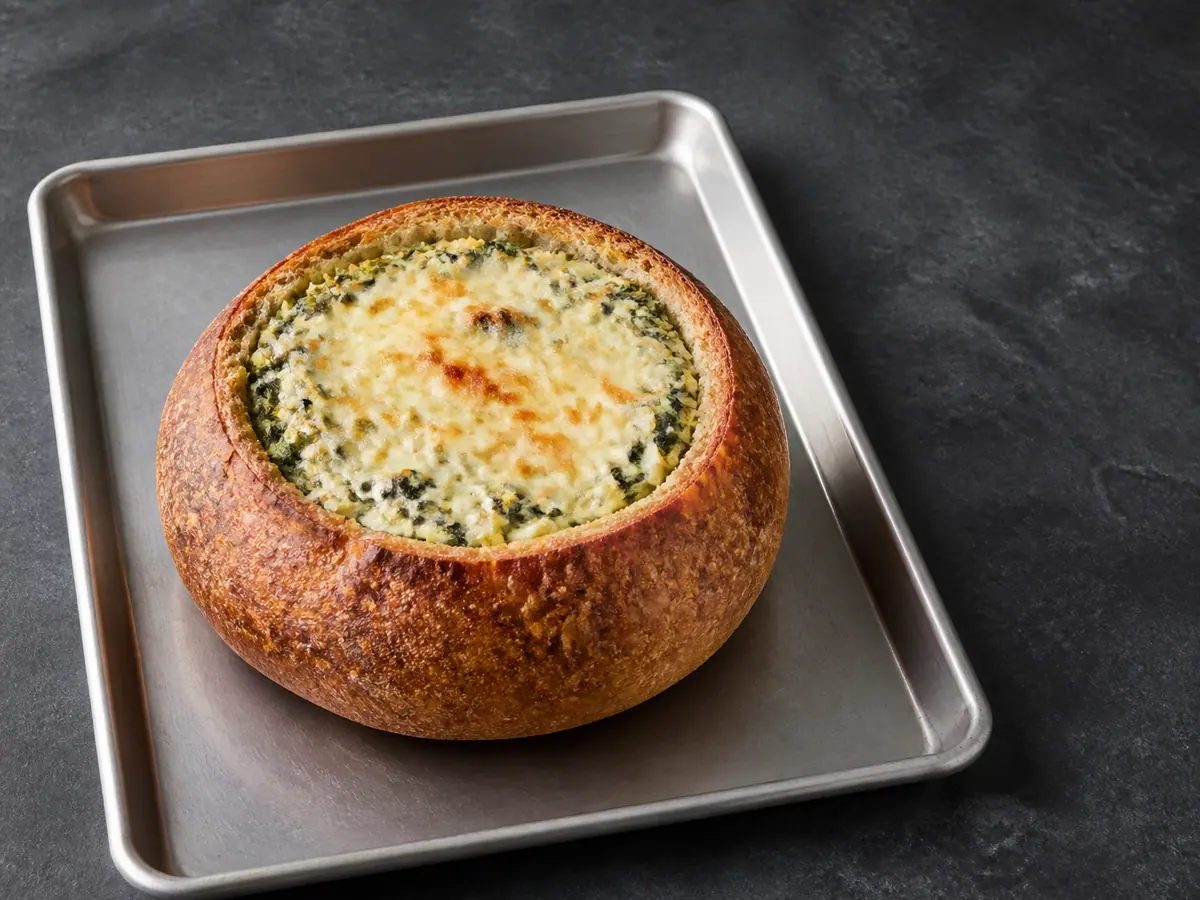
Bake the filled loaf at 190°C (375°F). For the default 8-serving loaf, begin checking at 22 minutes and bake for 22 to 28 minutes total. For 2-, 4-, or 6-serving scaled loaves, begin checking at about 14, 17, or 19 minutes respectively. At any size, it is ready when the filling bubbles around the edge, the cheese is completely melted, and small golden spots appear on top. If the crust darkens too quickly, shield only the outer bread with a loose ring of foil and leave the filling exposed.
22:00Open the door and serve
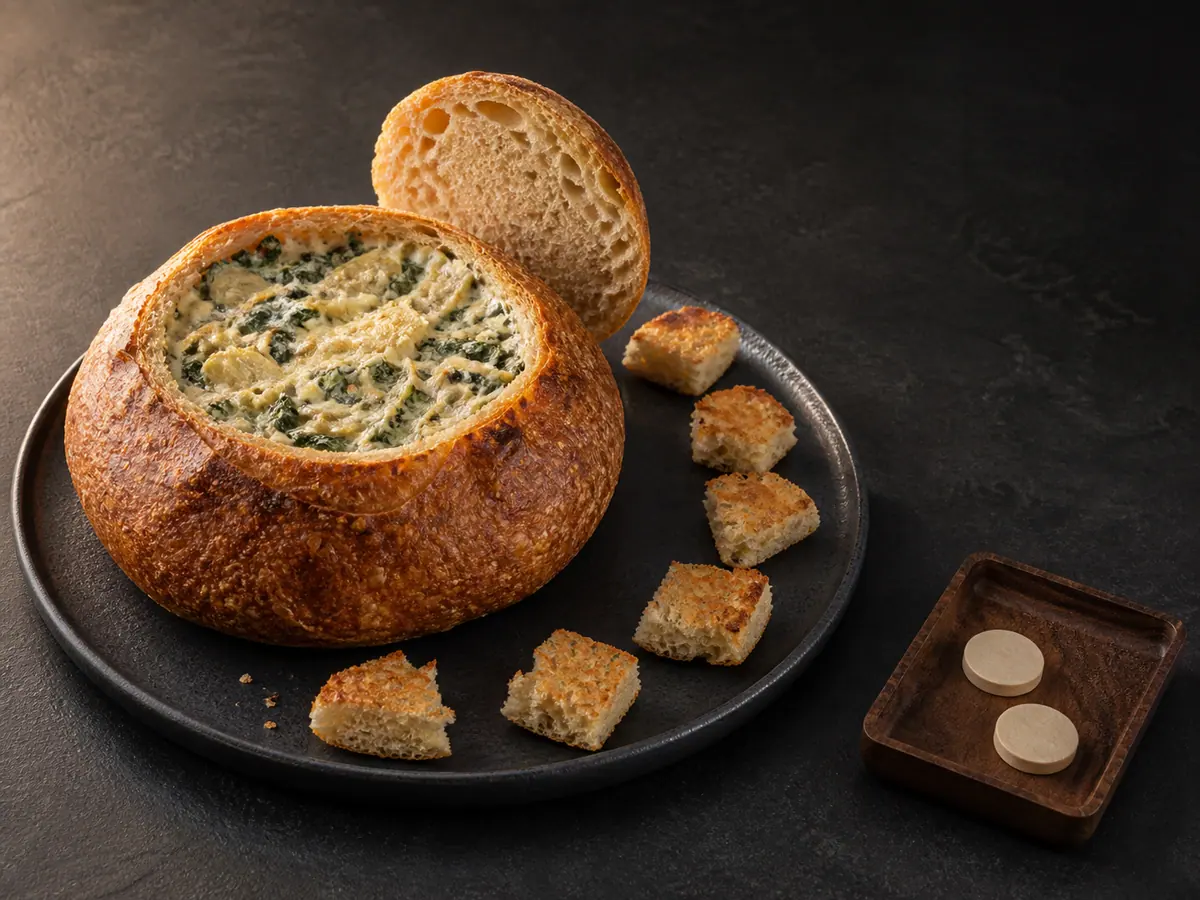
Let the loaf stand for 5 minutes so the filling settles and clings to the bread. Move it to the heat-safe platter and set the toasted cap lightly over the opening for the presentation. At serving time, lift the cap to reveal the hot spinach-artichoke center, then lean the cap securely against the back edge. Arrange the selected bread pieces in a short route toward the opening. Serve immediately, using the crisp pieces first and tearing the outer loaf into portions as the dip level drops.
05:00


Smart Substitutions
- No sourdough? Use a crusty country boule of similar weight with a firm base and thick crust.
- No Greek yogurt? Use full-fat sour cream for a rounder, slightly richer tang.
- No mozzarella? Use Monterey Jack or mild provolone for a similarly smooth melt.
- Prefer less heat? Leave out the red pepper flakes and add a little more black pepper.
Tips and Variations
- Pat the drained artichokes dry as well as squeezing the spinach; both can release enough liquid to loosen the filling.
- Keep the bread cap intact during carving so the reveal looks deliberate instead of like a pile of torn crust.
- Toast only until the bread pieces are dry at the surface and lightly golden; they will firm further as they cool during baking.
What Went Wrong?
- Dip is watery The vegetables held too much liquid. Squeeze the spinach again, pat the artichokes dry, and fold in a small spoonful of grated parmesan.
- Loaf is browning too fast Cover the outer crust with a loose foil ring while leaving the cheese surface uncovered.
- Cheese looks oily Stop baking as soon as the edges bubble and the top has a few golden spots; prolonged heat can separate the cheese.
- Bread pieces are too hard Cut larger pieces and toast only until the torn surfaces feel dry rather than deeply browned.
Nutrition Estimate
- Fiber: 5 g per serving
- Sodium: 1100 mg per serving
Nutrition disclaimer:This recipe is provided for general cooking information only. Nutrition values are estimates and may vary by ingredients, brands, preparation methods, and serving sizes. Check ingredient labels and follow appropriate food-safety practices. This content is not medical, dietary, allergy, or professional food-safety advice.
FAQ
Found an error or have a suggestion?
Help us improve this recipe. Send us your feedback and include the recipe name so we can take a look.