Method
Mix and knead the dough
Whisk 360 g of all-purpose flour for dough with 4.5 g of fine sea salt in a large bowl, then set 20 g of all-purpose flour for rolling aside for shaping. Stir 210 ml of warm water with 15 ml of olive oil for dough, pour the mixture into the bowl, and mix until no dry patches remain. Knead on a clean surface for 6 to 8 minutes, starting the timer for the first elasticity check at 6 minutes. Stop when the dough is smooth, supple, and only faintly tacky.
06:00Rest the dough
Shape the dough into a ball, cover it with an inverted bowl or a clean towel, and let it rest for 20 minutes at room temperature. The pause relaxes the gluten; the dough should spread more willingly when pressed and should not spring back sharply.
20:00Cook the spinach filling
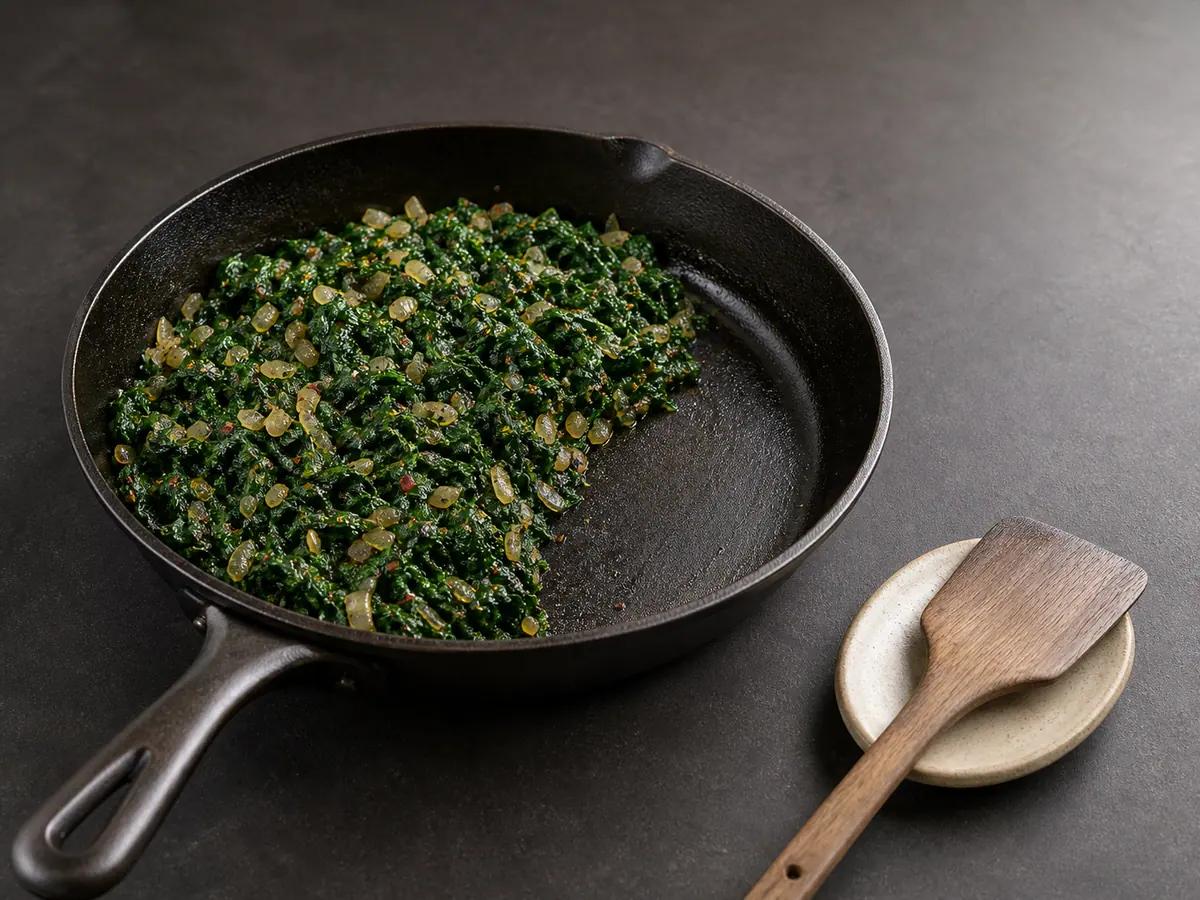
Finely chop 120 g of yellow onion. Warm 15 ml of olive oil for filling in a wide skillet over medium heat, add the onion, and cook for 5 to 6 minutes, stirring often, until soft and translucent without browning. Roughly chop 280 g of fresh spinach, add it in two batches, and cook for 3 to 4 minutes, stirring and pressing it against the pan, until wilted and no liquid collects when the skillet is tilted. Stir in 3 g of Aleppo pepper and 1 g of black pepper, then remove the pan from the heat.
Cool and season the filling
Spread the spinach mixture on a wide plate and let it cool for 5 minutes, until warm rather than steaming. Chop 15 g of fresh dill. Crumble 140 g of feta cheese, then fold both into the spinach mixture. Taste the filling; the feta should provide enough seasoning, and the mixture should be crumbly, moist, and loose enough to divide without leaving liquid on the plate.
05:00Divide and roll the dough
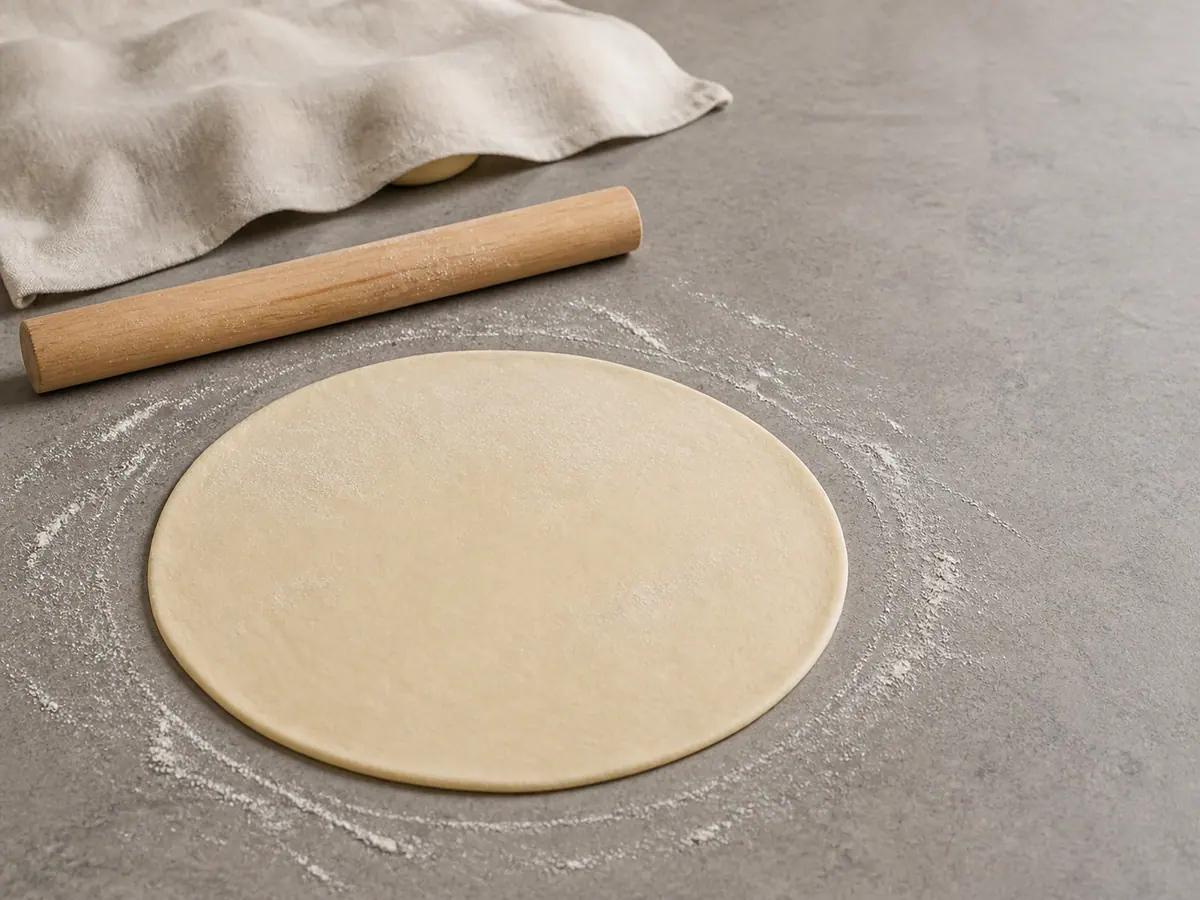
Divide the rested dough into equal pieces, making two pieces for each serving, and shape them into smooth balls. Keep the pieces covered so their surfaces stay supple. Dust the work surface lightly with the reserved rolling flour and roll the first piece into a round about 18 cm (7 in) wide and 2 to 3 mm thick. The dough should look evenly thin, with no thick rim and no tears.
Fill and seal the branches
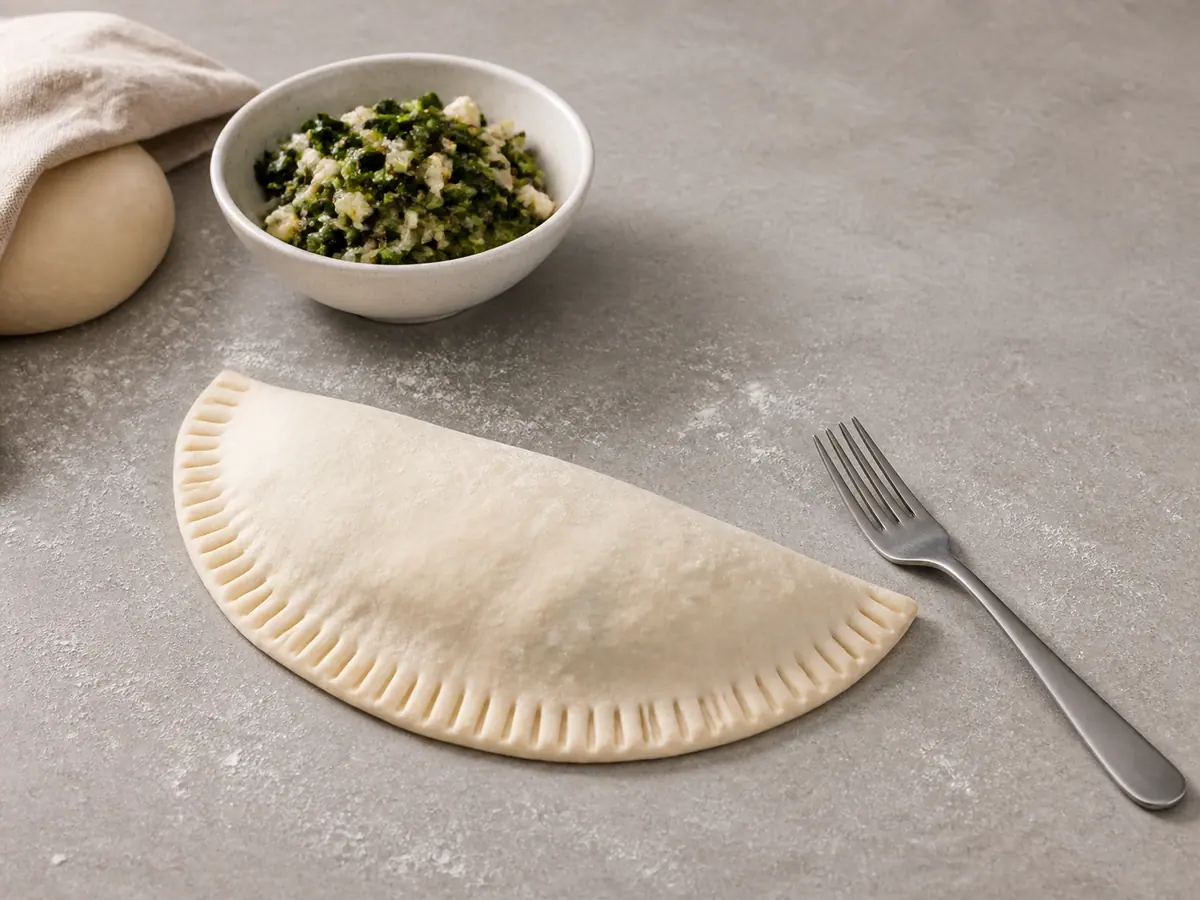
Working with one dough ball at a time, roll each remaining piece to the same size and thinness as the first round. Divide the filling evenly among the rounds. Spread each portion over one half of a round, leaving a 1.5 cm (1/2 in) border. Fold the empty half over the filling, then press from the center toward the curved edge to remove trapped air. Seal the border firmly and make shallow diagonal marks with a fork without piercing the dough. Keep the shaped flatbreads separated on the floured surface.
Griddle the branches
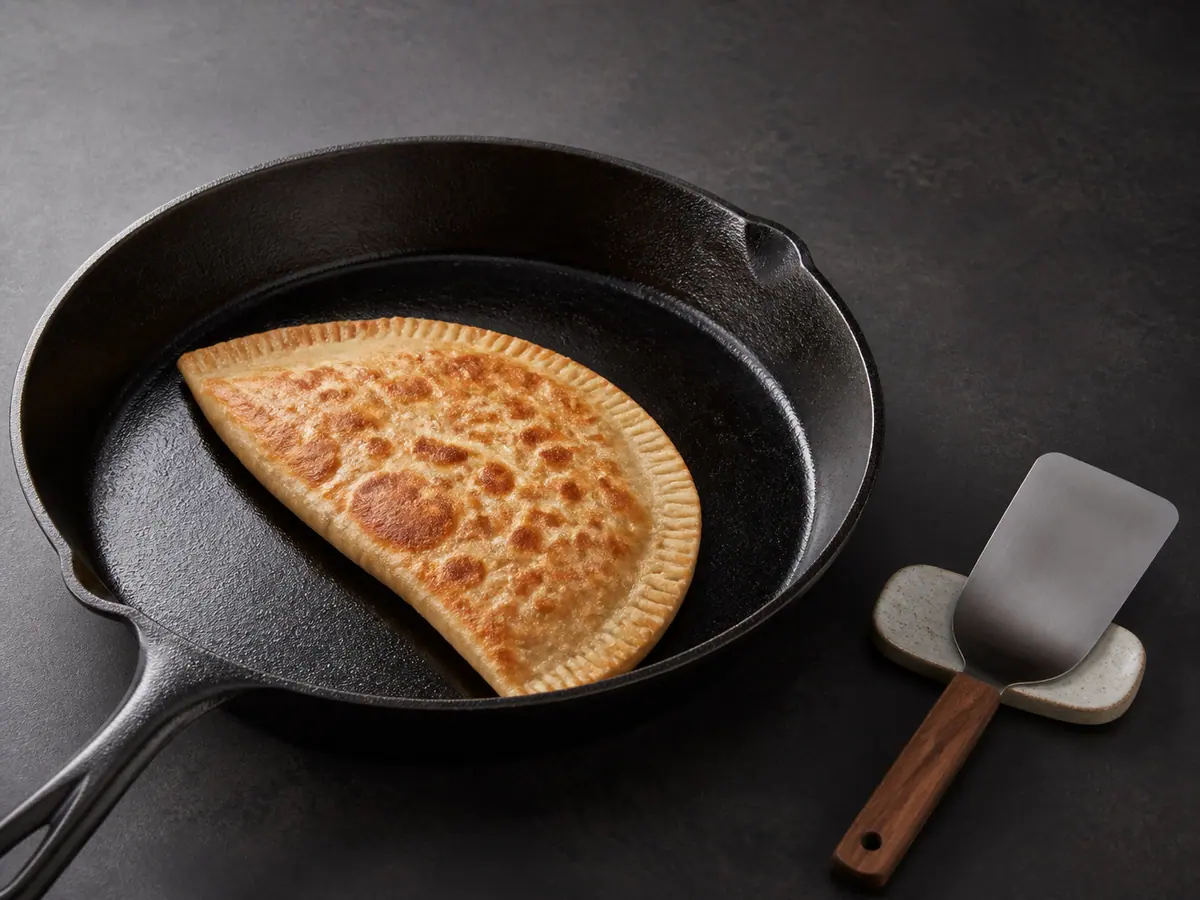
Heat a large heavy skillet or flat griddle over medium-high heat for 3 minutes. Pour 15 ml of olive oil for brushing into a small bowl and brush a very thin film over both sides of every filled flatbread. Cook one or two at a time, without crowding, for 2 to 3 minutes per side. Use the 2-minute timer as the first check after each turn. Press lightly with a spatula only where the dough has not contacted the pan; the breads are ready when both sides have deep golden blisters and no pale raw-looking patches.
02:00Set the branches and serve
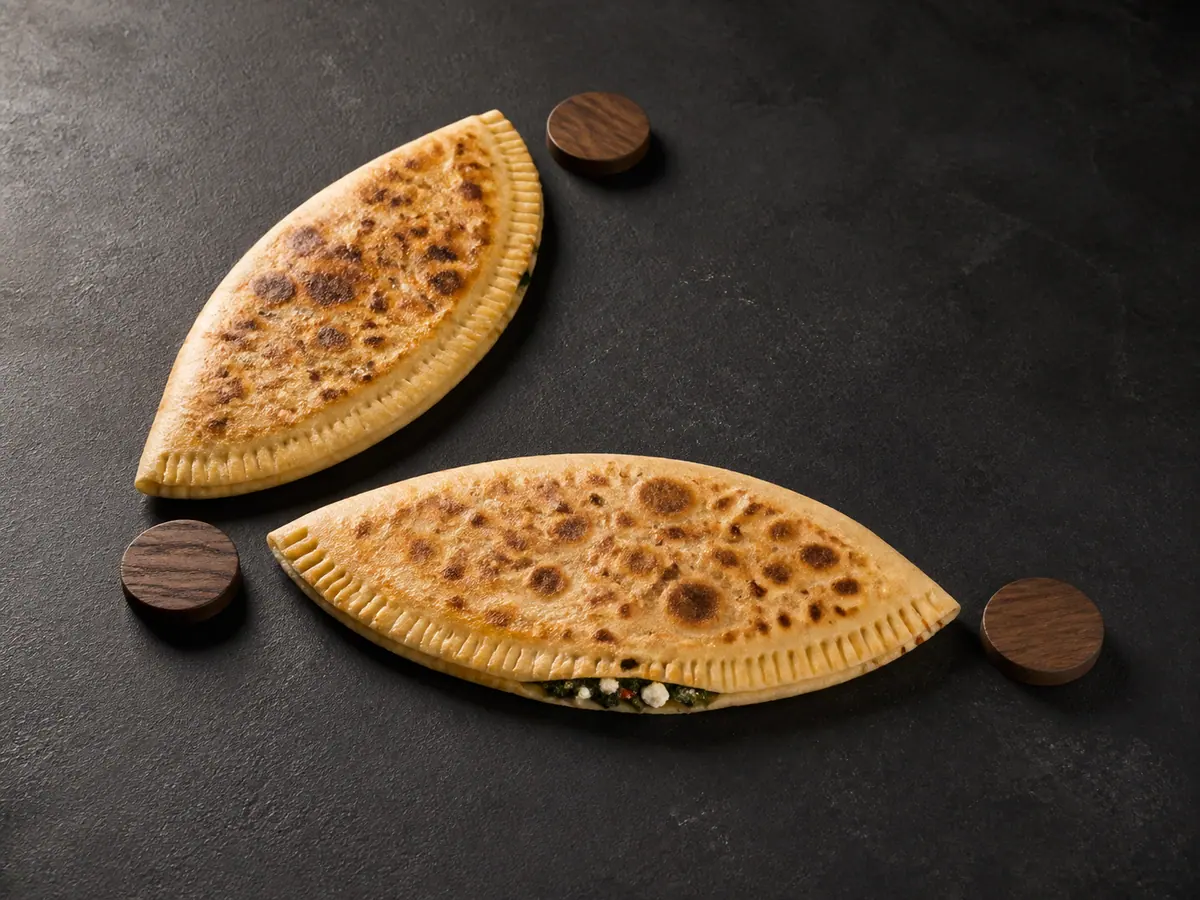
Transfer the cooked flatbreads to a wire rack or wooden board and let them stand for 3 minutes so the crust settles and the hot filling stops rushing toward the seam. Arrange two branches per serving in a V, with the fork-crimped edges facing outward, and serve warm.
03:00


Smart Substitutions
- No feta? Use the same weight of crumbled Turkish white cheese, ricotta salata, or firm farmer cheese.
- No fresh spinach? Use chard leaves; remove the thick stems and cook the leaves until the skillet is dry.
- No fresh dill? Use flat-leaf parsley with a small pinch of dried mint.
- No Aleppo pepper? Use mild red pepper flakes with a pinch of sweet paprika.
Tips and Variations
- Treat the dough rest as non-negotiable; relaxed dough rolls thin without snapping back.
- Use a dry pan surface. The light film brushed onto the dough is enough to brown it without greasy seams.
- For a readable skill-tree platter, arrange each serving as a V and keep the two branches separate rather than stacking them.
What Went Wrong?
- Dough springs back Cover the portion and give it another 5 minutes before rolling; forcing it thinner will make uneven edges.
- Filling leaks from the seam The mixture is too wet or the round is overfilled. Press out moisture, use a little less filling, and reseal without piercing the dough.
- Flatbreads are pale and tough Preheat the skillet longer and roll the dough thinner so the crust browns before it dries out.
- Spots scorch before the center cooks Lower the heat slightly and turn the flatbread more often, pressing only the pale areas against the pan.
Nutrition Estimate
- Fiber: 5 g per serving
- Sodium: 900 mg per serving
Nutrition disclaimer:This recipe is provided for general cooking information only. Nutrition values are estimates and may vary by ingredients, brands, preparation methods, and serving sizes. Check ingredient labels and follow appropriate food-safety practices. This content is not medical, dietary, allergy, or professional food-safety advice.
FAQ
Found an error or have a suggestion?
Help us improve this recipe. Send us your feedback and include the recipe name so we can take a look.