Method
Build the harissa base
Heat the oven to 220°C (425°F) and line a rimmed sheet pan with parchment. Whisk 120 g of plain Greek yogurt for chicken, 30 g of harissa paste for chicken, 30 ml of lemon juice for chicken, 15 ml of olive oil, 3 g of kosher salt for chicken, and 1 g of black pepper in a large bowl. Mince 2 garlic cloves and stir it into the marinade. Add 680 g of boneless skinless chicken thighs and turn with tongs until every surface is coated. Let the chicken stand for 10 minutes while the oven heats, keeping the raw-chicken bowl and utensils away from the vegetables and rolls.
10:00Roast to a browned, safe finish
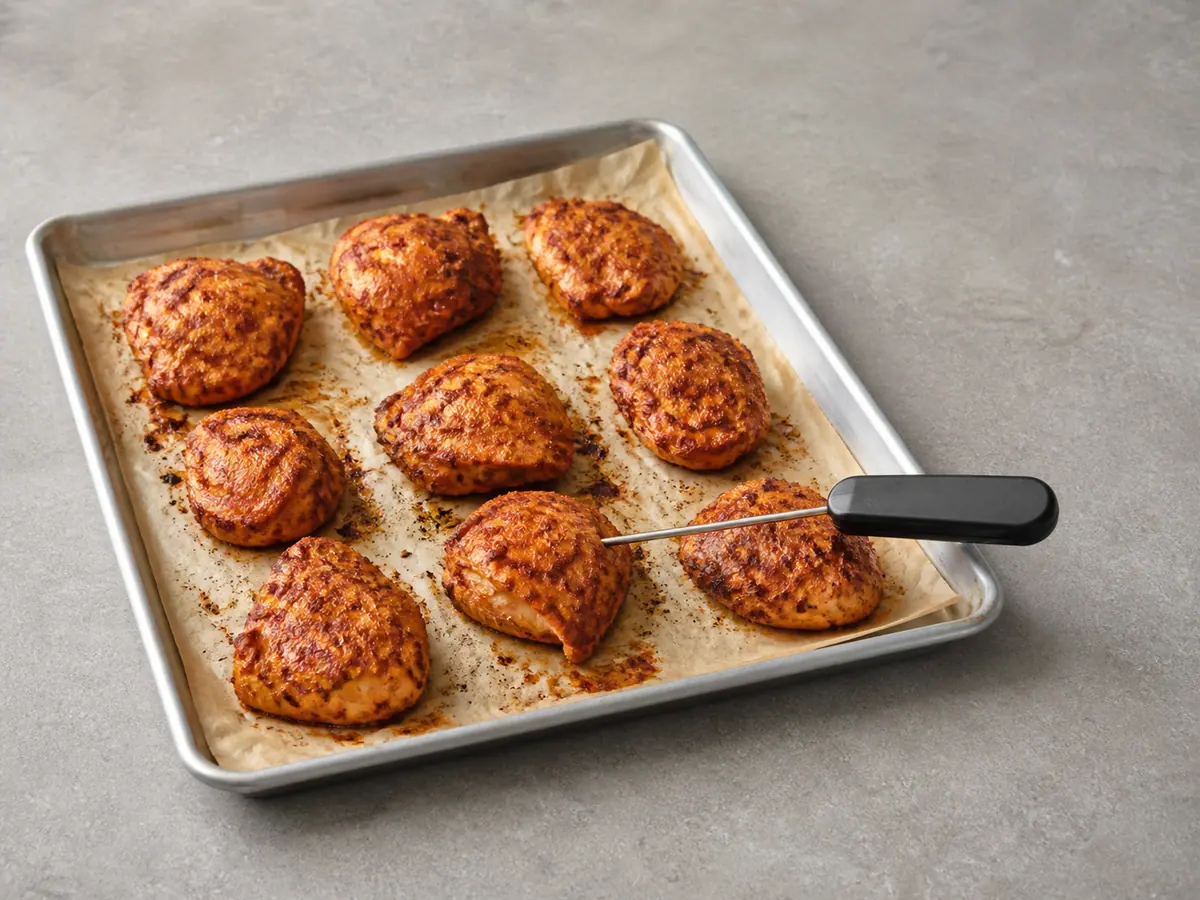
Use tongs to lift the coated chicken onto the prepared pan in one layer, leaving space between pieces, then scrape the marinade over the top. Wash the bowl, tongs, sink area, and work surface with hot soapy water before touching ready-to-eat ingredients. Roast for 18 to 24 minutes, turning once about halfway through, until the edges brown. Check the thickest part of every piece with an instant-read food thermometer; the chicken must reach 74°C/165°F.
18:00 first checkMix the cool mint slaw
Shred 180 g of red cabbage into thin ribbons, grate 100 g of carrot, and chop 10 g of fresh mint. In a clean bowl, whisk 120 g of plain Greek yogurt for slaw, 30 ml of lemon juice for slaw, 15 ml of apple cider vinegar, and 1 g of kosher salt for slaw until smooth. Fold in the cabbage, carrot, and mint until lightly coated. The slaw should hold together without dressing pooling at the bottom; leave any excess dressing in the bowl when assembling.
Set the two heat routes
In one clean medium bowl, stir 15 g of harissa paste for stage one with 21 g of honey for stage one until glossy for the amber-red stage-one finish. In a second clean bowl, stir 30 g of harissa paste for stage two with 14 g of honey for stage two for the deeper crimson stage-two finish. Taste each mixture with a separate clean spoon before it touches the cooked chicken; the first should be rounded and warm, while the second should carry a clearer chile kick.
Rest, split, and glaze the chicken
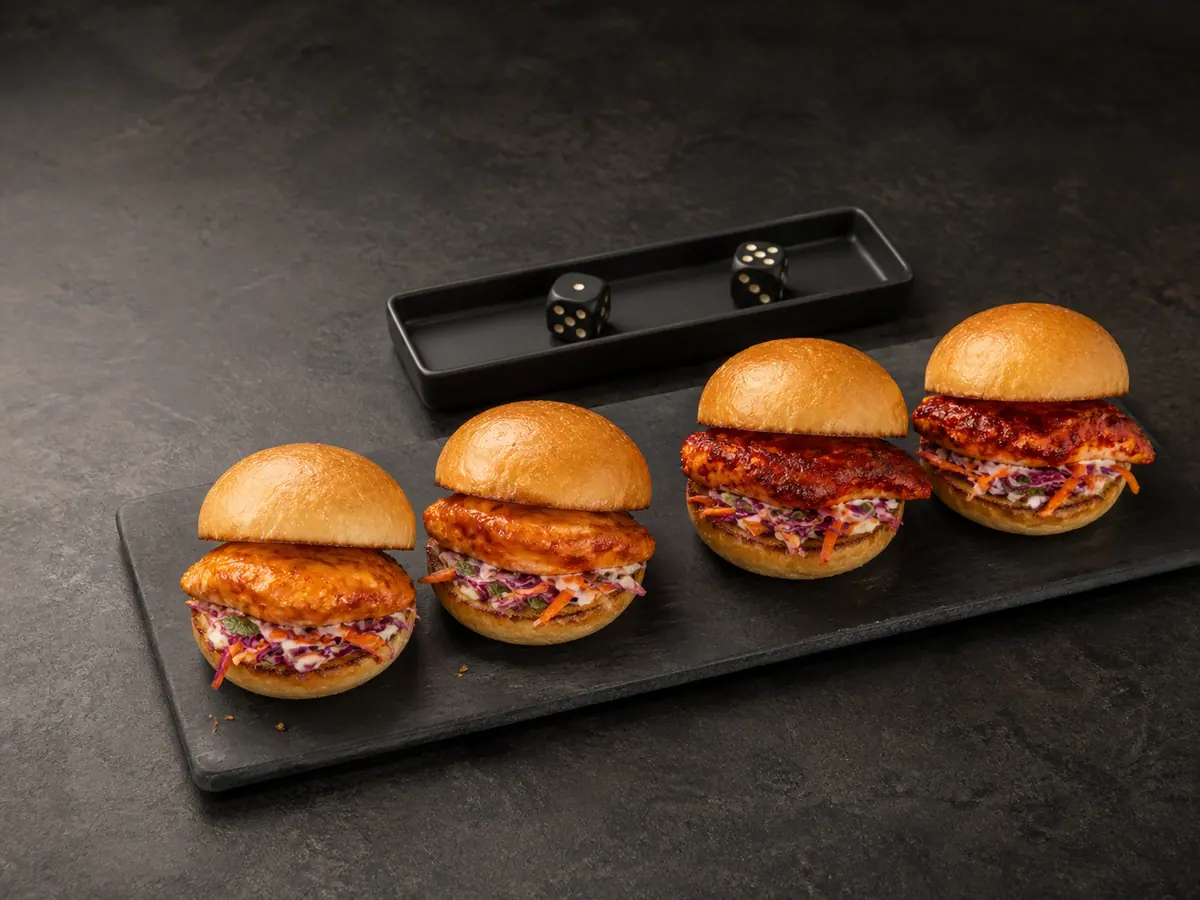
Transfer the fully cooked chicken to a clean cutting board and let it rest for 5 minutes. Slice or pull it into short, slider-friendly strips, then divide it evenly between the two finish bowls. Spoon a little of the clean hot pan juices into each bowl and toss until every piece is coated. The stage-one batch should look glossy orange-red; the stage-two batch should be visibly deeper crimson. If any piece has not reached 74°C/165°F, return it to the oven before slicing.
05:00Toast the slider rolls
Split 8 soft wheat slider rolls and arrange them cut-side up on a clean sheet pan. Toast at 220°C (425°F) for 3 to 4 minutes, until the cut edges are lightly crisp but the centers and domed tops remain soft. Watch closely after the first check so the small rolls do not dry out.
03:00 first checkAssemble the two-stage flight
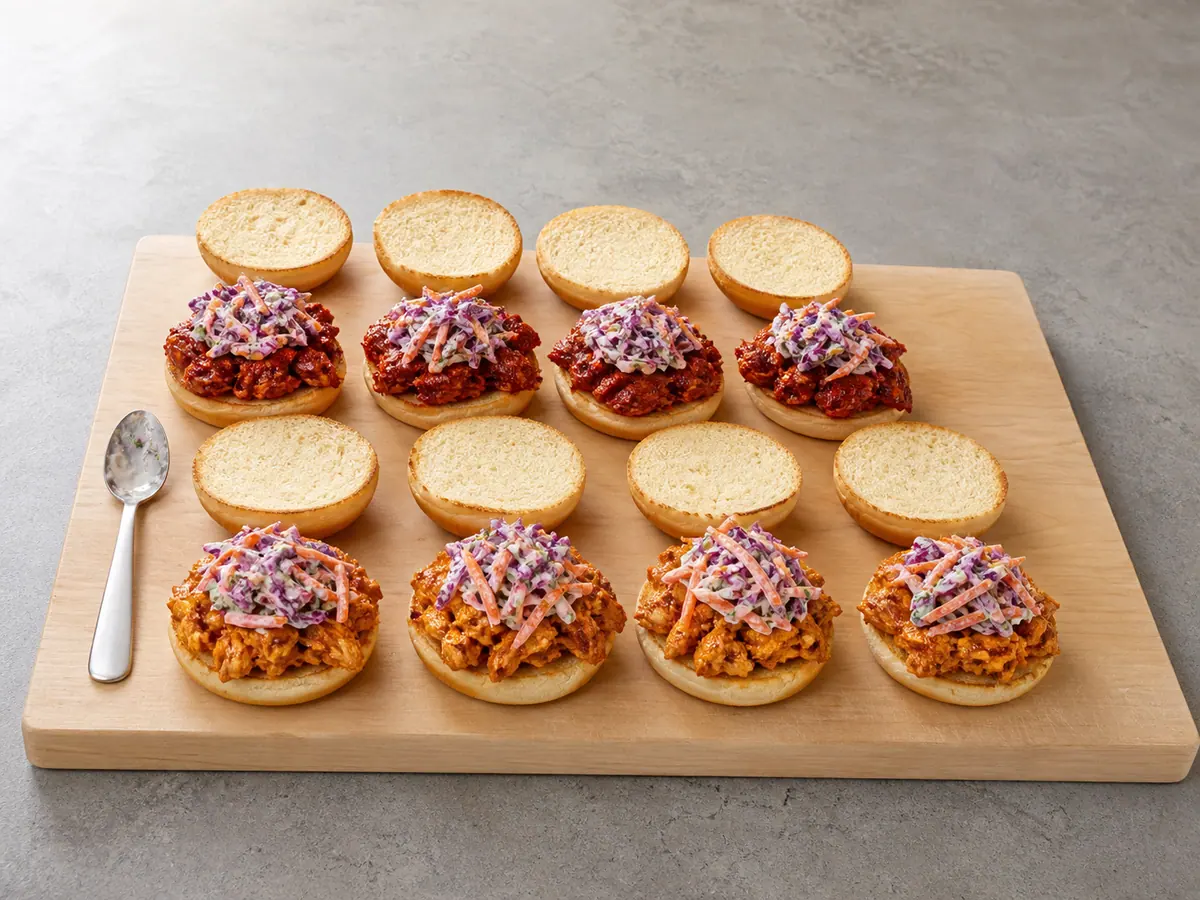
Arrange the bottom halves from 8 soft wheat slider rolls in two equal rows on a clean board. Divide the stage-one chicken evenly among the first row and the stage-two chicken evenly among the second. Add one compact forkful of slaw to each slider, leaving loose dressing in the bowl so the filling stays contained. Close with the top halves and press gently until stable. Serve the honey-rounded row first and the hotter crimson row second so the heat progression is clear.


Smart Substitutions
- Prefer chicken breast? Use boneless skinless chicken breast cut into even pieces. Start checking early and cook every piece to 74°C/165°F so the lean meat stays moist.
- No red cabbage? Use green cabbage or a firm plain slaw mix; keep the cut fine so the filling remains compact inside the small rolls.
- Need a dairy-free route? Choose a thick unsweetened plant-based yogurt for both the marinade and slaw, and check the specific product label for allergens and added sugar.
- No honey? Use maple syrup in the same volume. The finishes will be slightly looser, so add pan juices sparingly.
Tips and Variations
- Use thick Greek yogurt; a runny yogurt makes the marinade slide off and can leave the slaw too loose.
- Arrange both rows of rolls before filling so the gentler and hotter routes stay visually distinct.
- Harissa brands vary in salt and heat, so taste the two clean finish mixtures before they touch the cooked chicken.
- Packaged slider rolls contain wheat and may also contain milk, sesame, or soy; check the specific label when those allergens matter.
What Went Wrong?
- Chicken steams instead of browning Spread the pieces farther apart and use a wide rimmed pan so moisture can escape around them.
- Slaw slips out of the rolls Leave loose dressing in the bowl and use a smaller, compact forkful on each slider.
- A finish is too thick to coat Stir in clean hot pan juices a teaspoon at a time until the glaze clings in a thin glossy layer.
- Rolls turn dry or brittle Pull them as soon as the cut edges are lightly crisp; the small size makes them toast quickly.
Nutrition Estimate
- Fiber: 5 g per serving
- Sodium: 1030 mg per serving
Nutrition disclaimer:This recipe is provided for general cooking information only. Nutrition values are estimates and may vary by ingredients, brands, preparation methods, and serving sizes. Check ingredient labels and follow appropriate food-safety practices. This content is not medical, dietary, allergy, or professional food-safety advice.
FAQ
Found an error or have a suggestion?
Help us improve this recipe. Send us your feedback and include the recipe name so we can take a look.