Method
Drain the crisp cabbage layer
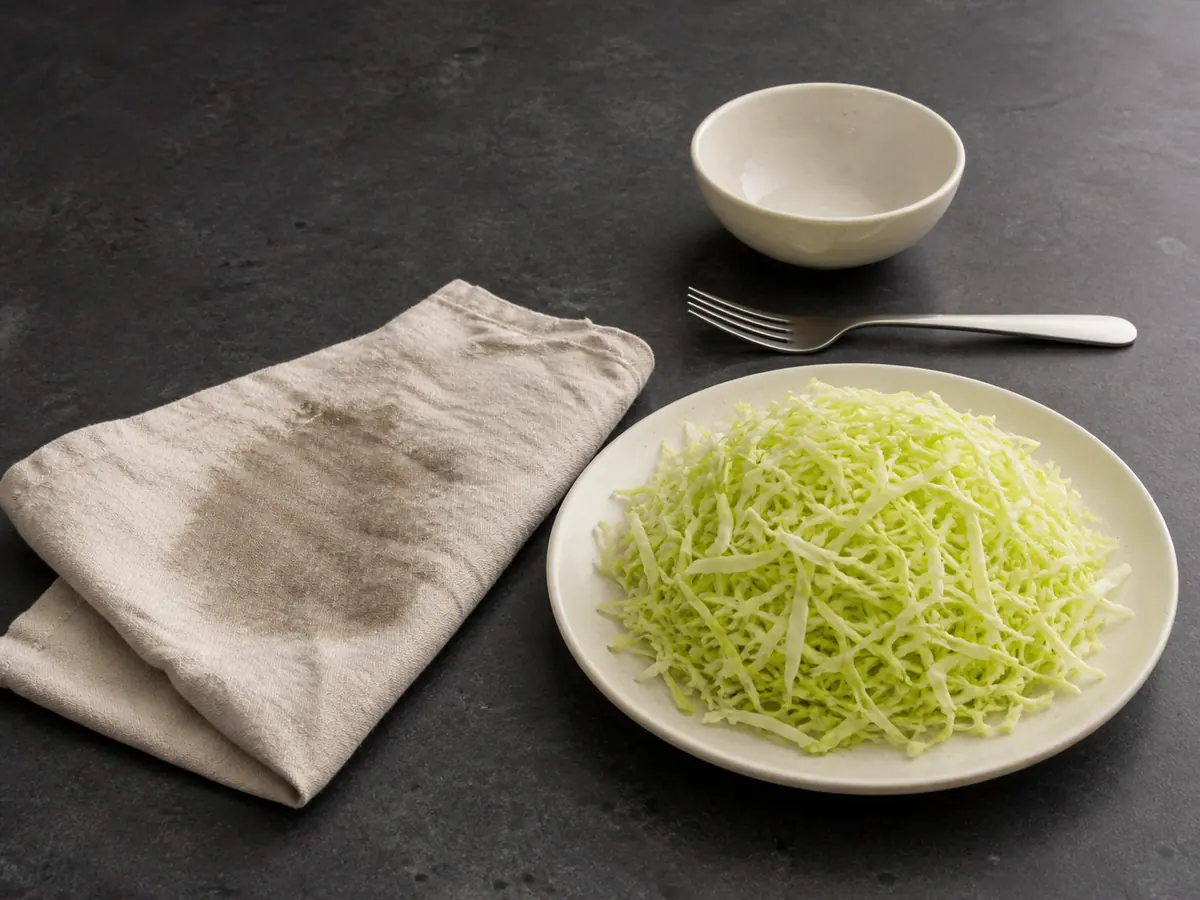
Cut 160 g of green cabbage into very fine ribbons. Toss with 20 ml of rice vinegar and 1 g of kosher salt for cabbage, then rest for 10 minutes while the pork station is prepared. Spread the softened cabbage across the center of a clean kitchen towel, gather the towel around it, and press firmly until no drops appear. Fluff the dry shreds onto a clean plate so they remain light rather than packed.
10:00Set up the crumb path
Portion 460 g of boneless pork loin cutlets into one sandwich-sized piece per serving if the cutlets are not already separate. Working between two sheets of parchment, strike from the center toward the edges until each piece is an even 8 mm (1/3 in) thick. Season both sides with 3 g of kosher salt for pork and 1 g of black pepper. Arrange 40 g of all-purpose flour, 1 large egg, and 80 g of panko breadcrumbs in three shallow dishes from left to right, then beat the egg in its dish until smooth. Coat one cutlet at a time in flour, egg, and panko, pressing the crumbs only enough to cover bare spots. Place breaded raw cutlets on their own plate. Set a clean rack on a clean tray for cooked cutlets, well away from the raw plate. Discard used breading, then wash hands, tools, and every raw-contact surface before touching cooked food or sandwich ingredients.
Shallow-fry in steady batches
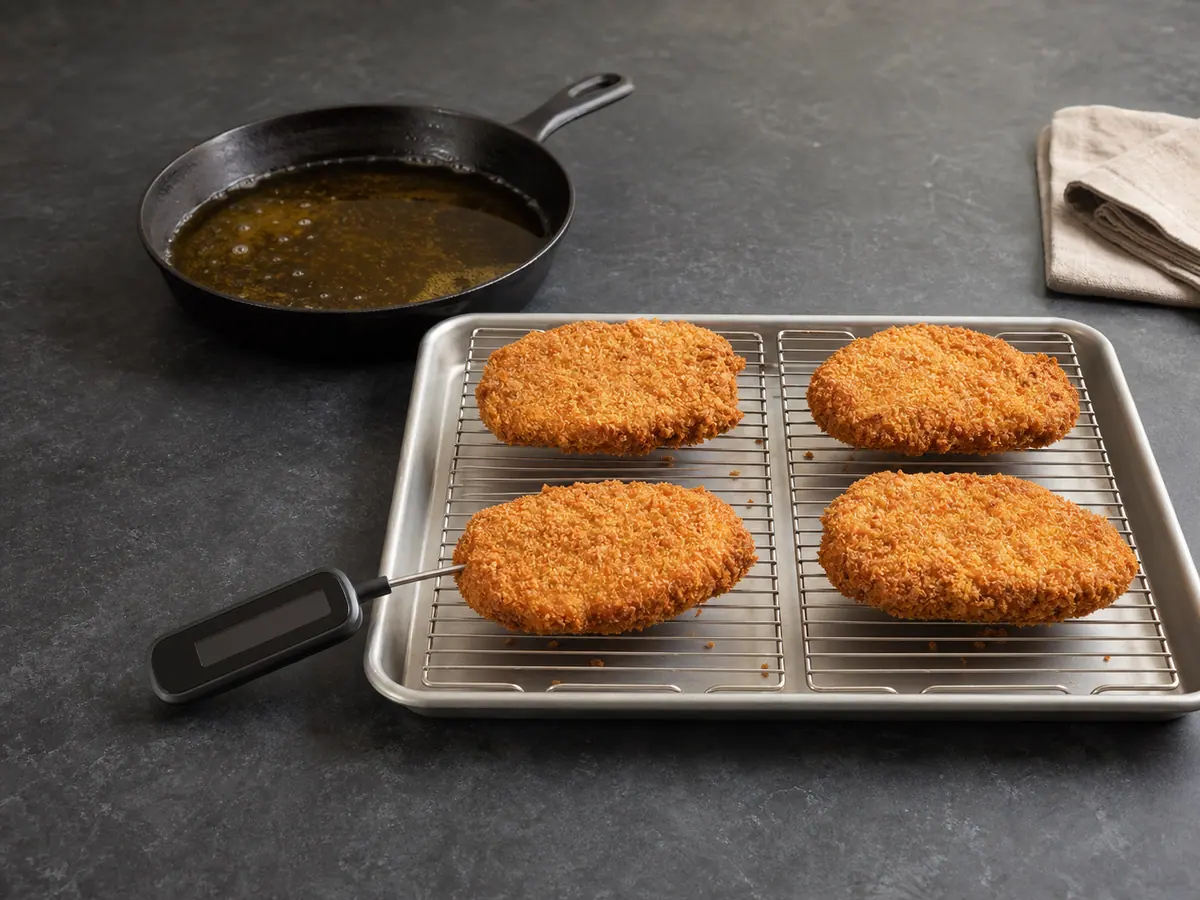
For the default four-serving batch, pour 480 ml of neutral oil, for shallow-frying into a 25 cm (10 in) heavy skillet; the oil should stand about 8 mm (1/3 in) deep. For another yield, choose a pan that preserves that depth without crowding, and cook additional batches rather than enlarging one batch. Heat the oil over medium heat to 175°C (350°F). Lower in only as many breaded cutlets as fit with clear space between them. Fry for 2 to 3 minutes, using the timer as the first-side check, then turn once and fry for another 2 to 3 minutes. Adjust the heat to keep the crumbs steadily bubbling and golden rather than darkening rapidly. Check each cutlet from the side with an instant-read thermometer; move it to the clean rack only when the thickest center reaches 63°C/145°F. Continue in batches, keeping the rack and cooked cutlets separate from the discarded raw-pork plate.
02:30Rest the cutlets and mix the spread
Leave the cooked cutlets on the clean rack for at least 3 minutes. While they rest, blend 30 g of unsalted butter with 20 g of Dijon mustard in a clean bowl until the mixture is smooth enough to spread in a thin film. Prepare a clean board, tray, and knife for assembly.
03:00Build and lightly lock the layers
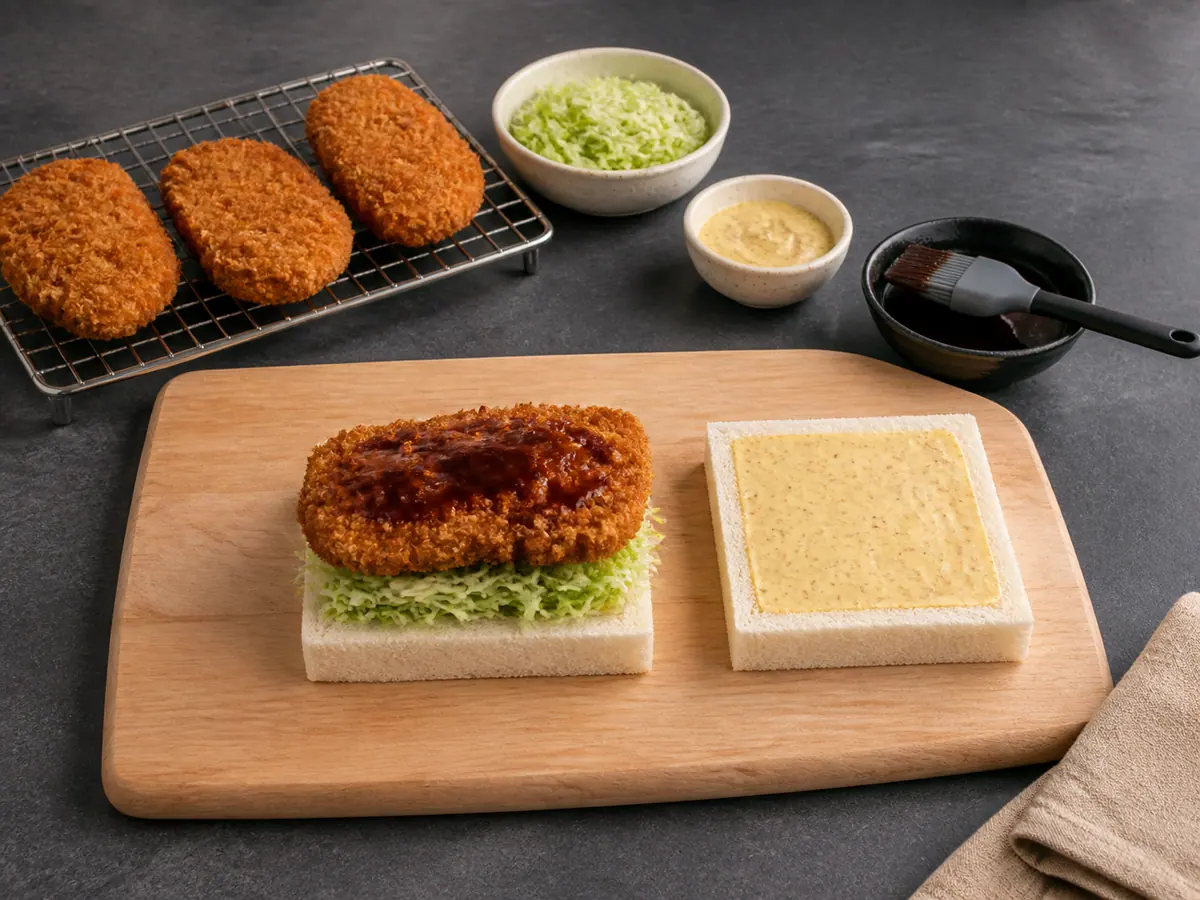
Arrange 8 slices of thick-cut soft white bread in pairs. Coat one side of every slice with a thin, edge-to-edge film made from 30 g of unsalted butter and 20 g of Dijon mustard. Divide 160 g of green cabbage evenly across the bottom slices, leaving a narrow clean border. Add one rested cooked cutlet to each, brush 60 ml of tonkatsu sauce across the crust, and close with the remaining slices, spread-side down. Cover the sandwiches with a clean tray and set a light, evenly balanced weight on top for 5 minutes. The bread should make full contact with the filling without becoming compressed or forcing sauce beyond the edges.
05:00Slice for clean handoffs
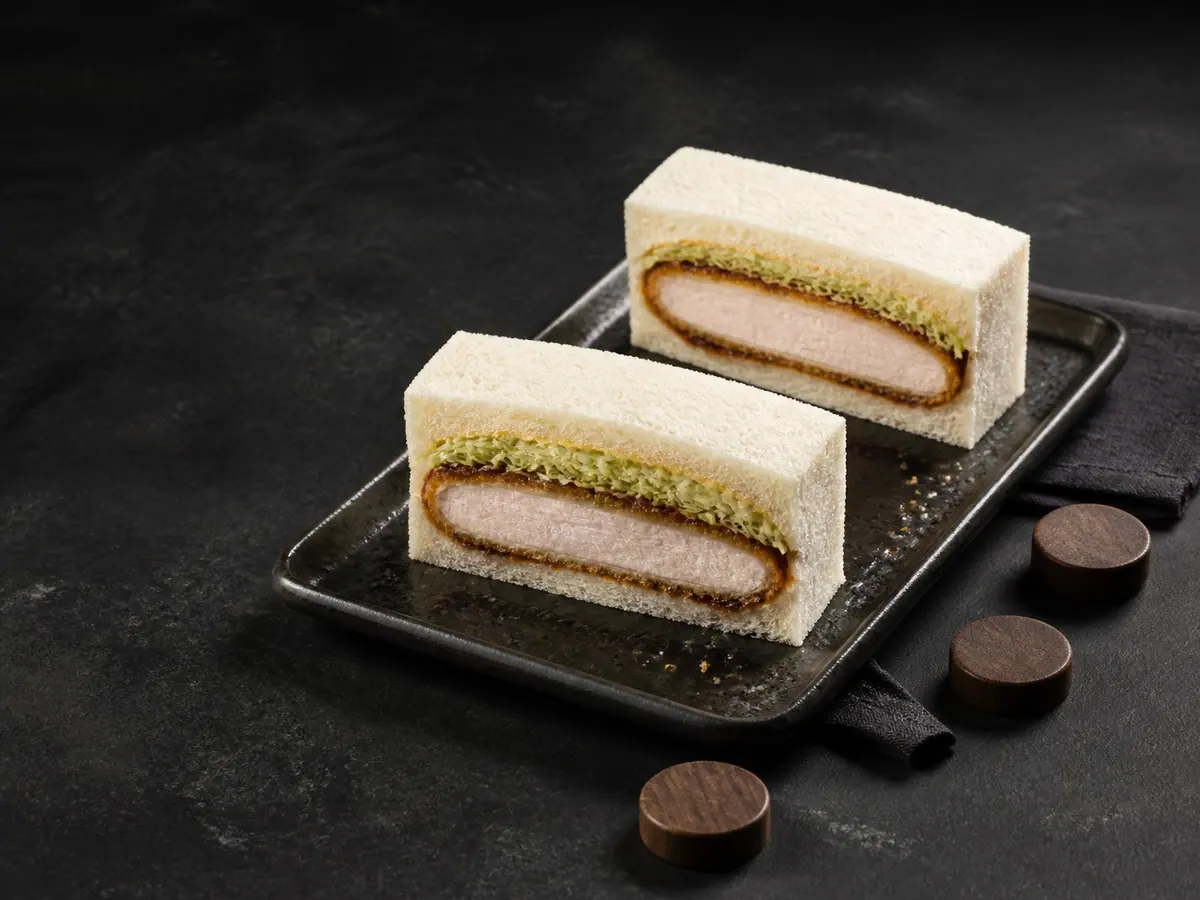
Lift away the tray and weight. For a squared presentation, trim the crusts; otherwise leave them intact. With a clean serrated knife, divide each sandwich into two equal rectangles. Wipe the blade after every cut so crumbs, cabbage, and sauce remain inside the cross-section. Serve immediately while the bread is soft and the panko is crisp.


Smart Substitutions
- No shokupan? Use a thick-cut Pullman loaf or another soft white sandwich bread with a fine crumb.
- Prefer chicken? Use boneless chicken breast cutlets and cook them to 74°C/165°F with a food thermometer.
- No Dijon mustard? Use mild yellow mustard or Japanese-style hot mustard, reducing the amount if it is sharp.
- Need a dairy-free spread? Use a firm plant-based butter that spreads thinly and does not make the bread wet.
Tips and Variations
- Pound every cutlet to the same thickness so the crust and center finish together.
- Keep panko loose in the dish and press only once; crushed crumbs form a denser, less craggy shell.
- Use a light press and wipe the knife between cuts for stable halves that are easier to handle during an intermission.
What Went Wrong?
- Breading falls away Dry the pork well, shake off excess flour, and let excess egg drip before adding panko.
- Crust darkens too fast Lower the heat and hold the oil near 175°C (350°F) so the pork reaches temperature before the crumbs burn.
- Bread turns soggy Squeeze the cabbage more firmly, keep sauce on the cutlet, and spread the mustard butter all the way to the bread edges.
- Layers slide apart Keep cabbage and sauce away from the outer edge, then give the closed sandwiches the full light press before cutting.
Nutrition Estimate
- Fiber: 4 g per serving
- Sodium: 1270 mg per serving
Nutrition disclaimer:This recipe is provided for general cooking information only. Nutrition values are estimates and may vary by ingredients, brands, preparation methods, and serving sizes. Check ingredient labels and follow appropriate food-safety practices. This content is not medical, dietary, allergy, or professional food-safety advice.
FAQ
Found an error or have a suggestion?
Help us improve this recipe. Send us your feedback and include the recipe name so we can take a look.