Method
Cook the rice
Rinse 180 g of short-grain white rice under cold running water until the water is nearly clear, then drain well. Combine 180 g of short-grain white rice and 265 ml of water in a medium saucepan. Bring to a boil over medium-high heat, stir once, cover, and reduce the heat to low. Cook for 15 minutes, then remove the pan from the heat without lifting the lid and let the rice rest, still covered, for 10 minutes.
15:00Season and cool the rice
Whisk 30 ml of rice vinegar, 10 g of granulated sugar, and 3 g of fine sea salt in a wide bowl until the sugar and salt dissolve. Add the cooked rice and fold with a cutting motion while turning the bowl, taking care not to mash the grains. Spread the rice into a shallow layer and let it stand for 10 minutes, until warm rather than hot.
10:00Cook the salmon safely
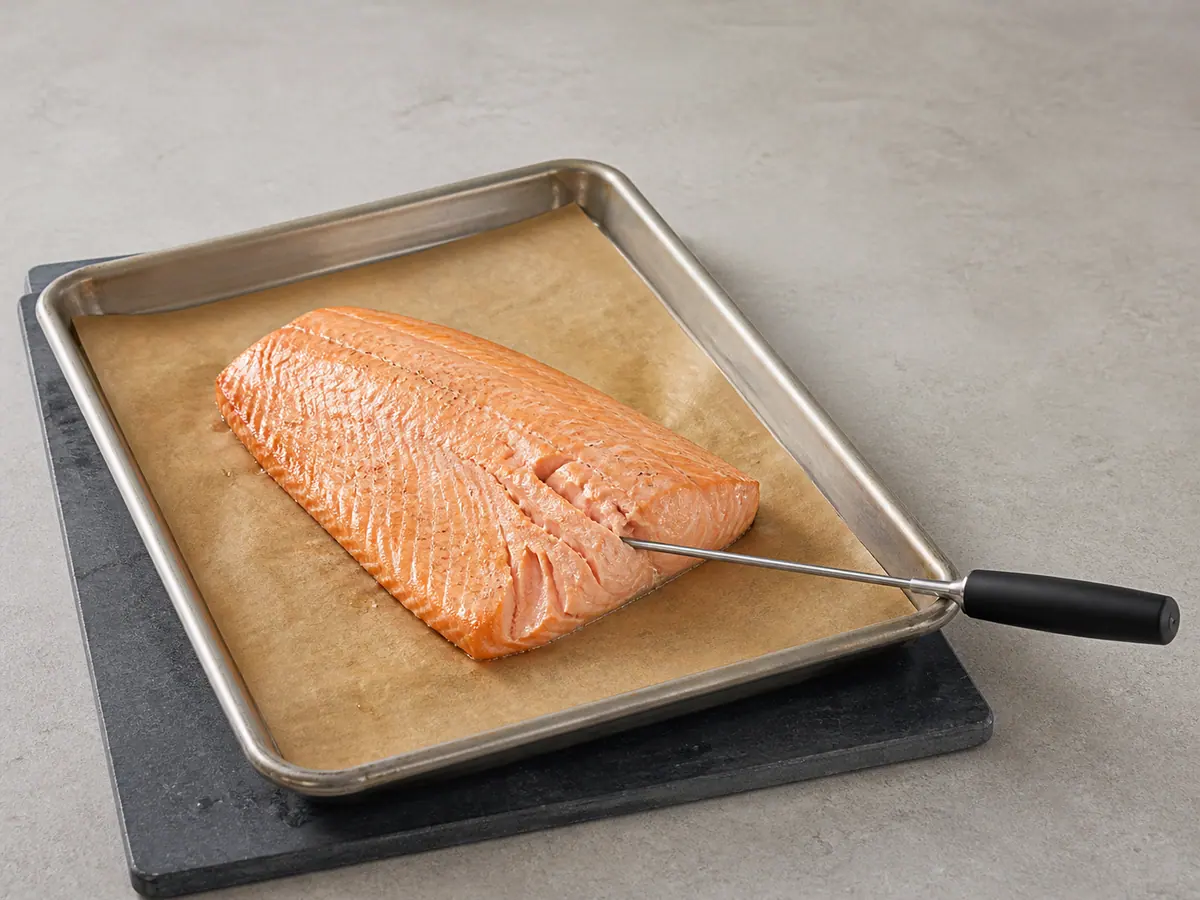
Heat the oven to 220°C (425°F) and line a small rimmed sheet pan. Pat 340 g of skinless salmon fillet dry with paper towels, place it on the pan, and brush 5 ml of neutral cooking oil over the surface. Wash your hands after handling the raw fish, then wash and sanitize any board, knife, plate, or counter area it touched before preparing ready-to-eat ingredients. Roast for 8 to 12 minutes, starting the timer for the first check at 8 minutes. Insert a food thermometer into the thickest part and continue cooking until it reaches 63°C/145°F; the flesh should be opaque and separate easily into flakes. Transfer it with a clean utensil to a clean bowl and let it stand until comfortable to handle.
08:00Build the salmon filling
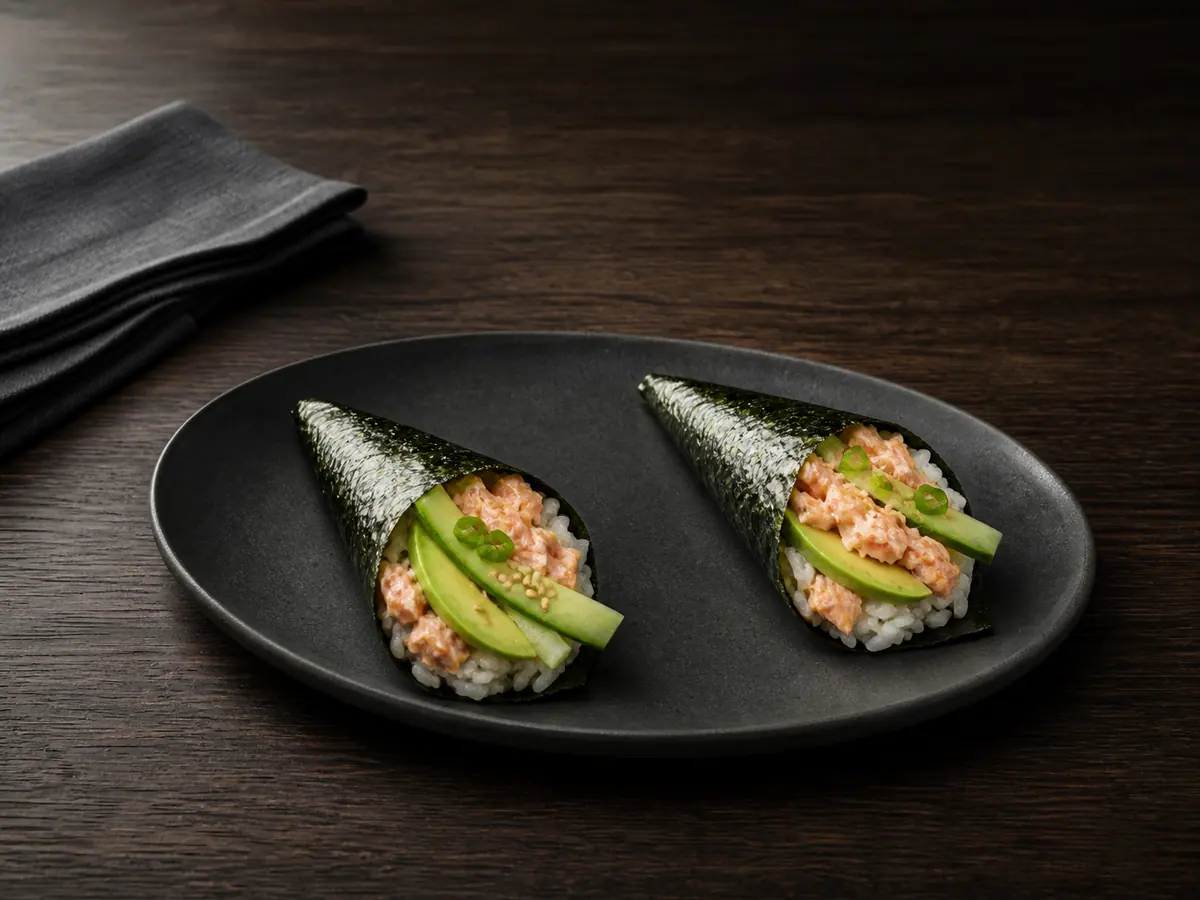
Flake the fully cooked salmon into bite-size pieces. Add 30 g of mayonnaise (contains egg), 15 ml of reduced-sodium soy sauce (contains soy and wheat), and 6 g of toasted sesame seeds, then fold gently until the mixture holds together without becoming pasty. Cut 140 g of English cucumber into slim batons about 6 cm (2 1/2 in) long, one for each roll. Halve, pit, and peel 180 g of avocado, then cut it into one curved slice per roll. Thinly slice 30 g of scallions and fold them into the salmon mixture.
Roll the hand rolls
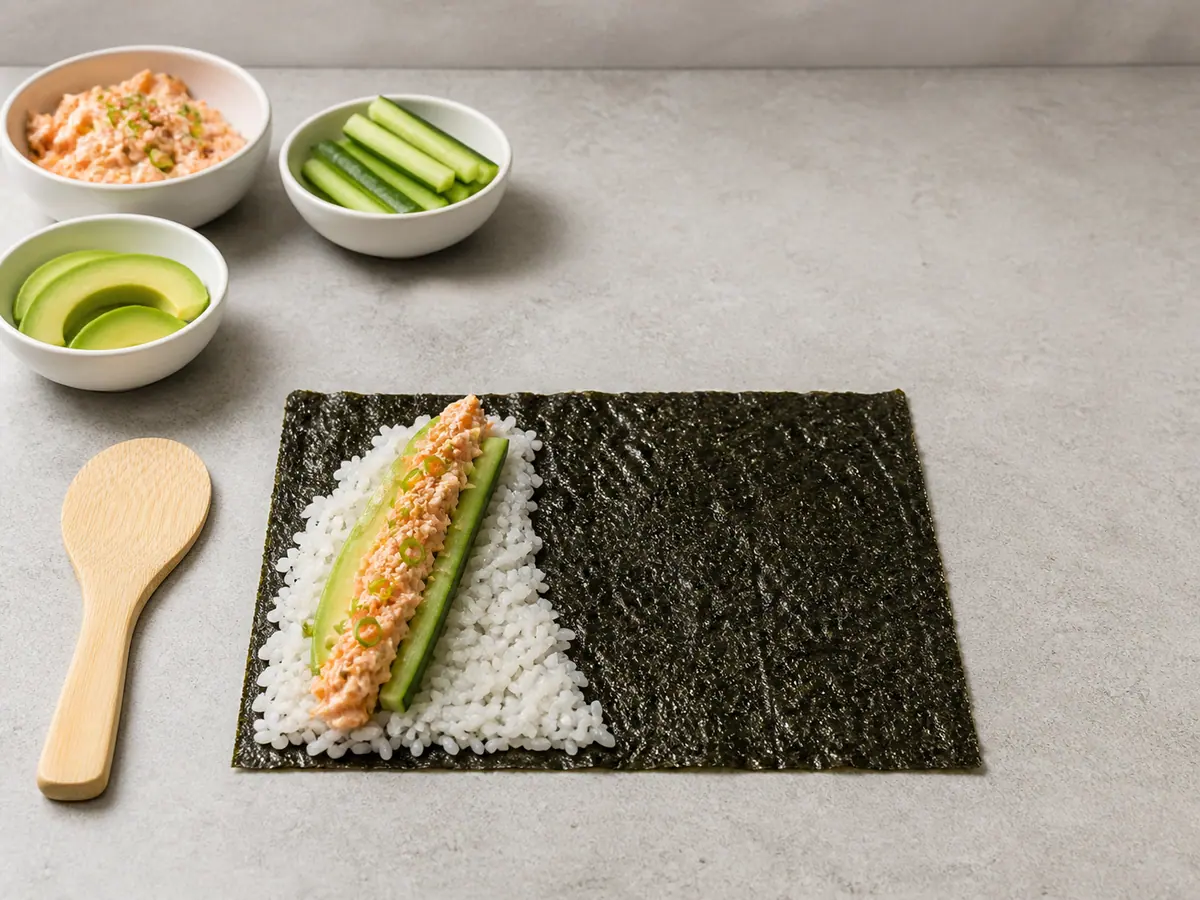
Cut 4 sheets of roasted nori in half crosswise to make two rectangles from each sheet. Place one rectangle shiny side down with a long edge facing you. With lightly dampened fingers, spread a thin triangular layer of seasoned rice over the left third, leaving a 1.5 cm (1/2 in) clean border. Lay one cucumber baton and one avocado slice diagonally over the rice, then add a compact line of salmon filling. Fold the lower-left corner over the filling and roll toward the right to form a tight cone with a closed point; press one rice grain against the seam if it needs help holding. Repeat with the remaining components. Arrange two rolls per serving and serve immediately while the nori is crisp.


Smart Substitutions
- No avocado? Use ripe mango slices or blanched asparagus for a firm, fresh contrast.
- No cucumber? Use thin carrot batons or crisp lettuce ribs cut to the same length.
- No salmon? Use fully cooked trout or drained canned tuna and keep the filling lightly bound.
- Want a lighter binder? Replace half of the mayonnaise with mashed avocado and reduce the added avocado slices slightly.
Tips and Variations
- Set out the seasoned rice, filling, vegetables, and serving platter before cutting the nori so assembly moves quickly.
- Dampen your fingertips, not the nori; excess water makes the seaweed soften and tear.
- Place the salmon filling in a diagonal line instead of a central mound so the cone closes around it.
- Serve two rolls per person on small plates during a natural pause, keeping sauces inside the filling rather than beside the controls.
What Went Wrong?
- Rice smears across the nori Let the rice cool until warm and use lightly dampened fingertips with a gentle pressing motion.
- Nori tears while rolling Use less rice and filling, and keep wet fingers away from the bare sealing edge.
- The cone opens at the seam Start with the filling on a diagonal, roll firmly from the lower-left corner, and use one rice grain as a small edible seal.
- Salmon feels dry Begin checking at 8 minutes, remove it as soon as the thickest part reaches 63°C/145°F, and fold rather than mash it with the mayonnaise mixture.
Nutrition Estimate
- Fiber: 6 g per serving
- Sodium: 595 mg per serving
Nutrition disclaimer:This recipe is provided for general cooking information only. Nutrition values are estimates and may vary by ingredients, brands, preparation methods, and serving sizes. Check ingredient labels and follow appropriate food-safety practices. This content is not medical, dietary, allergy, or professional food-safety advice.
FAQ
Found an error or have a suggestion?
Help us improve this recipe. Send us your feedback and include the recipe name so we can take a look.