Method
Mix and knead the dough
Warm 240 ml of whole milk for dough to 38°C to 43°C (100°F to 110°F). Melt 42 g of unsalted butter for dough and let it cool for 2 minutes. Whisk 38 g of granulated sugar and 7 g of instant yeast into the warm milk, then add the cooled butter. Stir in 360 g of all-purpose flour and 4.5 g of fine sea salt until no dry patches remain. Knead by hand on a lightly greased surface or with a dough hook for 7 to 9 minutes, until the dough is smooth, elastic, and tacky but releases cleanly from your fingers after a brief touch.
08:00Let the dough rise
Shape the dough into a ball and place it in a lightly greased bowl. Cover the bowl and let the dough rise in a warm, draft-free place for 50 to 60 minutes, until it is roughly doubled and a fingertip indentation fills back slowly rather than snapping closed. Let the dough follow the visual cue even if your kitchen makes the rise slightly faster or slower.
50:00Fill, stack, and shape the rolls
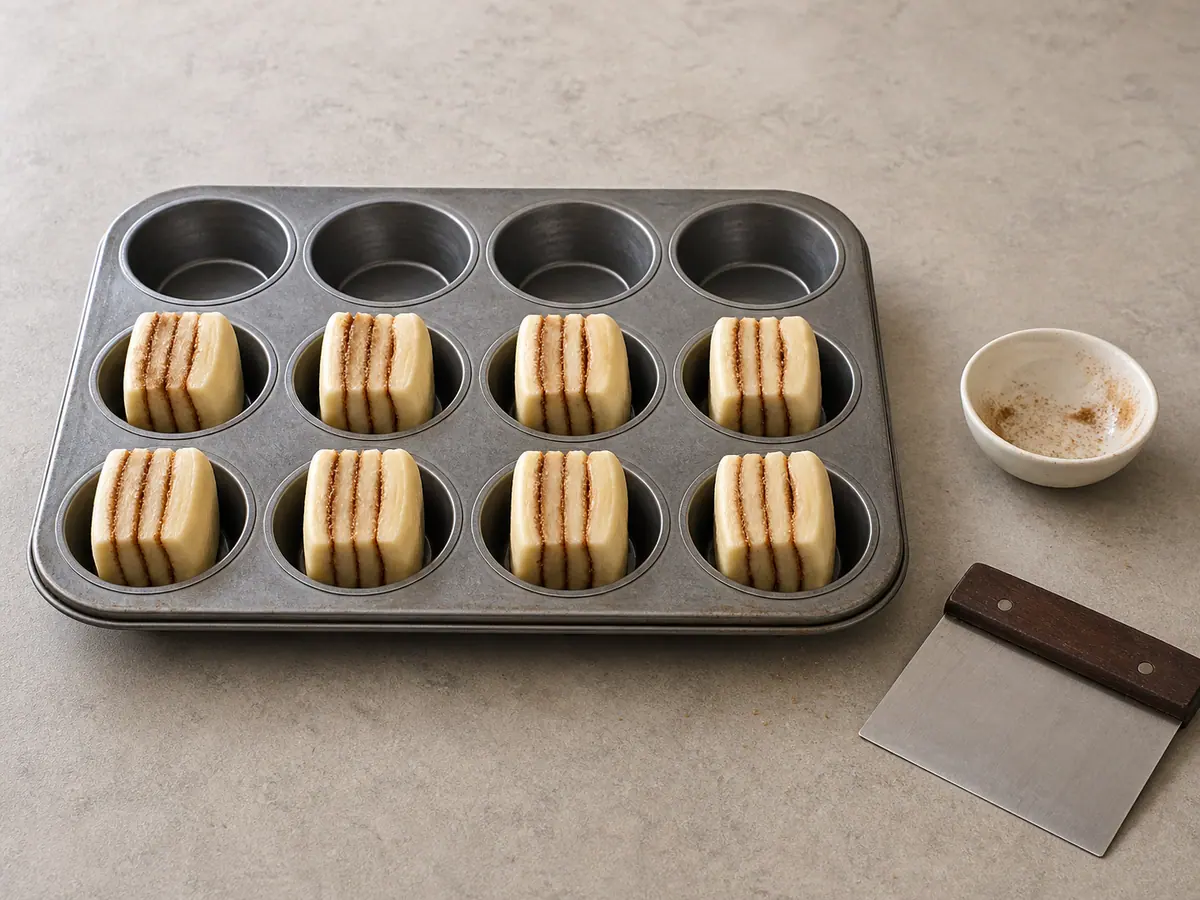
Use 5 ml of neutral oil to coat one well per serving in a standard muffin pan. Melt 56 g of unsalted butter for filling and let it cool until slightly thickened but still spreadable. Stir 100 g of light brown sugar and 8 g of ground cinnamon together. Gently deflate the risen dough and roll it into an even rectangle about 5 mm (1/4 in) thick. Spread the butter to the edges, then scatter the cinnamon sugar evenly and press it lightly so it adheres. Cut the rectangle lengthwise into four equal strips, stack the strips with the filling sides facing up, and cut the stack into one packet per serving. Stand each packet upright in a prepared well with the cut layers facing upward; separate the top leaves slightly, but keep the base connected.
Proof the shaped rolls
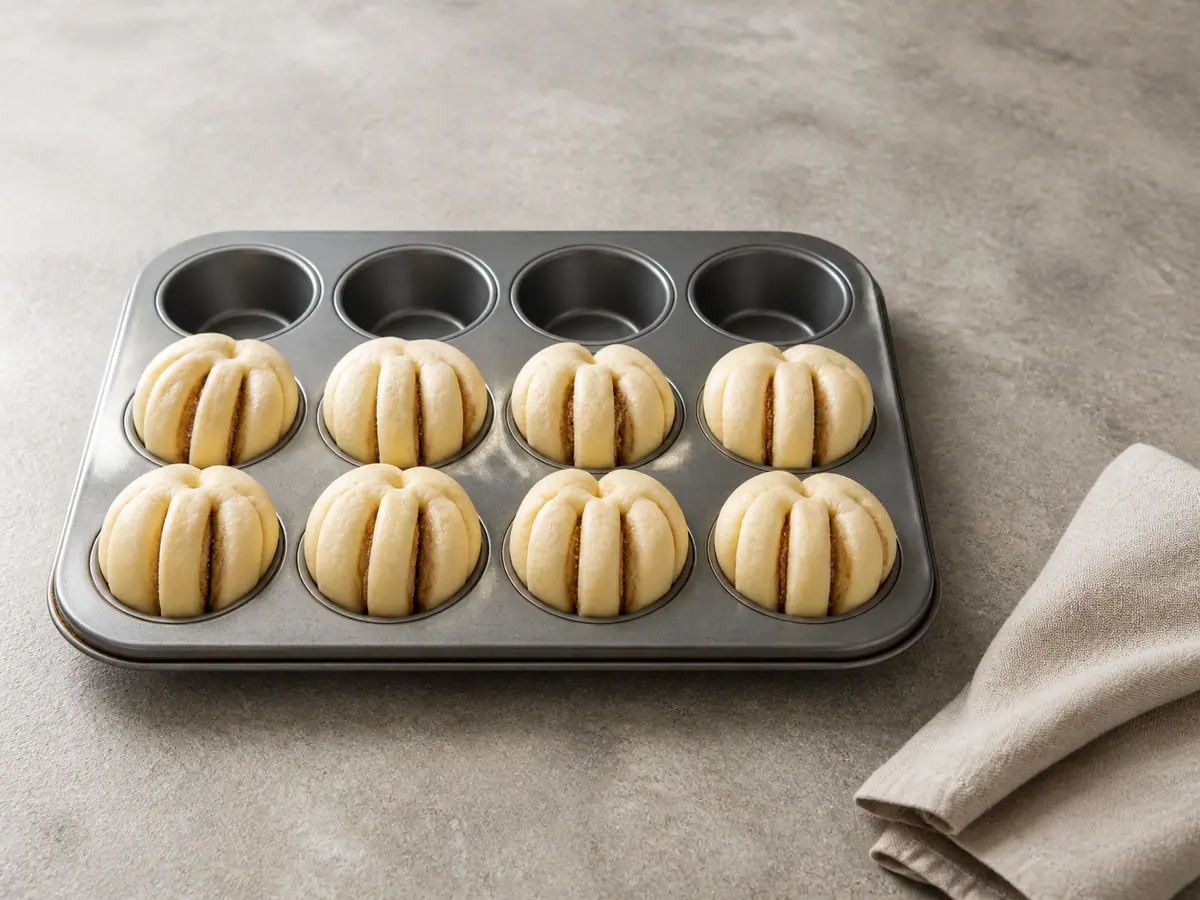
Cover the muffin pan loosely and let the rolls rise for 30 to 40 minutes, until the layers look puffy, the packets fill most of their wells, and a gentle press leaves an indentation that returns slowly. During the final 20 minutes, heat the oven to 190°C (375°F) with a rack in the center.
30:00Bake until the centers are set
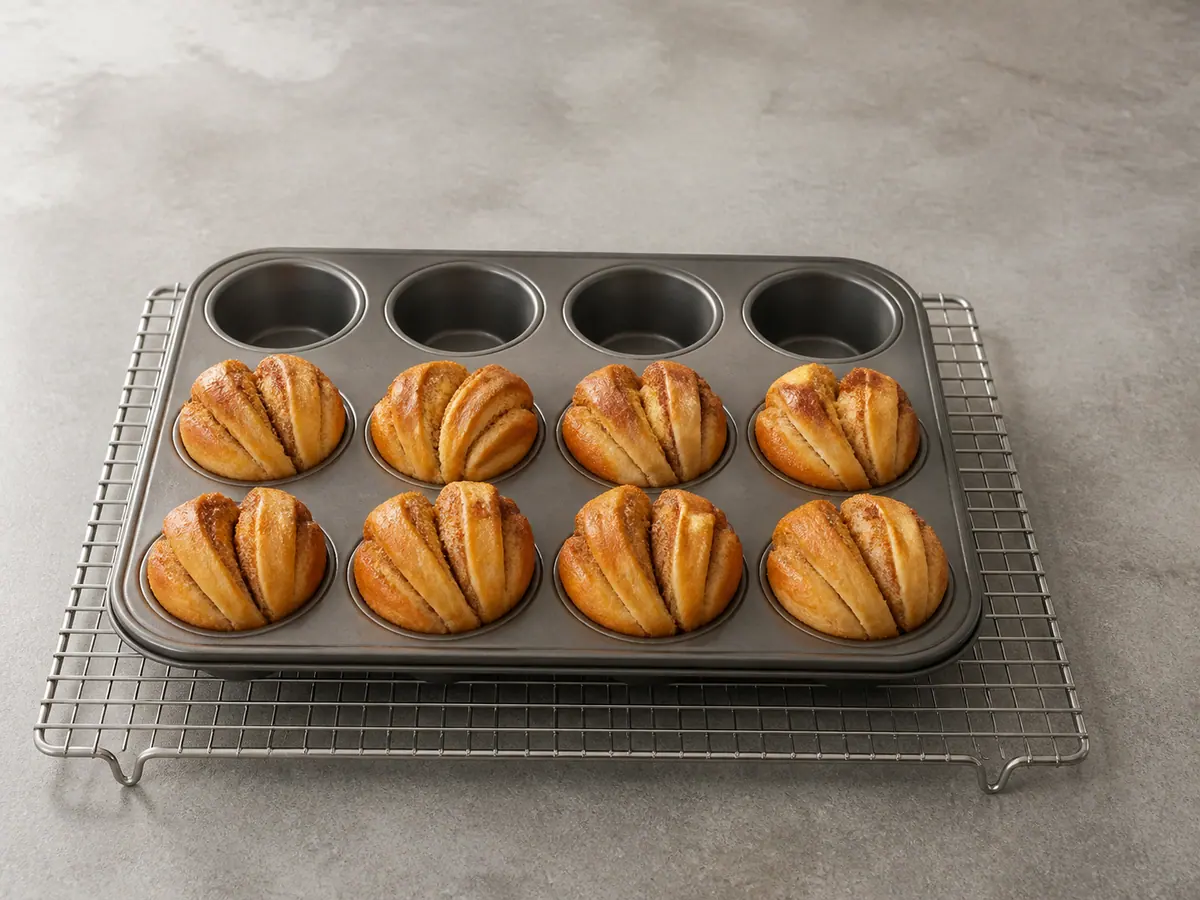
Bake the rolls for 18 to 22 minutes, rotating the pan once after 12 minutes, until the top edges are golden, the cinnamon seams are bubbling lightly, and the center of a middle roll reaches 88°C (190°F) on a digital thermometer. If the tops color before the centers reach temperature, lay a loose sheet of foil over the pan for the remaining time.
18:00Glaze and serve warm
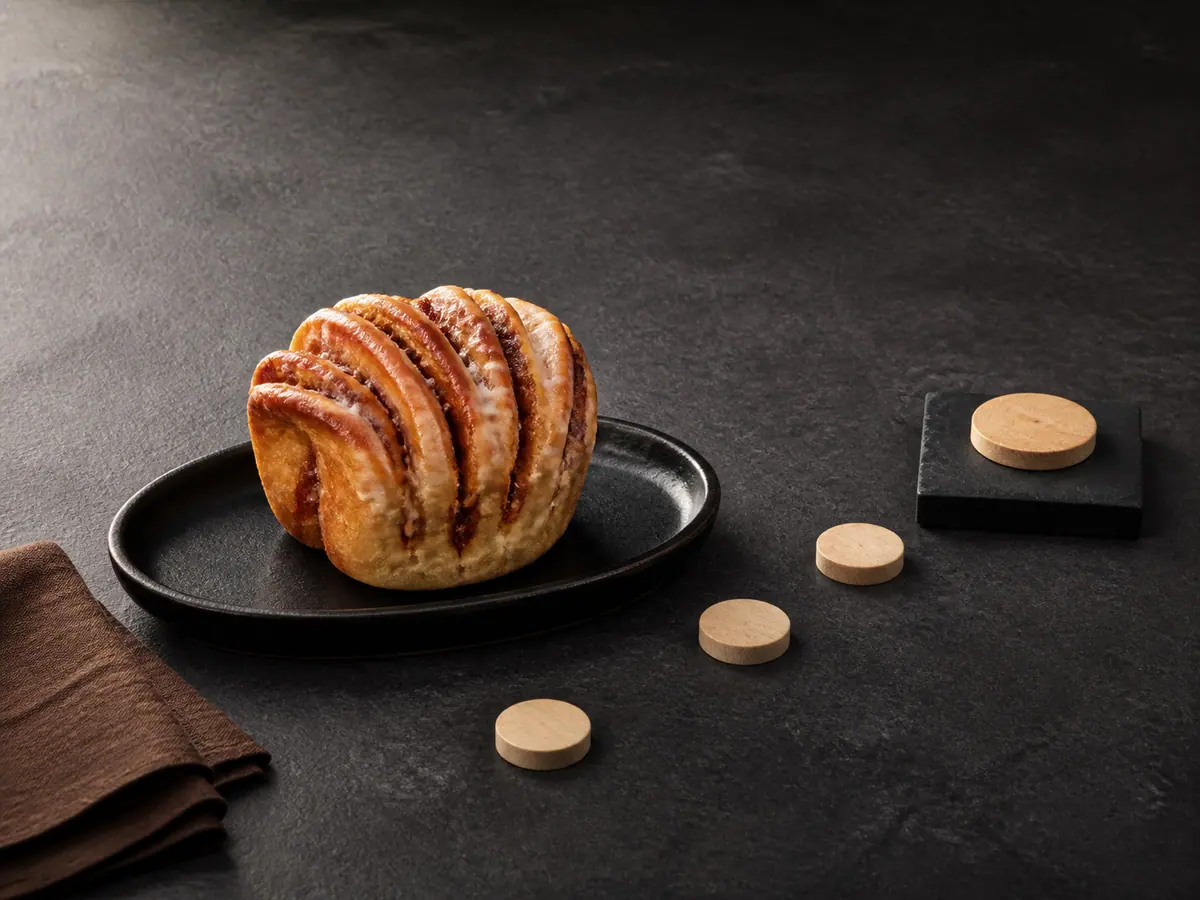
Set the pan on a rack and let the rolls stand for 10 minutes. Whisk 80 g of powdered sugar, 22 ml of whole milk for glaze, and 5 ml of vanilla extract until smooth and thick but pourable. Lift the rolls from the wells, drizzle the glaze across the warm fan layers, and serve while the edges are caramelized and the centers remain soft.
10:00


Smart Substitutions
- No whole milk? Use 2% milk or unsweetened oat milk in equal volume; the crumb will be slightly less rich.
- No instant yeast? Use the same weight of active dry yeast and expect the first rise to take a little longer.
- No muffin pan? Arrange the layered packets upright in a greased baking dish large enough to keep them lightly touching in one layer.
- Want a deeper spice route? Replace up to one-quarter of the ground cinnamon with ground cardamom.
Tips and Variations
- Weigh the flour when possible; a packed cup can make the dough firm and the layers reluctant to open.
- Let the melted filling butter cool until it turns slightly opaque. Warm, runny butter encourages the cinnamon sugar to slide out during shaping.
- Serve the rolls on small plates or parchment squares during a planned break. The individual portions stay contained, but the glaze is still pleasantly sticky.
What Went Wrong?
- Dough is not rising Move the covered bowl to a warmer spot and give it more time. If the dough remains unchanged, the yeast or milk temperature may have prevented fermentation.
- Filling slides out Let the melted butter thicken before spreading, press the cinnamon sugar lightly into the dough, and move the stacked strips with a bench scraper.
- Rolls are dense Knead until the dough stretches smoothly, then let both rises reach their visual cues instead of stopping only because the timer ends.
- Centers are still doughy Check a middle roll with a digital thermometer and continue baking until it reaches 88°C (190°F), shielding the tops loosely with foil if needed.
Nutrition Estimate
- Fiber: 2 g per serving
- Sodium: 240 mg per serving
Nutrition disclaimer:This recipe is provided for general cooking information only. Nutrition values are estimates and may vary by ingredients, brands, preparation methods, and serving sizes. Check ingredient labels and follow appropriate food-safety practices. This content is not medical, dietary, allergy, or professional food-safety advice.
FAQ
Found an error or have a suggestion?
Help us improve this recipe. Send us your feedback and include the recipe name so we can take a look.